Heated committee debate as Martin’s bill would replace traditional insanity defense and limit downward departures tied to mental illness
January 26, 2026 | 2026 Legislature FL, Florida
This article was created by AI summarizing key points discussed. AI makes mistakes, so for full details and context, please refer to the video of the full meeting. Please report any errors so we can fix them. Report an error »
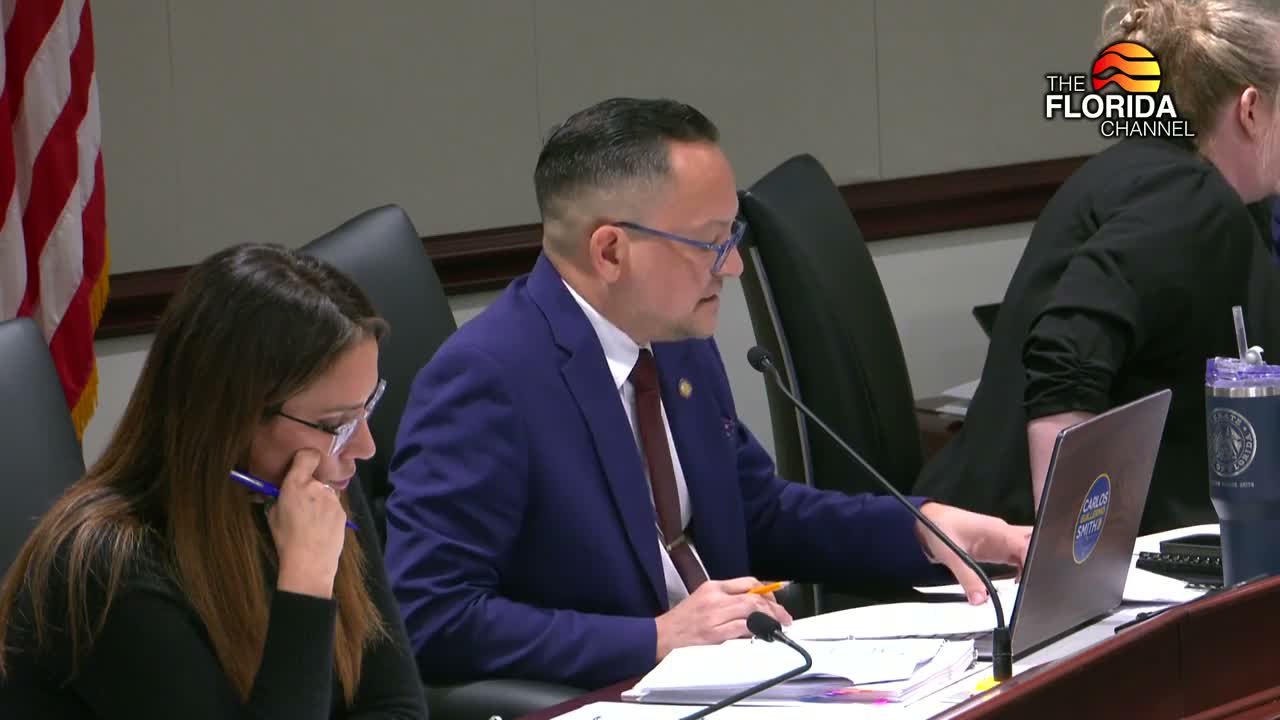
Senate Bill 1326, presented by Chair Martin, would overhaul several criminal-procedure provisions related to mental-health defenses and sentencing. The bill replaces the traditional not-guilty-by-reason-of-insanity framework with a defense focusing on lack of culpable mental state caused by a mental disease or defect, requires competency experts to use a clinician-recognized assessment tool to determine malingering, and narrows the ability of judges to downwardly depart from sentencing guidelines on account of mental illness.
Martin said the changes respond to instances where individuals adjudicated under other states’ standards later posed a threat in Florida; he framed the bill as a public-safety measure and said he is working with stakeholders to ensure treatment is available in cases where commitment or treatment is appropriate.
Opponents, including Nellie King of the Florida Association of Criminal Defense Lawyers, warned that removing or narrowing the insanity framework and curtailing judicial discretion risks moving medically ill people into prisons that lack therapeutic services. King raised concerns about the scientific reliability and cost of required malingering instruments and cautioned that intellectual and developmental disabilities could produce false positives on screening tools.
Senator Pizzo pressed the sponsor on whether judges would retain tools to order treatment and on the bill’s practical effects; Martin acknowledged the bill needs further work and promised to consult stakeholders. Several senators opposed the bill in debate, arguing it would move Florida backward on humane and effective responses to serious mental illness.
Despite the debate and requests for amendments to address treatment and due-process safeguards, the committee recorded a favorable report on SB 1326. The sponsor said he will continue stakeholder engagement before the measure moves further.
Martin said the changes respond to instances where individuals adjudicated under other states’ standards later posed a threat in Florida; he framed the bill as a public-safety measure and said he is working with stakeholders to ensure treatment is available in cases where commitment or treatment is appropriate.
Opponents, including Nellie King of the Florida Association of Criminal Defense Lawyers, warned that removing or narrowing the insanity framework and curtailing judicial discretion risks moving medically ill people into prisons that lack therapeutic services. King raised concerns about the scientific reliability and cost of required malingering instruments and cautioned that intellectual and developmental disabilities could produce false positives on screening tools.
Senator Pizzo pressed the sponsor on whether judges would retain tools to order treatment and on the bill’s practical effects; Martin acknowledged the bill needs further work and promised to consult stakeholders. Several senators opposed the bill in debate, arguing it would move Florida backward on humane and effective responses to serious mental illness.
Despite the debate and requests for amendments to address treatment and due-process safeguards, the committee recorded a favorable report on SB 1326. The sponsor said he will continue stakeholder engagement before the measure moves further.
Don't Miss a Word: See the Full Meeting!
Go beyond summaries. Unlock every video, transcript, and key insight with a Founder Membership.
✓
Get instant access to full meeting videos
✓
Search and clip any phrase from complete transcripts
✓
Receive AI-powered summaries & custom alerts
✓
Enjoy lifetime, unrestricted access to government data
30-day money-back guarantee
