House committee advances HJR 213 to slow annual property-assessment increases, adds first-responder carve-out
January 22, 2026 | 2026 Legislature FL, Florida
This article was created by AI summarizing key points discussed. AI makes mistakes, so for full details and context, please refer to the video of the full meeting. Please report any errors so we can fix them. Report an error »
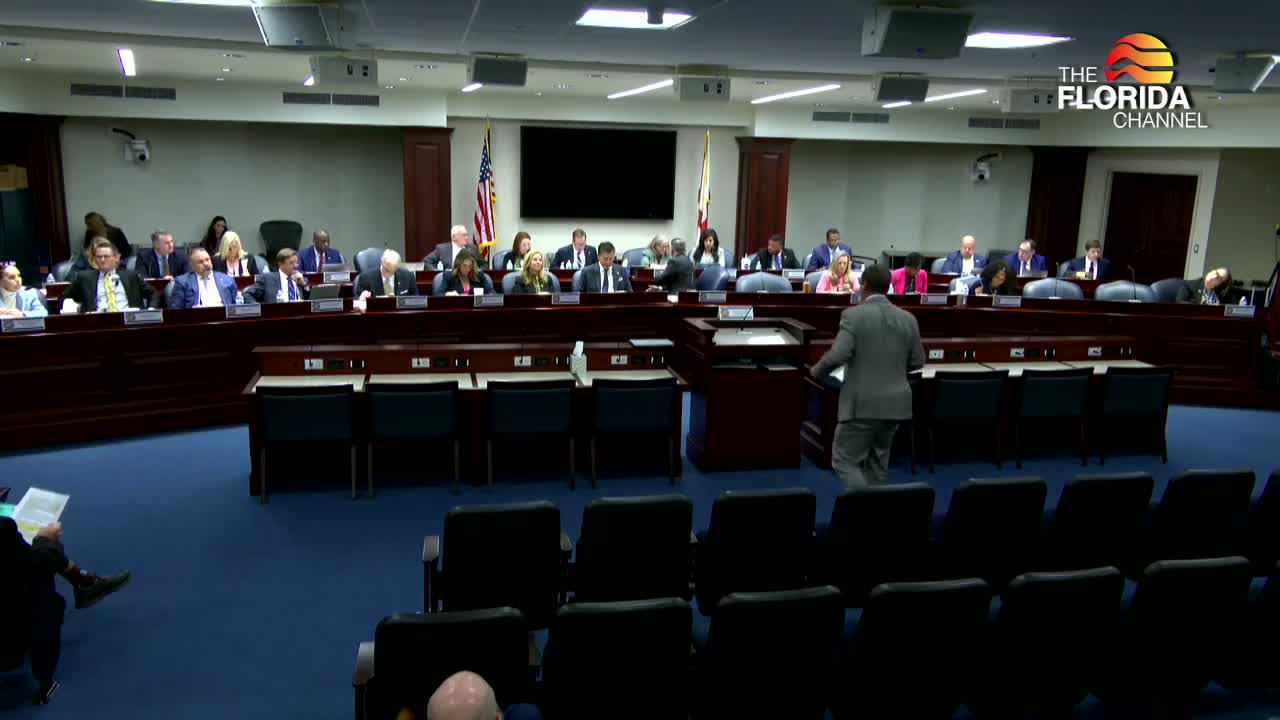
Representative Harrison Griffiths pressed forward HJR 213 before the Florida House State Affairs Committee on grounds it would slow rapid local budget growth and provide three-year predictability for county and city tax rolls.
Griffiths told the committee the joint resolution would move homestead assessment adjustments from an annual schedule to once every three years while keeping the existing 3% cap; non-homestead property would move from a 10% annual cap to a 15% maximum over a three-year period. "This adds some predictability for that county or city to know that their growth pattern will have steady but slow increase over a 3 year period," Griffiths said.
The proposal drew sustained questioning from members who raised concerns about the potential fiscal impact on local services. Representative Jeff Gant asked for data about expected revenue reductions; Griffiths offered an estimate that the first-year impact would be about $1.5 billion statewide and grow to more than $5 billion by year five. Local-government witnesses warned those reductions could disrupt stormwater, infrastructure and other services.
Charles Chapman of the Florida League of Cities told the panel the group opposed the measure, saying property taxes make up "79% of our general fund tax revenue" for many municipalities and that a three-year assessment window could complicate bondability, credit ratings and rising operating costs.
During debate the sponsor offered amendment barcode 735455 to expand an original protection for law-enforcement funding so it also prevents reductions for firefighters and other first responders as defined by general law. The amendment also revised ballot language for clarity. The committee adopted the amendment by voice vote.
Opponents said the HJR risks shifting tax burdens and cutting services such as Meals on Wheels, debris removal and libraries; supporters said the change simply slows the rate of growth in taxable value and preserves protections for school funding and public safety. Representative Griffiths and several backers framed the measure as a measured, common-sense reform to curb "explosive" growth in local government budgets.
After extended debate and public testimony from multiple municipal and county associations, the committee voted to report HJR 213 favorably to the full House. The sponsor and opponents both encouraged further study and implementation planning in later stages.
The committee adopted an amendment clarifying the protection for law enforcement and first responders and sent the joint resolution forward; no implementation bill was presented during the hearing. The committee recorded the outcome as reported favorably and adjourned the session.
Griffiths told the committee the joint resolution would move homestead assessment adjustments from an annual schedule to once every three years while keeping the existing 3% cap; non-homestead property would move from a 10% annual cap to a 15% maximum over a three-year period. "This adds some predictability for that county or city to know that their growth pattern will have steady but slow increase over a 3 year period," Griffiths said.
The proposal drew sustained questioning from members who raised concerns about the potential fiscal impact on local services. Representative Jeff Gant asked for data about expected revenue reductions; Griffiths offered an estimate that the first-year impact would be about $1.5 billion statewide and grow to more than $5 billion by year five. Local-government witnesses warned those reductions could disrupt stormwater, infrastructure and other services.
Charles Chapman of the Florida League of Cities told the panel the group opposed the measure, saying property taxes make up "79% of our general fund tax revenue" for many municipalities and that a three-year assessment window could complicate bondability, credit ratings and rising operating costs.
During debate the sponsor offered amendment barcode 735455 to expand an original protection for law-enforcement funding so it also prevents reductions for firefighters and other first responders as defined by general law. The amendment also revised ballot language for clarity. The committee adopted the amendment by voice vote.
Opponents said the HJR risks shifting tax burdens and cutting services such as Meals on Wheels, debris removal and libraries; supporters said the change simply slows the rate of growth in taxable value and preserves protections for school funding and public safety. Representative Griffiths and several backers framed the measure as a measured, common-sense reform to curb "explosive" growth in local government budgets.
After extended debate and public testimony from multiple municipal and county associations, the committee voted to report HJR 213 favorably to the full House. The sponsor and opponents both encouraged further study and implementation planning in later stages.
The committee adopted an amendment clarifying the protection for law enforcement and first responders and sent the joint resolution forward; no implementation bill was presented during the hearing. The committee recorded the outcome as reported favorably and adjourned the session.
View the Full Meeting & All Its Details
This article offers just a summary. Unlock complete video, transcripts, and insights as a Founder Member.
✓
Watch full, unedited meeting videos
✓
Search every word spoken in unlimited transcripts
✓
AI summaries & real-time alerts (all government levels)
✓
Permanent access to expanding government content
30-day money-back guarantee
