Fulshear council tables Waters PUD after residents warn multifamily would strain water, traffic and character
January 20, 2026 | Fulshear, Fort Bend County, Texas
This article was created by AI summarizing key points discussed. AI makes mistakes, so for full details and context, please refer to the video of the full meeting. Please report any errors so we can fix them. Report an error »
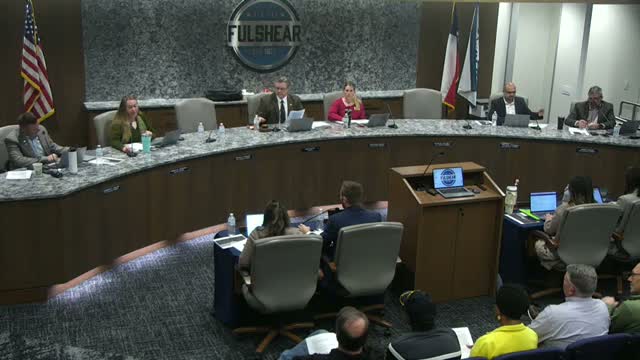
Council members on Tuesday tabled consideration of a proposed Waters planned unit development that would change the zoning of several tracts near FM 1093 and FM 359 — a move that pauses a proposal residents said could allow large apartment complexes across multiple properties.
Residents packed council chambers and delivered more than a dozen public comments opposing multifamily uses, arguing the change would overwhelm local roads, wastewater and groundwater supplies and alter downtown’s small‑town character. Cecile Thompson of Del Webb told the council she has “read today that the apartments that are under construction are gonna have over 600 units,” and warned the cumulative effect could be “about 1,000 apartments” and thousands of daily vehicle trips. Jared Barton read a letter from Full Brook HOA president Harry Folletter that urged denial or strict limits, arguing a binding 2016 development agreement and later amendments vest single‑family expectations for many of the parcels.
Joshua Brothers of city staff explained the legal and contractual background: development agreements executed in 2016 and amended through 2019 changed some tracts from single‑family to commercial/multifamily, and utility agreements allocate a fixed number of water/wastewater service connections among the five tracts. Brothers told the council that, under current interpretations of the agreements and exhibits, “all five of them could possibly go to multifamily,” though any building would still need planning approvals such as traffic‑impact analyses and civil reviews.
Council members repeatedly raised water and subsidence concerns and asked staff for clearer, tract‑by‑tract land‑use percentages and updated engineering numbers. Several residents and council members urged stronger buffering, tree preservation and phasing rules. After extensive discussion, Councilmember Kanopy moved to table consideration of Ordinance 2026‑1524 (the Waters PUD rezoning); Councilmember Miller seconded, and the motion carried by voice vote, pausing action while staff continues negotiations and compiles outstanding technical details and legal analysis.
What happens next: tabling the item preserves the city’s ability to return the PUD to Planning & Zoning or to a future council meeting once staff and legal counsel assemble the outstanding materials the council asked for — including explicit exhibit disclosure, traffic studies, water‑service allocations, and the EDC/utility commitments that affect infrastructure funding.
Ending: Council members and residents asked staff to return with tract‑specific allocations, any proposed limits on nontraditional uses, stronger tree and buffer requirements, and a clear accounting of where the utility connections would be reallocated from and to. No rezoning was adopted at Tuesday’s meeting.
Residents packed council chambers and delivered more than a dozen public comments opposing multifamily uses, arguing the change would overwhelm local roads, wastewater and groundwater supplies and alter downtown’s small‑town character. Cecile Thompson of Del Webb told the council she has “read today that the apartments that are under construction are gonna have over 600 units,” and warned the cumulative effect could be “about 1,000 apartments” and thousands of daily vehicle trips. Jared Barton read a letter from Full Brook HOA president Harry Folletter that urged denial or strict limits, arguing a binding 2016 development agreement and later amendments vest single‑family expectations for many of the parcels.
Joshua Brothers of city staff explained the legal and contractual background: development agreements executed in 2016 and amended through 2019 changed some tracts from single‑family to commercial/multifamily, and utility agreements allocate a fixed number of water/wastewater service connections among the five tracts. Brothers told the council that, under current interpretations of the agreements and exhibits, “all five of them could possibly go to multifamily,” though any building would still need planning approvals such as traffic‑impact analyses and civil reviews.
Council members repeatedly raised water and subsidence concerns and asked staff for clearer, tract‑by‑tract land‑use percentages and updated engineering numbers. Several residents and council members urged stronger buffering, tree preservation and phasing rules. After extensive discussion, Councilmember Kanopy moved to table consideration of Ordinance 2026‑1524 (the Waters PUD rezoning); Councilmember Miller seconded, and the motion carried by voice vote, pausing action while staff continues negotiations and compiles outstanding technical details and legal analysis.
What happens next: tabling the item preserves the city’s ability to return the PUD to Planning & Zoning or to a future council meeting once staff and legal counsel assemble the outstanding materials the council asked for — including explicit exhibit disclosure, traffic studies, water‑service allocations, and the EDC/utility commitments that affect infrastructure funding.
Ending: Council members and residents asked staff to return with tract‑specific allocations, any proposed limits on nontraditional uses, stronger tree and buffer requirements, and a clear accounting of where the utility connections would be reallocated from and to. No rezoning was adopted at Tuesday’s meeting.
View the Full Meeting & All Its Details
This article offers just a summary. Unlock complete video, transcripts, and insights as a Founder Member.
✓
Watch full, unedited meeting videos
✓
Search every word spoken in unlimited transcripts
✓
AI summaries & real-time alerts (all government levels)
✓
Permanent access to expanding government content
30-day money-back guarantee
