House committee advances Immigrant Safety Act after heated debate over detainee harms and local costs
January 22, 2026 | Consumer & Public Affairs, House of Representatives, Committees, Legislative, New Mexico
This article was created by AI summarizing key points discussed. AI makes mistakes, so for full details and context, please refer to the video of the full meeting. Please report any errors so we can fix them. Report an error »
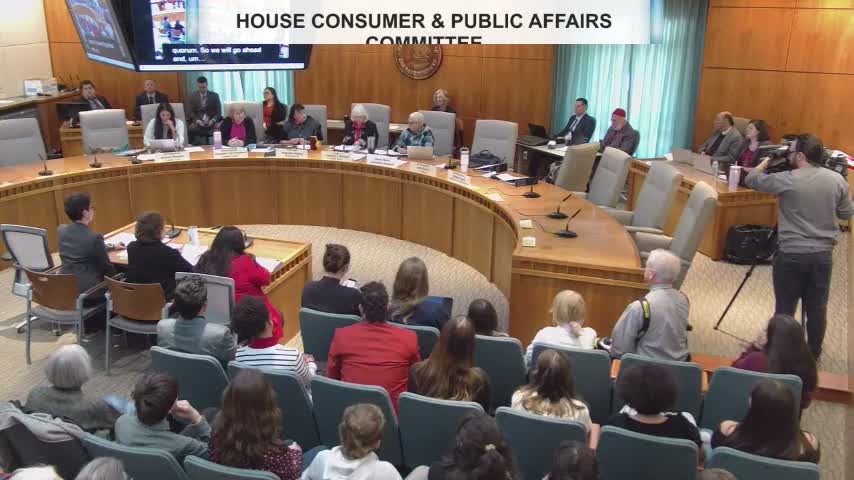
The House Consumer & Public Affairs Committee voted 4–2 on a due‑pass recommendation for House Bill 9, the Immigrant Safety Act, after more than two hours of testimony and public comment about alleged abuses in federal civil immigration detention and concerns about local economic impacts.
The bill’s sponsor opened the hearing saying HB 9 would "get New Mexico out of the business of immigration detention," citing recent national enforcement actions and what the sponsor described as at least five deaths tied to ICE enforcement actions in New Mexico. Rebecca Sheff, senior staff attorney with the ACLU of New Mexico, told the committee the bill is "on solid legal footing," that it regulates only New Mexico public bodies, and cited a recent wrongful‑death settlement against CoreCivic for negligent care. Jessica Ines Martinez, director of policy and coalition building at the New Mexico Immigrant Law Center, said advocates are seeing due‑process violations and other harms in the state’s detention facilities and urged passage.
Supporters in public comment — including New Mexico Voices for Children, Equality New Mexico, Contigo Immigrant Justice, the New Mexico Dream Team and Conservation Voters New Mexico — described family separations, medical neglect and other abuses they say occur in state facilities. Jonathan Salazar of New Mexico Voices for Children said the bill would help keep families together; Nathan Saavedra of Equality New Mexico described alleged harassment and neglect of LGBTQ detainees; and Ian Fillabaugh of Innovation Law Lab described pro bono legal work documenting medical neglect, sewage issues and use of solitary confinement at Torrance County.
Opponents, including a speaker identifying himself on behalf of Otero County and other in‑person commenters, warned passage would impose "drastic economic consequences" on counties that host ICE contracts. The Otero County representative said the county carries about $16 million in outstanding revenue bonds for its processing facility and argued the bill could jeopardize jobs and local revenue streams. Other opponents framed the bill as a federal matter and warned of lost federal funds and bond impacts.
Committee members pressed witnesses on specifics. Experts said the bill targets intergovernmental service agreements between ICE and New Mexico counties and would not directly regulate private contractors such as CoreCivic or tell ICE where to transfer detainees; they also said the state has authority under anti‑commandeering principles to withhold cooperation. Witnesses stated the Otero County processing center holds just over 1,100 beds and asserted that more than 80 percent of people in ICE custody nationally were apprehended in the interior of the country.
Legislators debated fiscal and legal risk. Committee members asked whether the bill would violate NMSA 4‑62‑6(C), a state statute prosecutors cited about impairing revenue bond security; experts responded bondholders assumed legislative and policy risk when purchasing revenue bonds and that the bill as drafted would not place taxpayer liability on those bonds. Members also discussed litigation in other states; witnesses cited up to seven jurisdictions with similar laws and noted Illinois’ comparable statute was upheld through the Seventh Circuit.
After procedural motions, the committee voted on a tabling motion that failed 2–4 and then recorded a 4–2 roll call in favor of a due‑pass recommendation. The roll shows Representatives Romero, Thompson, the vice chair and the chair voting Yes; Representatives Block and Lord recorded No. Representative Block explained his No vote, saying the bill would “irreparably harm Otero County.”
The committee’s recommendation sends HB 9 to the next stage of the legislative process; sponsors and experts said the measure is intended to remove state and local government from arrangements that facilitate federal civil immigration detention and to reduce the use of local facilities as detention beds. The committee adjourned without any amendment added on the floor of the hearing.
Sources: Sponsor remarks and expert testimony (ACLU of New Mexico; New Mexico Immigrant Law Center); public commenters; committee roll calls and explanations.
The bill’s sponsor opened the hearing saying HB 9 would "get New Mexico out of the business of immigration detention," citing recent national enforcement actions and what the sponsor described as at least five deaths tied to ICE enforcement actions in New Mexico. Rebecca Sheff, senior staff attorney with the ACLU of New Mexico, told the committee the bill is "on solid legal footing," that it regulates only New Mexico public bodies, and cited a recent wrongful‑death settlement against CoreCivic for negligent care. Jessica Ines Martinez, director of policy and coalition building at the New Mexico Immigrant Law Center, said advocates are seeing due‑process violations and other harms in the state’s detention facilities and urged passage.
Supporters in public comment — including New Mexico Voices for Children, Equality New Mexico, Contigo Immigrant Justice, the New Mexico Dream Team and Conservation Voters New Mexico — described family separations, medical neglect and other abuses they say occur in state facilities. Jonathan Salazar of New Mexico Voices for Children said the bill would help keep families together; Nathan Saavedra of Equality New Mexico described alleged harassment and neglect of LGBTQ detainees; and Ian Fillabaugh of Innovation Law Lab described pro bono legal work documenting medical neglect, sewage issues and use of solitary confinement at Torrance County.
Opponents, including a speaker identifying himself on behalf of Otero County and other in‑person commenters, warned passage would impose "drastic economic consequences" on counties that host ICE contracts. The Otero County representative said the county carries about $16 million in outstanding revenue bonds for its processing facility and argued the bill could jeopardize jobs and local revenue streams. Other opponents framed the bill as a federal matter and warned of lost federal funds and bond impacts.
Committee members pressed witnesses on specifics. Experts said the bill targets intergovernmental service agreements between ICE and New Mexico counties and would not directly regulate private contractors such as CoreCivic or tell ICE where to transfer detainees; they also said the state has authority under anti‑commandeering principles to withhold cooperation. Witnesses stated the Otero County processing center holds just over 1,100 beds and asserted that more than 80 percent of people in ICE custody nationally were apprehended in the interior of the country.
Legislators debated fiscal and legal risk. Committee members asked whether the bill would violate NMSA 4‑62‑6(C), a state statute prosecutors cited about impairing revenue bond security; experts responded bondholders assumed legislative and policy risk when purchasing revenue bonds and that the bill as drafted would not place taxpayer liability on those bonds. Members also discussed litigation in other states; witnesses cited up to seven jurisdictions with similar laws and noted Illinois’ comparable statute was upheld through the Seventh Circuit.
After procedural motions, the committee voted on a tabling motion that failed 2–4 and then recorded a 4–2 roll call in favor of a due‑pass recommendation. The roll shows Representatives Romero, Thompson, the vice chair and the chair voting Yes; Representatives Block and Lord recorded No. Representative Block explained his No vote, saying the bill would “irreparably harm Otero County.”
The committee’s recommendation sends HB 9 to the next stage of the legislative process; sponsors and experts said the measure is intended to remove state and local government from arrangements that facilitate federal civil immigration detention and to reduce the use of local facilities as detention beds. The committee adjourned without any amendment added on the floor of the hearing.
Sources: Sponsor remarks and expert testimony (ACLU of New Mexico; New Mexico Immigrant Law Center); public commenters; committee roll calls and explanations.
Don't Miss a Word: See the Full Meeting!
Go beyond summaries. Unlock every video, transcript, and key insight with a Founder Membership.
✓
Get instant access to full meeting videos
✓
Search and clip any phrase from complete transcripts
✓
Receive AI-powered summaries & custom alerts
✓
Enjoy lifetime, unrestricted access to government data
30-day money-back guarantee
