Committee backs funding to expand New Mexico Tech seismic network; members debate amount
January 26, 2026 | Education, House of Representatives, Committees, Legislative, New Mexico
This article was created by AI summarizing key points discussed. AI makes mistakes, so for full details and context, please refer to the video of the full meeting. Please report any errors so we can fix them. Report an error »
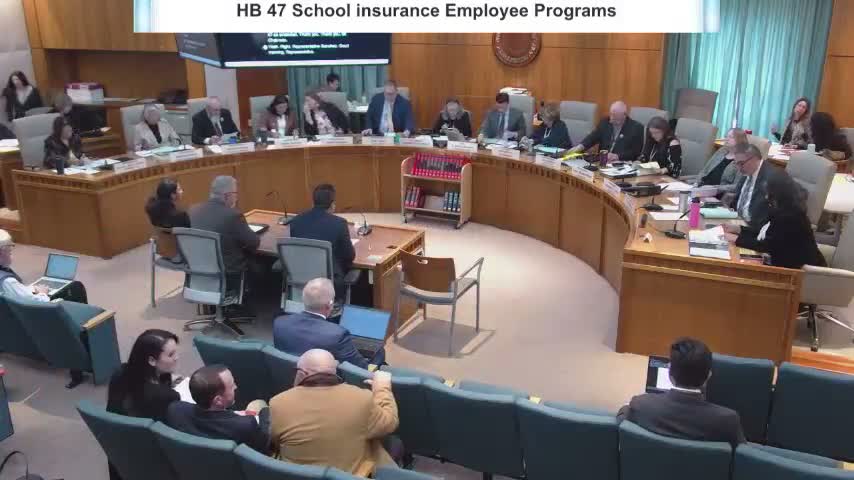
House Bill 48, which would appropriate funds to New Mexico Tech’s seismological observatory (the state Bureau of Geology and Mineral Resources) to expand seismic monitoring, received a 'do pass' recommendation from the House Education Committee after a hearing with technical presenters and supporters from industry and local governments.
Representative Sanchez introduced the bill as an appropriation for seismology equipment and network expansion in partnership with the Oil Conservation Division and the Energy, Minerals and Natural Resources Department. Committee testimony described the observatory’s role in producing public earthquake catalogs used by researchers, regulators and the public.
Mike Timmons, director and state geologist at the New Mexico Bureau of Geology and Mineral Resources, described the bureau as the state geological survey and a critical research division of New Mexico Tech. Dr. Urbi Basu, who manages the seismological observatory, told the committee that existing FY26 funding supported station upgrades and that plans include expanding from a smaller network to dozens of permanent stations statewide, adding staff, improving IT and achieving near-real-time notifications. "With this increase in stations, there is also a need for more personnel," Basu said, and she described goals to make the observatory the Oil Conservation Division's catalog of choice.
Industry and local-government speakers backed the bill. Ashley Wagner, vice president of government affairs for the New Mexico Oil and Gas Association, said expanded monitoring "will assure that the oil conservation division has access to impartial, authoritative, statewide data," and urged a yes vote. Local school-board and county officials also spoke in favor.
Committee members focused on funding specifics. Presenters described an initial $2,000,000 ask that they intended to amend to a lower figure (discussion included references to $500,000 or $1.5 million spread over three years) and said they planned to pursue recurring line-item funding in future budget processes. The presenters said recent FY26 investments (noted in testimony as $1,500,000 for one year) had already funded new stations and upgrades; they asked the committee to consider whether to provide one-time funding or to seek recurring appropriations to sustain operations.
Presenters emphasized public access and regulatory integration: the observatory’s catalogs are publicly posted and feed national catalogs, and regulators use the improved catalogs to inform seismicity-response actions such as reducing injection or production when indicated. Committee members noted benefits beyond oil-and-gas regulation — including geothermal development and industrial reinjection associated with water projects — and asked for performance measures and timelines. Presenters pointed to the observatory’s public data feeds and a plan reflected in the agency’s fiscal information summary for equipment, computing capacity, and staff.
A committee member moved a 'do pass' recommendation on HB48; the motion was seconded and, with no opposition recorded, the committee approved the recommendation to advance the bill.
Next steps: HB48 will proceed per the committee recommendation; the presenters indicated they expect to seek amendments to the funding level and to pursue recurring funding through the appropriations process.
Representative Sanchez introduced the bill as an appropriation for seismology equipment and network expansion in partnership with the Oil Conservation Division and the Energy, Minerals and Natural Resources Department. Committee testimony described the observatory’s role in producing public earthquake catalogs used by researchers, regulators and the public.
Mike Timmons, director and state geologist at the New Mexico Bureau of Geology and Mineral Resources, described the bureau as the state geological survey and a critical research division of New Mexico Tech. Dr. Urbi Basu, who manages the seismological observatory, told the committee that existing FY26 funding supported station upgrades and that plans include expanding from a smaller network to dozens of permanent stations statewide, adding staff, improving IT and achieving near-real-time notifications. "With this increase in stations, there is also a need for more personnel," Basu said, and she described goals to make the observatory the Oil Conservation Division's catalog of choice.
Industry and local-government speakers backed the bill. Ashley Wagner, vice president of government affairs for the New Mexico Oil and Gas Association, said expanded monitoring "will assure that the oil conservation division has access to impartial, authoritative, statewide data," and urged a yes vote. Local school-board and county officials also spoke in favor.
Committee members focused on funding specifics. Presenters described an initial $2,000,000 ask that they intended to amend to a lower figure (discussion included references to $500,000 or $1.5 million spread over three years) and said they planned to pursue recurring line-item funding in future budget processes. The presenters said recent FY26 investments (noted in testimony as $1,500,000 for one year) had already funded new stations and upgrades; they asked the committee to consider whether to provide one-time funding or to seek recurring appropriations to sustain operations.
Presenters emphasized public access and regulatory integration: the observatory’s catalogs are publicly posted and feed national catalogs, and regulators use the improved catalogs to inform seismicity-response actions such as reducing injection or production when indicated. Committee members noted benefits beyond oil-and-gas regulation — including geothermal development and industrial reinjection associated with water projects — and asked for performance measures and timelines. Presenters pointed to the observatory’s public data feeds and a plan reflected in the agency’s fiscal information summary for equipment, computing capacity, and staff.
A committee member moved a 'do pass' recommendation on HB48; the motion was seconded and, with no opposition recorded, the committee approved the recommendation to advance the bill.
Next steps: HB48 will proceed per the committee recommendation; the presenters indicated they expect to seek amendments to the funding level and to pursue recurring funding through the appropriations process.
View the Full Meeting & All Its Details
This article offers just a summary. Unlock complete video, transcripts, and insights as a Founder Member.
✓
Watch full, unedited meeting videos
✓
Search every word spoken in unlimited transcripts
✓
AI summaries & real-time alerts (all government levels)
✓
Permanent access to expanding government content
30-day money-back guarantee
