United Way Officials Tell Senate Panel 211 Covers All 95 Tennessee Counties and Seek One-Time Infrastructure Investment
January 21, 2026 | 2026 Legislature TN, Tennessee
This article was created by AI summarizing key points discussed. AI makes mistakes, so for full details and context, please refer to the video of the full meeting. Please report any errors so we can fix them. Report an error »
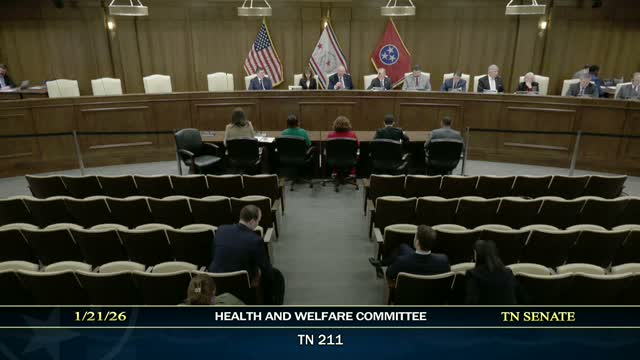
Senator Watson invited United Way representatives to brief the Health and Welfare Committee on Tennessee's 211 information-and-referral network and a one-time infrastructure funding request.
Abby Garrison of United Way of Greater Chattanooga said the 211 collaborative now includes five regional partners that together cover all 95 Tennessee counties and operate by phone, text, chat and web. "We are 5 regional partners, working together to ensure that every Tennesseean has access to the resources they need when they need them," Garrison said.
Lekelia Levin, 211 director for United Way of Greater Nashville, described the network's focus on ALICE households (asset-limited, income-constrained, employed). Levin said Tennessee's 211 network collectively handled 187,000 calls last year and provided about 193,000 referrals. She emphasized 211's disaster and surge capability, including the ability to rollover calls to other regions when local systems lose power.
Matt Marshall, of United Way of West Tennessee, outlined a vision for a unified statewide 211 backbone and requested a one-time state investment for technology modernization, disaster-ready systems, standardized resource directories, and regional capacity building. "This funding will take a system that already works... and make it more reliable, more consistent, and more scalable for all Tennesseans," Marshall said, and noted the collaborative had submitted the request to the governor's office.
Funding and operations: presenters said the collaborative's aggregate funding mix is roughly 51% private (largely United Way support), 39% local government, and about 11% state grants (programmatic). They said many referrals are to local nonprofit partners rather than state agencies; one presenter said fewer than 20% of calls are directly state-department directed. Presenters described vetting processes and follow-up referrals to financial empowerment centers and workforce services to reduce recurring need.
Committee response and next steps: Senators thanked the presenters, noted 211's role during disasters and in rural areas, and congratulated Matt Marshall on his upcoming statewide role. The committee did not take formal action on the funding request but acknowledged the request had been submitted to the governor's office and said members would consider how 211's infrastructure needs intersect with state disaster and social-service planning.
Abby Garrison of United Way of Greater Chattanooga said the 211 collaborative now includes five regional partners that together cover all 95 Tennessee counties and operate by phone, text, chat and web. "We are 5 regional partners, working together to ensure that every Tennesseean has access to the resources they need when they need them," Garrison said.
Lekelia Levin, 211 director for United Way of Greater Nashville, described the network's focus on ALICE households (asset-limited, income-constrained, employed). Levin said Tennessee's 211 network collectively handled 187,000 calls last year and provided about 193,000 referrals. She emphasized 211's disaster and surge capability, including the ability to rollover calls to other regions when local systems lose power.
Matt Marshall, of United Way of West Tennessee, outlined a vision for a unified statewide 211 backbone and requested a one-time state investment for technology modernization, disaster-ready systems, standardized resource directories, and regional capacity building. "This funding will take a system that already works... and make it more reliable, more consistent, and more scalable for all Tennesseans," Marshall said, and noted the collaborative had submitted the request to the governor's office.
Funding and operations: presenters said the collaborative's aggregate funding mix is roughly 51% private (largely United Way support), 39% local government, and about 11% state grants (programmatic). They said many referrals are to local nonprofit partners rather than state agencies; one presenter said fewer than 20% of calls are directly state-department directed. Presenters described vetting processes and follow-up referrals to financial empowerment centers and workforce services to reduce recurring need.
Committee response and next steps: Senators thanked the presenters, noted 211's role during disasters and in rural areas, and congratulated Matt Marshall on his upcoming statewide role. The committee did not take formal action on the funding request but acknowledged the request had been submitted to the governor's office and said members would consider how 211's infrastructure needs intersect with state disaster and social-service planning.
View the Full Meeting & All Its Details
This article offers just a summary. Unlock complete video, transcripts, and insights as a Founder Member.
✓
Watch full, unedited meeting videos
✓
Search every word spoken in unlimited transcripts
✓
AI summaries & real-time alerts (all government levels)
✓
Permanent access to expanding government content
30-day money-back guarantee
