House approves bill to require parental permission, accurate app-age ratings after amendment
January 23, 2026 | House, Alabama Legislative Sessions, Alabama
This article was created by AI summarizing key points discussed. AI makes mistakes, so for full details and context, please refer to the video of the full meeting. Please report any errors so we can fix them. Report an error »
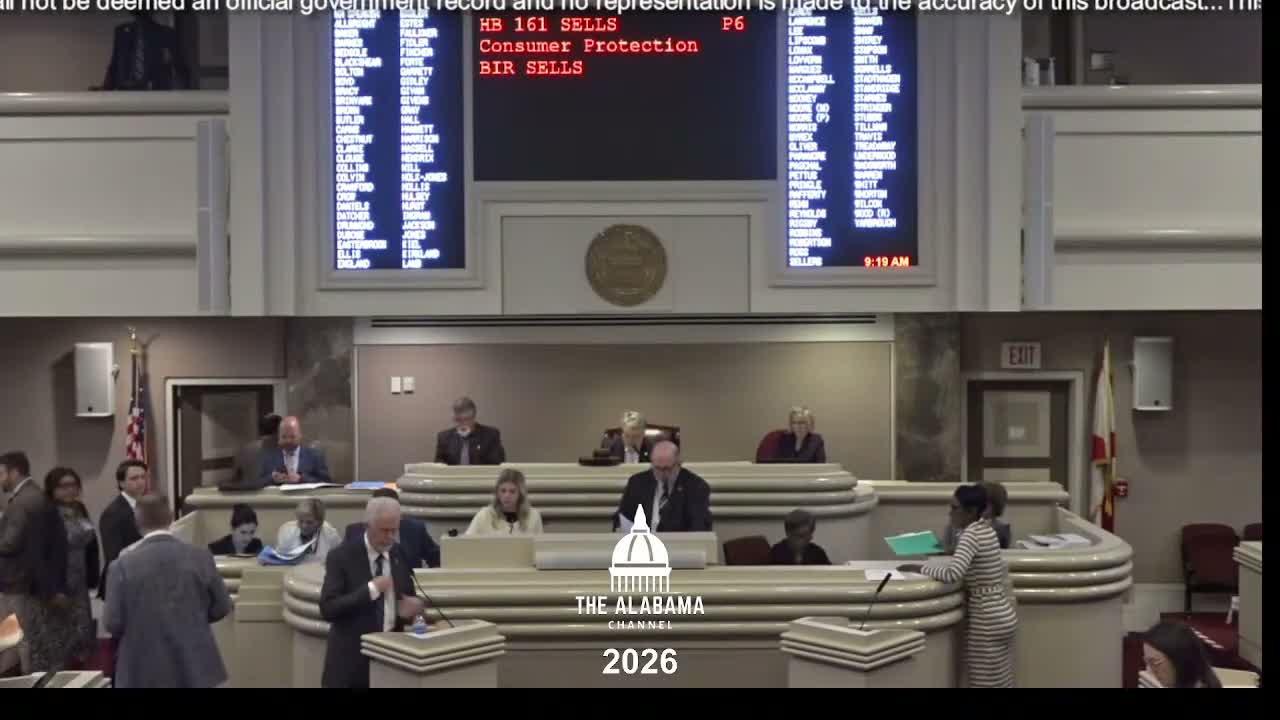
Representative Sales told colleagues HB161 aims to “put parents back in control” by requiring parental permission before apps can be downloaded to a child’s phone and requiring that an app’s age rating be accurate.
During floor debate, Representative Chestnut offered and explained a multi-part amendment that (1) broadened the bill’s definition of in-app purchases, (2) made the attorney general the exclusive enforcer of the law to avoid private suits, and (3) created a limited “safe harbor” for app-store providers that use commercially reasonable age-verification and due care practices and that reconcile parent attestations with other account data. Sales said he supported the amendments as friendly and thanked colleagues for working on the details.
Members questioned privacy and business impacts and how the bill would treat routine app updates; Representative Rafferty pressed whether the bill merely makes voluntary tools mandatory or requires new technology. Sales replied the bill uses commercially available methods and that most parental attestations will be set when a phone is configured.
The amendment was adopted and the House then voted to pass HB161 as amended. Representative Sales asked the clerk to open the bill for cosponsors after passage.
Quote attributed in debate: Representative Sales said the bill “puts parental permission before apps can be downloaded to a child's phone,” and Representative Chestnut described the amendment as providing the attorney general with exclusive jurisdiction to bring actions under the act.
The measure passed on a recorded vote as announced on the floor.
During floor debate, Representative Chestnut offered and explained a multi-part amendment that (1) broadened the bill’s definition of in-app purchases, (2) made the attorney general the exclusive enforcer of the law to avoid private suits, and (3) created a limited “safe harbor” for app-store providers that use commercially reasonable age-verification and due care practices and that reconcile parent attestations with other account data. Sales said he supported the amendments as friendly and thanked colleagues for working on the details.
Members questioned privacy and business impacts and how the bill would treat routine app updates; Representative Rafferty pressed whether the bill merely makes voluntary tools mandatory or requires new technology. Sales replied the bill uses commercially available methods and that most parental attestations will be set when a phone is configured.
The amendment was adopted and the House then voted to pass HB161 as amended. Representative Sales asked the clerk to open the bill for cosponsors after passage.
Quote attributed in debate: Representative Sales said the bill “puts parental permission before apps can be downloaded to a child's phone,” and Representative Chestnut described the amendment as providing the attorney general with exclusive jurisdiction to bring actions under the act.
The measure passed on a recorded vote as announced on the floor.
Don't Miss a Word: See the Full Meeting!
Go beyond summaries. Unlock every video, transcript, and key insight with a Founder Membership.
✓
Get instant access to full meeting videos
✓
Search and clip any phrase from complete transcripts
✓
Receive AI-powered summaries & custom alerts
✓
Enjoy lifetime, unrestricted access to government data
30-day money-back guarantee
