House passes 'Trey’s Law' to bar nondisclosure clauses that silence abuse survivors
January 23, 2026 | House, Alabama Legislative Sessions, Alabama
This article was created by AI summarizing key points discussed. AI makes mistakes, so for full details and context, please refer to the video of the full meeting. Please report any errors so we can fix them. Report an error »
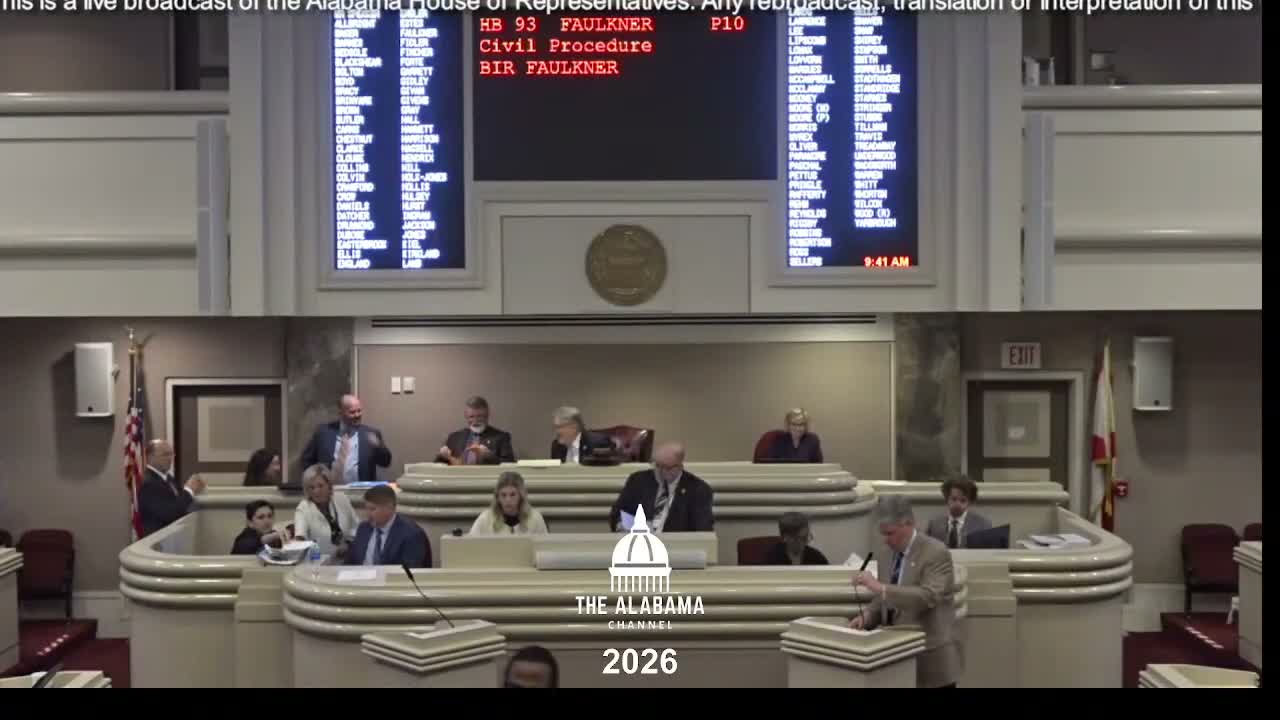
Representative Faulkner introduced HB93, commonly referred to on the floor as “Trey’s Law,” explaining the measure would make unenforceable any contractual provision that prohibits a victim from disclosing facts of sexual or child abuse, sexual assault, or trafficking. Faulkner told the House the law is named for Trey Carlot (spelled variably in discussion), a victim whose settlement included a nondisclosure provision.
Faulkner said the bill does not prevent confidentiality for settlement amounts or other terms, but it voids provisions that bar survivors from discussing the facts of their abuse. He said the proposal is narrow and intended to stop misuse of nondisclosure agreements in abuse settlements. Members asked about scope and whether the bill creates new private causes of action; Faulkner and colleagues said the bill grants enforcement mechanisms and leaves confidentiality of settlement amounts intact.
Multiple members shared personal or constituent experiences explaining why they supported the bill. Representative Hall described cases where NDAs contributed to retraumatization. Representative Rose and others spoke in support. After floor debate and questions, the House gave final passage by a recorded vote.
Representative Faulkner said the bill's purpose is to prevent the misuse of NDAs to silence survivors and to restore survivors' ability to speak about wrongdoing.
Faulkner said the bill does not prevent confidentiality for settlement amounts or other terms, but it voids provisions that bar survivors from discussing the facts of their abuse. He said the proposal is narrow and intended to stop misuse of nondisclosure agreements in abuse settlements. Members asked about scope and whether the bill creates new private causes of action; Faulkner and colleagues said the bill grants enforcement mechanisms and leaves confidentiality of settlement amounts intact.
Multiple members shared personal or constituent experiences explaining why they supported the bill. Representative Hall described cases where NDAs contributed to retraumatization. Representative Rose and others spoke in support. After floor debate and questions, the House gave final passage by a recorded vote.
Representative Faulkner said the bill's purpose is to prevent the misuse of NDAs to silence survivors and to restore survivors' ability to speak about wrongdoing.
View the Full Meeting & All Its Details
This article offers just a summary. Unlock complete video, transcripts, and insights as a Founder Member.
✓
Watch full, unedited meeting videos
✓
Search every word spoken in unlimited transcripts
✓
AI summaries & real-time alerts (all government levels)
✓
Permanent access to expanding government content
30-day money-back guarantee
