Judiciary Committee advances anti-grooming, anti-cloning and tougher prostitution penalties; accepts amendment on self-defense bill
January 22, 2026 | Judiciary, House, Alabama Legislative Sessions, Alabama
This article was created by AI summarizing key points discussed. AI makes mistakes, so for full details and context, please refer to the video of the full meeting. Please report any errors so we can fix them. Report an error »
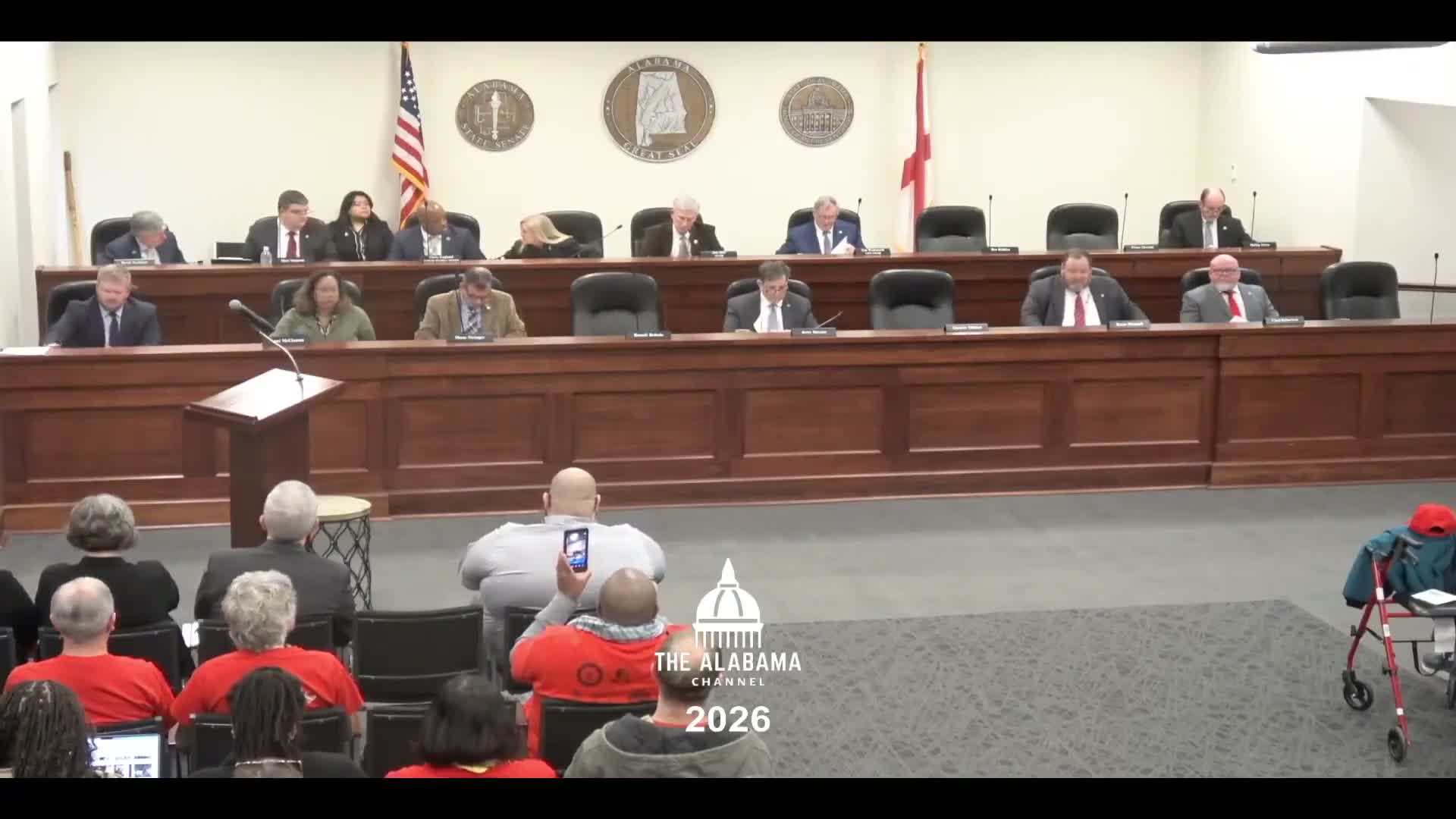
The Judiciary Committee advanced several criminal-justice and administrative bills in a fast-moving session. Sponsors and committee members moved and seconded favorable reports on multiple items and adopted targeted amendments before sending some measures to subcommittee for refinement.
Representative Gidley introduced HB105, described in the hearing as an "anti-grooming" bill that expands current offenses to prohibit electronic enticement and clarify jurisdictional rules. "This is what we call an anti grooming bill," he told the committee, and said prosecutors and the District Attorneys' Office had vetted changes. A motion to give the bill a favorable/fair report was moved and seconded and carried by voice vote.
Representative Rigsby presented HB111, a measure the sponsor described as pre-emptive guardrails against human cloning: the bill would prohibit use of a person's genetic material to create an embryo or zygote intended to produce a human clone. The sponsor clarified the bill "does not apply to in vitro fertilization or fertility enhancing drugs" and also exempts agricultural cloning. The committee recorded a favorable report for the bill.
On HB192, which would create a rebuttable presumption against a defendant's claim of justified force if the defendant concealed, altered or disposed of the weapon used, the committee accepted an amendment that clarified the codified language referring to a "deadly weapon or dangerous instrument." Sponsor testimony explained the intent: "If you dump the gun that you claim you used in self defense, there's gonna be a presumption that you did not act in self defense," and the amendment was accepted before the bill was reported favorably as amended.
Representative Bolton presented HB158, increasing penalties for certain prostitution offenses at the request of the West Alabama Human Trafficking Task Force. The bill raises the promotion-of-prostitution offense in some instances from a misdemeanor to a felony and alters penalties for repeat participants; an amendment added a requirement that those jailed pay housing, maintenance and medical costs and clarified credit for time served. The amendment was adopted and the bill received a favorable report as amended.
Representative Estes introduced HB132, which would add a classification for causing serious physical injury to a child in an "educational environment." Committee members expressed concern that the current draft could criminalize ordinary student fights; the chair referred the bill to the criminal subcommittee to draft narrower language focused on non-student attackers or adults who come onto campus.
The committee also approved a technical bill (2149) clarifying that the board of commissioners of the Alabama State Bar is an agency of the judicial branch. Several bills were carried over for additional consideration next week; the meeting ended with the chair thanking witnesses and members.
Representative Gidley introduced HB105, described in the hearing as an "anti-grooming" bill that expands current offenses to prohibit electronic enticement and clarify jurisdictional rules. "This is what we call an anti grooming bill," he told the committee, and said prosecutors and the District Attorneys' Office had vetted changes. A motion to give the bill a favorable/fair report was moved and seconded and carried by voice vote.
Representative Rigsby presented HB111, a measure the sponsor described as pre-emptive guardrails against human cloning: the bill would prohibit use of a person's genetic material to create an embryo or zygote intended to produce a human clone. The sponsor clarified the bill "does not apply to in vitro fertilization or fertility enhancing drugs" and also exempts agricultural cloning. The committee recorded a favorable report for the bill.
On HB192, which would create a rebuttable presumption against a defendant's claim of justified force if the defendant concealed, altered or disposed of the weapon used, the committee accepted an amendment that clarified the codified language referring to a "deadly weapon or dangerous instrument." Sponsor testimony explained the intent: "If you dump the gun that you claim you used in self defense, there's gonna be a presumption that you did not act in self defense," and the amendment was accepted before the bill was reported favorably as amended.
Representative Bolton presented HB158, increasing penalties for certain prostitution offenses at the request of the West Alabama Human Trafficking Task Force. The bill raises the promotion-of-prostitution offense in some instances from a misdemeanor to a felony and alters penalties for repeat participants; an amendment added a requirement that those jailed pay housing, maintenance and medical costs and clarified credit for time served. The amendment was adopted and the bill received a favorable report as amended.
Representative Estes introduced HB132, which would add a classification for causing serious physical injury to a child in an "educational environment." Committee members expressed concern that the current draft could criminalize ordinary student fights; the chair referred the bill to the criminal subcommittee to draft narrower language focused on non-student attackers or adults who come onto campus.
The committee also approved a technical bill (2149) clarifying that the board of commissioners of the Alabama State Bar is an agency of the judicial branch. Several bills were carried over for additional consideration next week; the meeting ended with the chair thanking witnesses and members.
View the Full Meeting & All Its Details
This article offers just a summary. Unlock complete video, transcripts, and insights as a Founder Member.
✓
Watch full, unedited meeting videos
✓
Search every word spoken in unlimited transcripts
✓
AI summaries & real-time alerts (all government levels)
✓
Permanent access to expanding government content
30-day money-back guarantee
