Senate committee advances adult-use cannabis marketplace and enforcement bills, setting Jan. 1, 2027 start
January 24, 2026 | 2026 Legislature VA, Virginia
This article was created by AI summarizing key points discussed. AI makes mistakes, so for full details and context, please refer to the video of the full meeting. Please report any errors so we can fix them. Report an error »
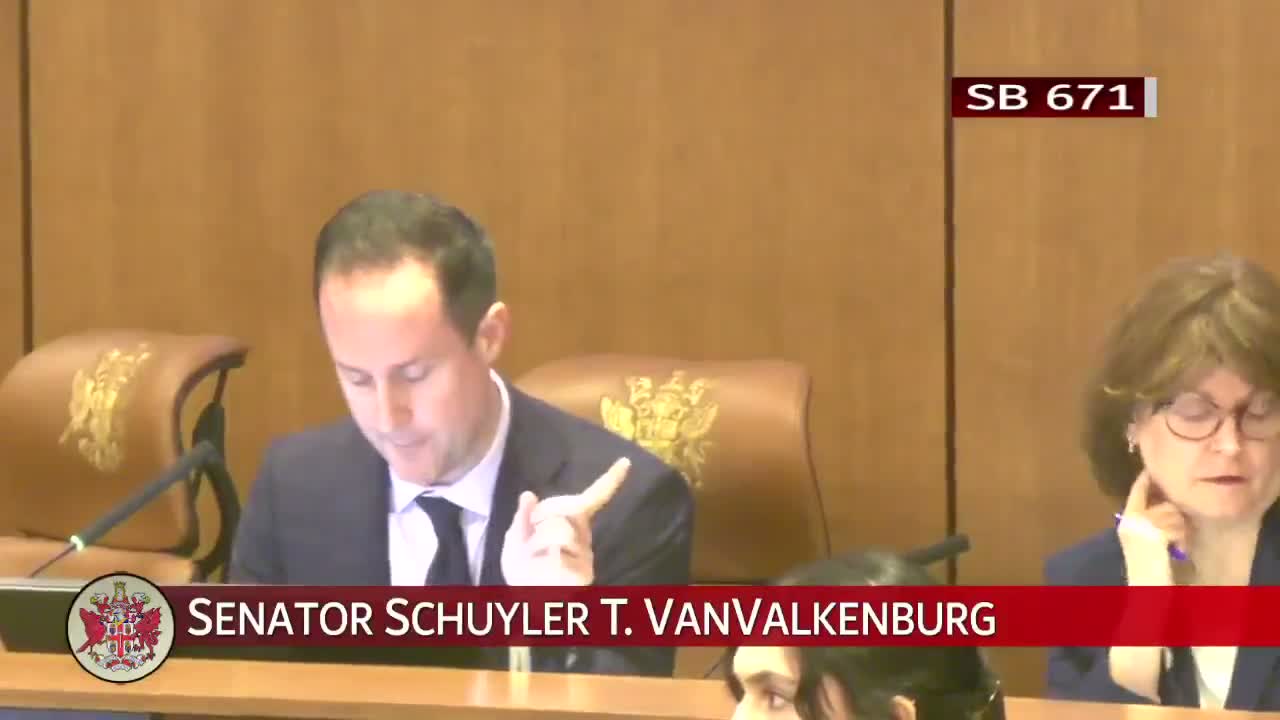
Senators on the Rehabilitation and Social Services Committee moved the state closer to a regulated adult-use cannabis marketplace while advancing a companion enforcement bill intended to curb the illicit market.
Senator (S37) explained that the committee adopted a substitute that incorporates Senator Rouse’s SB 671 into SB 542; the substitute delays the retail start date to Jan. 1, 2027, imposes an 8% state tax, allows a local tax up to 3.5%, eliminates a referendum requirement, and includes a conversion pathway for medical processors through a one-time $10,000,000 conversion payment noted in the substitute’s medical-cannabis chapter. The substitute also defines license tiers and canopy-size limits (Tier 1: 5,000 sq. ft.; Tier 2: 10,000; Tier 3: 15,000; Tier 4: 25,000; Tier 5: 35,000), modifies impact-license eligibility criteria, and establishes an equity reinvestment fund to support scholarships, grants and an equity loan fund.
Supporters told the committee a regulated market would reduce untested products and provide consumer protections. Jason Blanchett, president of the Virginia Cannabis Association (S38), and multiple licensed medical processors and small-business representatives said the framework creates clarity for licensing and banking. Opponents, including toxicologist Dr. Elise Osterweil (S27) and the Virginia Catholic Conference (S36), urged caution on public-health risks for youth and said more study is needed on long-term harms.
After debate and testimony, the committee voted to report the marketplace substitute and refer SB 542 to the Courts of Justice committee (recorded roll: 8 in favor, 7 opposed).
Separately, Senator Ayers presented SB 543 to provide enforcement mechanisms for the market: expanded licensing sanctions (suspension or revocation for repeated violations), authority for the Cannabis Control Authority (CCA) to order cease-and-desist activity and seize illicit products, a multi-agency enforcement task force, minimum training standards for law enforcement tied to the market opening, and a required decal for licensed retail stores to identify permitted premises. The bill creates per-day penalties for noncompliant displays or use of false decals.
SB 543 drew broad support from health organizations, industry groups and banks that argued enforcement is essential to protect consumers and enable regulated businesses to operate safely; some medical operators asked for additional due-process protections comparable to those afforded existing medical licensees. The committee voted to report and re-refer SB 543 to finance (roll: 15–0).
The sponsors said further enforcement and technical details will be addressed in follow-up legislation and in Senate Finance deliberations on tax provisions. The committee set limited testimony time to focus discussion on market design and deferred separate enforcement-related bills for additional consideration.
Senator (S37) explained that the committee adopted a substitute that incorporates Senator Rouse’s SB 671 into SB 542; the substitute delays the retail start date to Jan. 1, 2027, imposes an 8% state tax, allows a local tax up to 3.5%, eliminates a referendum requirement, and includes a conversion pathway for medical processors through a one-time $10,000,000 conversion payment noted in the substitute’s medical-cannabis chapter. The substitute also defines license tiers and canopy-size limits (Tier 1: 5,000 sq. ft.; Tier 2: 10,000; Tier 3: 15,000; Tier 4: 25,000; Tier 5: 35,000), modifies impact-license eligibility criteria, and establishes an equity reinvestment fund to support scholarships, grants and an equity loan fund.
Supporters told the committee a regulated market would reduce untested products and provide consumer protections. Jason Blanchett, president of the Virginia Cannabis Association (S38), and multiple licensed medical processors and small-business representatives said the framework creates clarity for licensing and banking. Opponents, including toxicologist Dr. Elise Osterweil (S27) and the Virginia Catholic Conference (S36), urged caution on public-health risks for youth and said more study is needed on long-term harms.
After debate and testimony, the committee voted to report the marketplace substitute and refer SB 542 to the Courts of Justice committee (recorded roll: 8 in favor, 7 opposed).
Separately, Senator Ayers presented SB 543 to provide enforcement mechanisms for the market: expanded licensing sanctions (suspension or revocation for repeated violations), authority for the Cannabis Control Authority (CCA) to order cease-and-desist activity and seize illicit products, a multi-agency enforcement task force, minimum training standards for law enforcement tied to the market opening, and a required decal for licensed retail stores to identify permitted premises. The bill creates per-day penalties for noncompliant displays or use of false decals.
SB 543 drew broad support from health organizations, industry groups and banks that argued enforcement is essential to protect consumers and enable regulated businesses to operate safely; some medical operators asked for additional due-process protections comparable to those afforded existing medical licensees. The committee voted to report and re-refer SB 543 to finance (roll: 15–0).
The sponsors said further enforcement and technical details will be addressed in follow-up legislation and in Senate Finance deliberations on tax provisions. The committee set limited testimony time to focus discussion on market design and deferred separate enforcement-related bills for additional consideration.
View the Full Meeting & All Its Details
This article offers just a summary. Unlock complete video, transcripts, and insights as a Founder Member.
✓
Watch full, unedited meeting videos
✓
Search every word spoken in unlimited transcripts
✓
AI summaries & real-time alerts (all government levels)
✓
Permanent access to expanding government content
30-day money-back guarantee
