Kansas committee hears competing views on HB 2476 to align state pesticide labels with federal rules
January 22, 2026 | Committee on Agriculture and Natural Resources, Standing, HOUSE OF REPRESENTATIVES, Committees, Legislative, Kansas
This article was created by AI summarizing key points discussed. AI makes mistakes, so for full details and context, please refer to the video of the full meeting. Please report any errors so we can fix them. Report an error »
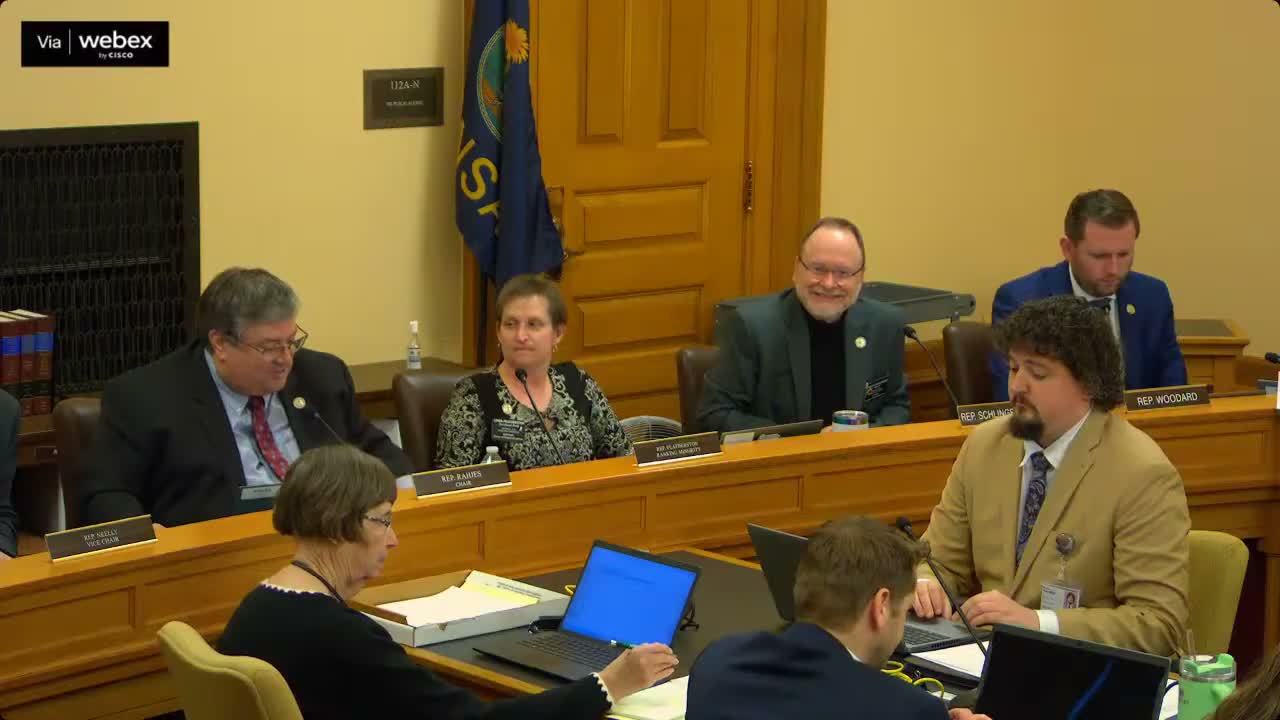
TOPEKA, Kan. — The House Committee on Agriculture and Natural Resources heard testimony Tuesday on House Bill 2476, a proposal to allow federal pesticide warning and labeling requirements to satisfy Kansas state labeling obligations.
Proponents including agribusiness groups, farm cooperatives and trade associations urged the committee to approve the bill as a clarification of existing law. "This is a labeling bill," Randy Stuckey of Kansas Agribusiness told the committee, saying the bill simply would put the Kansas Supreme Court's 1994 Jenkins decision into statute and make clear that conflicts with EPA-approved labels are governed by federal law. Kyle Hamilton, the reviser who summarized the measure for the committee, said pesticides that meet federal human-health assessments or federal carcinogenicity classifications would satisfy state health or safety labeling requirements under the bill. The fiscal note, read by Walter Schmidt of KLRD, reported the Kansas Department of Agriculture expects no fiscal impact from enactment.
Opponents, including conservation groups and some farmer advocates, said the measure would effectively limit Kansans’ access to legal recourse against manufacturers. "This bill would effectively hand legal immunity to foreign chemical corporations for more than 57,000 pesticide products," Kelly Ryerson of American Regeneration said in remote testimony, arguing that EPA assessments rely heavily on industry-supplied data. Several opponents asked the committee to either reject the bill or substantially revise its wording to preserve state oversight and clear legal remedies for people harmed by pesticide exposure.
Committee members pressed both sides on specifics. Supporters said the bill would not change state authority over drift or misapplication claims — matters they said remain within the state's regulatory and civil frameworks — and stressed that product-liability claims for defective products would still be available. "Nothing in this bill says that you can't bring in Kansas a product liability case," Randy Stuckey said. Opponents countered that codifying federal preemption in statute could make it harder for plaintiffs to pursue certain failure-to-warn claims in state court.
Witnesses also discussed practical consequences. Proponents said inconsistent state standards discourage manufacturers from registering products in some states and risk limiting farmers’ access to crop-protection tools; opponents cited public-health and environmental risks, and called for greater education and safer alternatives rather than the statutory change.
The committee closed the hearing without a vote and said it will return to the bill Monday to continue consideration. The chair also noted written testimony filed by multiple organizations and individuals in the committee record.
No formal motions or votes were taken during the hearing.
Proponents including agribusiness groups, farm cooperatives and trade associations urged the committee to approve the bill as a clarification of existing law. "This is a labeling bill," Randy Stuckey of Kansas Agribusiness told the committee, saying the bill simply would put the Kansas Supreme Court's 1994 Jenkins decision into statute and make clear that conflicts with EPA-approved labels are governed by federal law. Kyle Hamilton, the reviser who summarized the measure for the committee, said pesticides that meet federal human-health assessments or federal carcinogenicity classifications would satisfy state health or safety labeling requirements under the bill. The fiscal note, read by Walter Schmidt of KLRD, reported the Kansas Department of Agriculture expects no fiscal impact from enactment.
Opponents, including conservation groups and some farmer advocates, said the measure would effectively limit Kansans’ access to legal recourse against manufacturers. "This bill would effectively hand legal immunity to foreign chemical corporations for more than 57,000 pesticide products," Kelly Ryerson of American Regeneration said in remote testimony, arguing that EPA assessments rely heavily on industry-supplied data. Several opponents asked the committee to either reject the bill or substantially revise its wording to preserve state oversight and clear legal remedies for people harmed by pesticide exposure.
Committee members pressed both sides on specifics. Supporters said the bill would not change state authority over drift or misapplication claims — matters they said remain within the state's regulatory and civil frameworks — and stressed that product-liability claims for defective products would still be available. "Nothing in this bill says that you can't bring in Kansas a product liability case," Randy Stuckey said. Opponents countered that codifying federal preemption in statute could make it harder for plaintiffs to pursue certain failure-to-warn claims in state court.
Witnesses also discussed practical consequences. Proponents said inconsistent state standards discourage manufacturers from registering products in some states and risk limiting farmers’ access to crop-protection tools; opponents cited public-health and environmental risks, and called for greater education and safer alternatives rather than the statutory change.
The committee closed the hearing without a vote and said it will return to the bill Monday to continue consideration. The chair also noted written testimony filed by multiple organizations and individuals in the committee record.
No formal motions or votes were taken during the hearing.
View the Full Meeting & All Its Details
This article offers just a summary. Unlock complete video, transcripts, and insights as a Founder Member.
✓
Watch full, unedited meeting videos
✓
Search every word spoken in unlimited transcripts
✓
AI summaries & real-time alerts (all government levels)
✓
Permanent access to expanding government content
30-day money-back guarantee
