Appropriations committee hears bill to create legislative fiscal integrity auditor
January 23, 2026 | Committee on Appropriations, Standing, HOUSE OF REPRESENTATIVES, Committees, Legislative, Kansas
This article was created by AI summarizing key points discussed. AI makes mistakes, so for full details and context, please refer to the video of the full meeting. Please report any errors so we can fix them. Report an error »
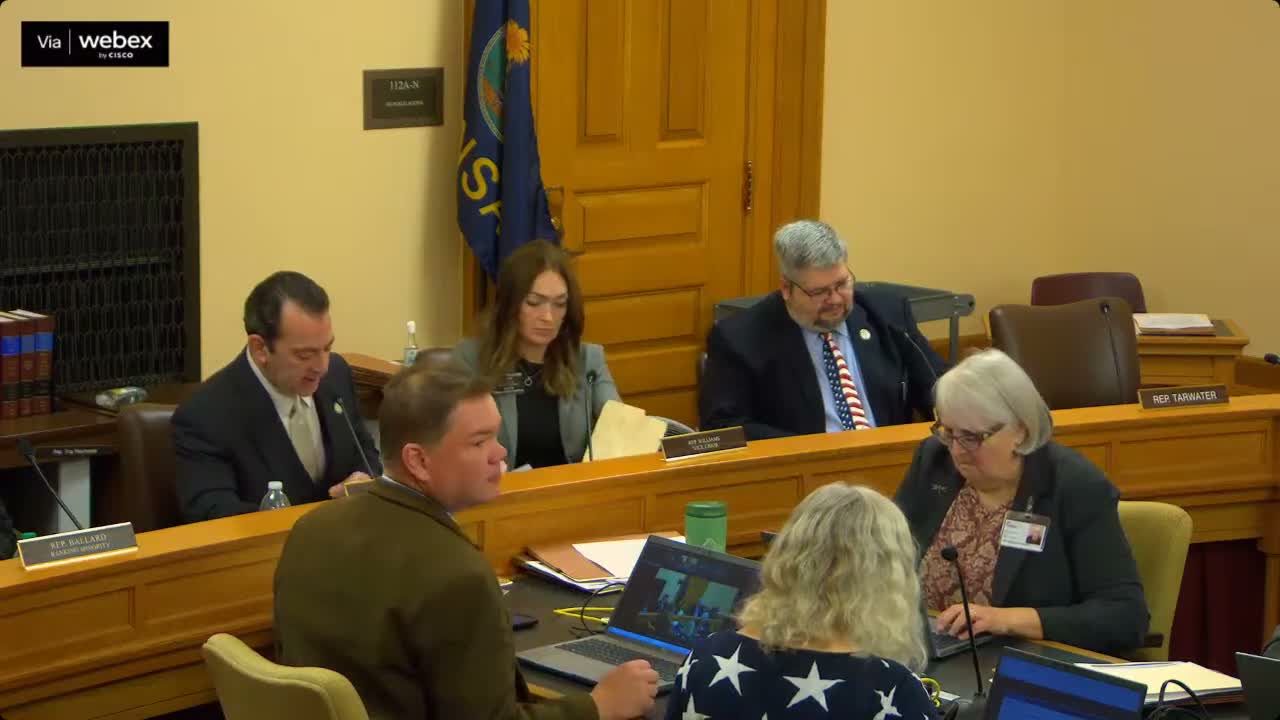
The Committee on Appropriations held a hearing on House Bill 24‑27, which would create a legislative fiscal integrity auditor appointed by the Legislative Coordinating Council and reporting to the Speaker of the House and the President of the Senate.
Jill Walters of the Office of the Reviser of Statutes briefed members on the measure, saying, “House bill 24 27, like the chairman said, establishes the position of fiscal integrity auditor.” Walters summarized duties in the bill: unlimited access to state accounting systems (currently the SMART and SHARP systems and successors), authority to examine agency books and records for fiscal purpose, and annual reports to legislative budget committees while remaining subject to existing confidentiality statutes.
Vice Chair Ayesha Williams testified in support, saying the position aims to reduce waste and improve accountability. “My favorite two words up here really are accountability and transparency,” Williams said, arguing the role would help the legislature "close the loop" on whether appropriations were spent consistent with legislative intent.
Committee members pressed for specifics. The chair (Representative Buehler) and others asked whether the auditor would see personal records and whether the statute should explicitly exclude access to medical or dependent information; Walters and Williams said confidentiality protections and statutory penalties would apply and agreed language could be tightened to exclude personal health and dependent data.
Members also questioned governance, staffing and cost. The bill as filed named one auditor, but leadership plans to ask for two — one for each chamber — which would increase the fiscal note. Williams and staff disputed some line items in the fiscal note; the brief referenced $225,000 per position and a separate $25,000 equipment/office line that members said may be unnecessary if chambers supply existing infrastructure. Walters clarified that the bill allows removal of the auditor by a five‑member vote of the Legislative Coordinating Council, mirroring removal language for other legislative officers.
Discussion touched on whether existing offices could perform the same work. Several members asked whether Legislative Post Audit, KLRD or the fiscal affairs office could handle the function; proponents said the auditor’s perspective and direct leadership access (speaker/president) are essential and that the AG’s fraud unit does not have SMART access.
The committee discussed estimates of questionable expenditures provided by the Speaker Pro Tem's office: an initial large estimate was cited informally (one member referenced an early figure near $1 billion), a subsequent review was described as near $600 million, and a more narrowly focused review of State General Fund transactions yielded roughly $16,000,000 identified as potentially questionable. Members emphasized those numbers were preliminary and that full verification would require substantial audit work.
No vote was taken on HB 24‑27; the chair closed the hearing after proponent testimony and indicated amendments would be considered (including tightened confidentiality language and a request for two auditors). The committee then moved on to other agenda items.
Jill Walters of the Office of the Reviser of Statutes briefed members on the measure, saying, “House bill 24 27, like the chairman said, establishes the position of fiscal integrity auditor.” Walters summarized duties in the bill: unlimited access to state accounting systems (currently the SMART and SHARP systems and successors), authority to examine agency books and records for fiscal purpose, and annual reports to legislative budget committees while remaining subject to existing confidentiality statutes.
Vice Chair Ayesha Williams testified in support, saying the position aims to reduce waste and improve accountability. “My favorite two words up here really are accountability and transparency,” Williams said, arguing the role would help the legislature "close the loop" on whether appropriations were spent consistent with legislative intent.
Committee members pressed for specifics. The chair (Representative Buehler) and others asked whether the auditor would see personal records and whether the statute should explicitly exclude access to medical or dependent information; Walters and Williams said confidentiality protections and statutory penalties would apply and agreed language could be tightened to exclude personal health and dependent data.
Members also questioned governance, staffing and cost. The bill as filed named one auditor, but leadership plans to ask for two — one for each chamber — which would increase the fiscal note. Williams and staff disputed some line items in the fiscal note; the brief referenced $225,000 per position and a separate $25,000 equipment/office line that members said may be unnecessary if chambers supply existing infrastructure. Walters clarified that the bill allows removal of the auditor by a five‑member vote of the Legislative Coordinating Council, mirroring removal language for other legislative officers.
Discussion touched on whether existing offices could perform the same work. Several members asked whether Legislative Post Audit, KLRD or the fiscal affairs office could handle the function; proponents said the auditor’s perspective and direct leadership access (speaker/president) are essential and that the AG’s fraud unit does not have SMART access.
The committee discussed estimates of questionable expenditures provided by the Speaker Pro Tem's office: an initial large estimate was cited informally (one member referenced an early figure near $1 billion), a subsequent review was described as near $600 million, and a more narrowly focused review of State General Fund transactions yielded roughly $16,000,000 identified as potentially questionable. Members emphasized those numbers were preliminary and that full verification would require substantial audit work.
No vote was taken on HB 24‑27; the chair closed the hearing after proponent testimony and indicated amendments would be considered (including tightened confidentiality language and a request for two auditors). The committee then moved on to other agenda items.
View the Full Meeting & All Its Details
This article offers just a summary. Unlock complete video, transcripts, and insights as a Founder Member.
✓
Watch full, unedited meeting videos
✓
Search every word spoken in unlimited transcripts
✓
AI summaries & real-time alerts (all government levels)
✓
Permanent access to expanding government content
30-day money-back guarantee
