Budget committee hears ARPA SRF update: $1.7 billion awarded, major projects still show unspent balances
January 22, 2026 | Committee on Appropriations, Standing, HOUSE OF REPRESENTATIVES, Committees, Legislative, Kansas
This article was created by AI summarizing key points discussed. AI makes mistakes, so for full details and context, please refer to the video of the full meeting. Please report any errors so we can fix them. Report an error »
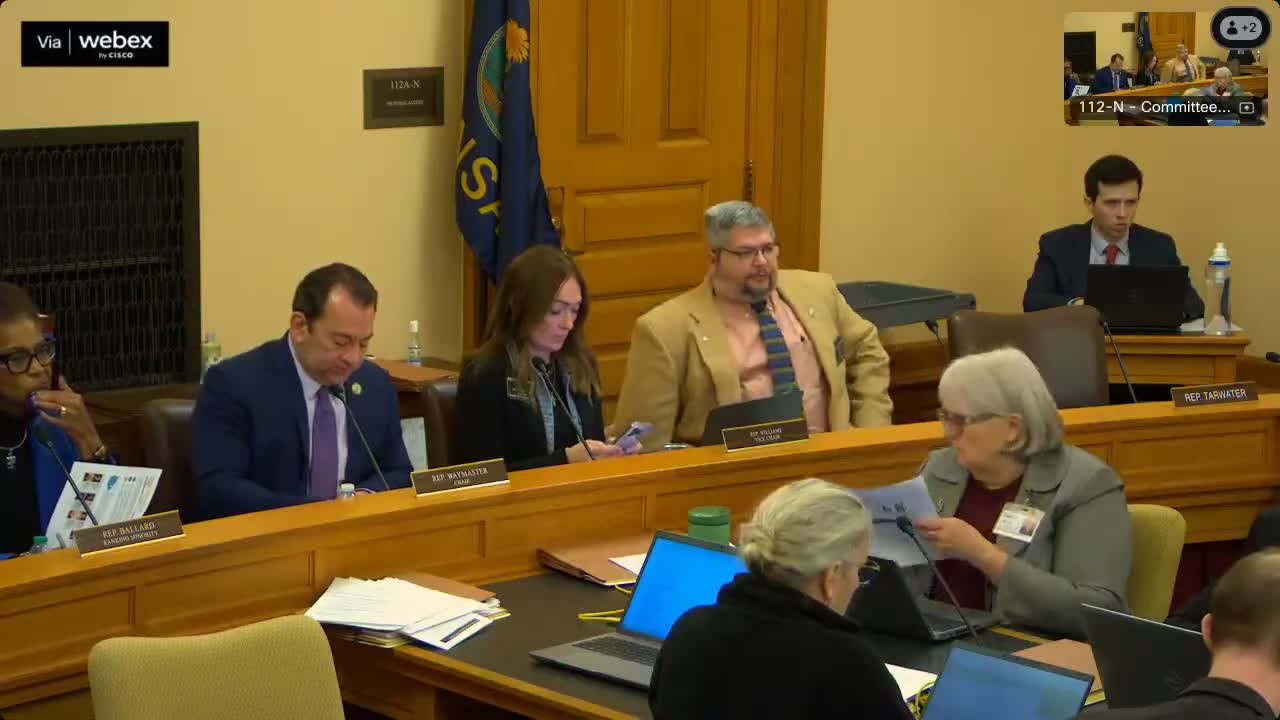
Dylan Dear, assistant director of fiscal affairs for the Kansas Legislative Research Department, briefed the committee on the status of American Rescue Plan Act State Fiscal Recovery Fund (ARPA SRF) expenditures and allocations.
Dear summarized the program-level totals: the committee packet lists SRF awards of about $1.6 billion and accumulated interest of $96.5 million, which he described as roughly $1.7 billion in total available funding. From those totals, he said about $1.2 billion had been allocated to projects; of that allocated amount the packet shows $914.7 million expended and about $264.2 million remaining as of the December update provided to the Legislative Budget Committee.
Dear walked members through examples of active projects with remaining balances: recovery office administrative costs (about $9.4 million remaining of $25.7 million allocated), the learning loss recovery program (about $10 million remaining of $50 million), a Kansas City, Kansas Community College project (about $6 million remaining of $12 million allocated), broadband connectivity (about $14 million remaining of a $30 million allocation), and a small‑town water and sewer line with about $9.1 million remaining of $10 million allocated. He also noted larger capital projects with substantial remaining balances, including Wichita State’s biomedical campus and a state defense building remodel.
On reallocation and scope: Dear told the committee that, in general, new allocations are largely closed (the deadline for new allocations has passed) and that most reallocation would be limited to expanding existing projects or using narrow exceptions. Andrea Clark of the Office of Recovery explained Treasury guidance allows an existing project obligation to be amended if the amended use is substantially the same in scope; she confirmed projects can be amended but reminded members federal deadlines (extensions) apply.
Committee members asked why some balances remain large despite upcoming events such as the World Cup and whether federal security dollars and transportation timing explain slow spend rates; staff answered that transportation‑focused work tends to spend closer to event dates and that multiple federal and state funding streams complicate the accounting for broadband. Members also pressed staff about a COVID small‑business reimbursement program that had very limited uptake; staff said restrictive statutory eligibility and a small number of applicants limited use.
Next steps: committee members requested follow‑up records (applications/approvals for the business relief program, details on broadband funding streams, and a clearer accounting of what remains available for reallocation). Office of Recovery and Department of Commerce staff were identified as follow‑ups for those questions.
All figures stated are taken from the committee presentation and packet; some transcript lines include formatting artifacts and committee staff acknowledged they will double‑check whether certain listed balances (in the packet) reflect transcription formatting or reporting conventions.
Dear summarized the program-level totals: the committee packet lists SRF awards of about $1.6 billion and accumulated interest of $96.5 million, which he described as roughly $1.7 billion in total available funding. From those totals, he said about $1.2 billion had been allocated to projects; of that allocated amount the packet shows $914.7 million expended and about $264.2 million remaining as of the December update provided to the Legislative Budget Committee.
Dear walked members through examples of active projects with remaining balances: recovery office administrative costs (about $9.4 million remaining of $25.7 million allocated), the learning loss recovery program (about $10 million remaining of $50 million), a Kansas City, Kansas Community College project (about $6 million remaining of $12 million allocated), broadband connectivity (about $14 million remaining of a $30 million allocation), and a small‑town water and sewer line with about $9.1 million remaining of $10 million allocated. He also noted larger capital projects with substantial remaining balances, including Wichita State’s biomedical campus and a state defense building remodel.
On reallocation and scope: Dear told the committee that, in general, new allocations are largely closed (the deadline for new allocations has passed) and that most reallocation would be limited to expanding existing projects or using narrow exceptions. Andrea Clark of the Office of Recovery explained Treasury guidance allows an existing project obligation to be amended if the amended use is substantially the same in scope; she confirmed projects can be amended but reminded members federal deadlines (extensions) apply.
Committee members asked why some balances remain large despite upcoming events such as the World Cup and whether federal security dollars and transportation timing explain slow spend rates; staff answered that transportation‑focused work tends to spend closer to event dates and that multiple federal and state funding streams complicate the accounting for broadband. Members also pressed staff about a COVID small‑business reimbursement program that had very limited uptake; staff said restrictive statutory eligibility and a small number of applicants limited use.
Next steps: committee members requested follow‑up records (applications/approvals for the business relief program, details on broadband funding streams, and a clearer accounting of what remains available for reallocation). Office of Recovery and Department of Commerce staff were identified as follow‑ups for those questions.
All figures stated are taken from the committee presentation and packet; some transcript lines include formatting artifacts and committee staff acknowledged they will double‑check whether certain listed balances (in the packet) reflect transcription formatting or reporting conventions.
Don't Miss a Word: See the Full Meeting!
Go beyond summaries. Unlock every video, transcript, and key insight with a Founder Membership.
✓
Get instant access to full meeting videos
✓
Search and clip any phrase from complete transcripts
✓
Receive AI-powered summaries & custom alerts
✓
Enjoy lifetime, unrestricted access to government data
30-day money-back guarantee
