Committee hears State Board update on literacy training, LETRS completion and plans for classroom implementation
January 22, 2026 | Committee on Education, Standing, HOUSE OF REPRESENTATIVES, Committees, Legislative, Kansas
This article was created by AI summarizing key points discussed. AI makes mistakes, so for full details and context, please refer to the video of the full meeting. Please report any errors so we can fix them. Report an error »
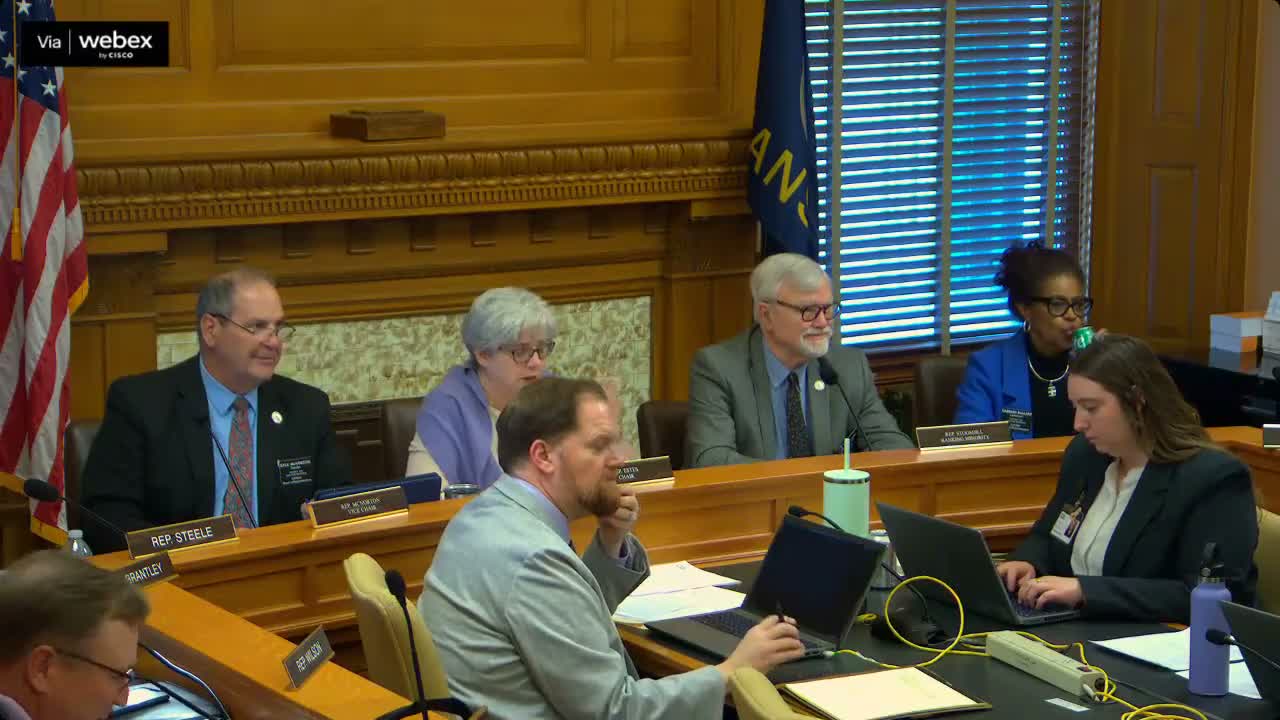
The Committee on Education received a detailed update from State Board representatives on statewide literacy training and implementation of LETRS and the Blueprint for Literacy.
Doctor Harwood outlined licensure changes tied to a "seal of literacy" required by July 1, 2028, for certain educator positions. He described three pathways to the seal—approved trainings, the Foundations of Science of Reading courses, and tests—and provided counts of participation: for example, 494 of 1,470 early childhood positions have a seal (about 35%), and roughly 6,523 have completed the foundations course in elementary education with 7,819 still in training. Harwood said the State Board anticipates spending approximately $25,000,000 in ESSER funds on LETRS-related training and has contracted for trainer capacity to reach more educators.
Committee members pressed on pass rates and long-term implementation. Harwood reported a LETRS pass score requirement of 80% and a pass rate of about 97% (excluding a summer anomaly); an ETS-type test pass rate was noted around 89%. He and other witnesses emphasized that training alone will not raise student test scores without follow-through in classroom practice and implementation supports for districts. Dr. Lane, who chaired a steering committee under the Blueprint for Literacy, urged a comprehensive pre-K–16 literacy plan that aligns higher education, K–12, professional learning, instructional materials and screening/intervention so training yields measurable gains.
Members asked for reconciled data and discussion of metrics to evaluate long-term outcomes. Chair Rowan Estes signaled plans for future roundtables and additional briefings, including a scheduled FastBridge presentation to discuss screening tools. The committee reserved the right to call State Board staff back for implementation details and data reconciliation.
Doctor Harwood outlined licensure changes tied to a "seal of literacy" required by July 1, 2028, for certain educator positions. He described three pathways to the seal—approved trainings, the Foundations of Science of Reading courses, and tests—and provided counts of participation: for example, 494 of 1,470 early childhood positions have a seal (about 35%), and roughly 6,523 have completed the foundations course in elementary education with 7,819 still in training. Harwood said the State Board anticipates spending approximately $25,000,000 in ESSER funds on LETRS-related training and has contracted for trainer capacity to reach more educators.
Committee members pressed on pass rates and long-term implementation. Harwood reported a LETRS pass score requirement of 80% and a pass rate of about 97% (excluding a summer anomaly); an ETS-type test pass rate was noted around 89%. He and other witnesses emphasized that training alone will not raise student test scores without follow-through in classroom practice and implementation supports for districts. Dr. Lane, who chaired a steering committee under the Blueprint for Literacy, urged a comprehensive pre-K–16 literacy plan that aligns higher education, K–12, professional learning, instructional materials and screening/intervention so training yields measurable gains.
Members asked for reconciled data and discussion of metrics to evaluate long-term outcomes. Chair Rowan Estes signaled plans for future roundtables and additional briefings, including a scheduled FastBridge presentation to discuss screening tools. The committee reserved the right to call State Board staff back for implementation details and data reconciliation.
Don't Miss a Word: See the Full Meeting!
Go beyond summaries. Unlock every video, transcript, and key insight with a Founder Membership.
✓
Get instant access to full meeting videos
✓
Search and clip any phrase from complete transcripts
✓
Receive AI-powered summaries & custom alerts
✓
Enjoy lifetime, unrestricted access to government data
30-day money-back guarantee
