Kansas judicial branch seeks specialty-court funding, three coordinator positions and learning-center money
January 22, 2026 | Committee on General Government Budget , Standing, HOUSE OF REPRESENTATIVES, Committees, Legislative, Kansas
This article was created by AI summarizing key points discussed. AI makes mistakes, so for full details and context, please refer to the video of the full meeting. Please report any errors so we can fix them. Report an error »
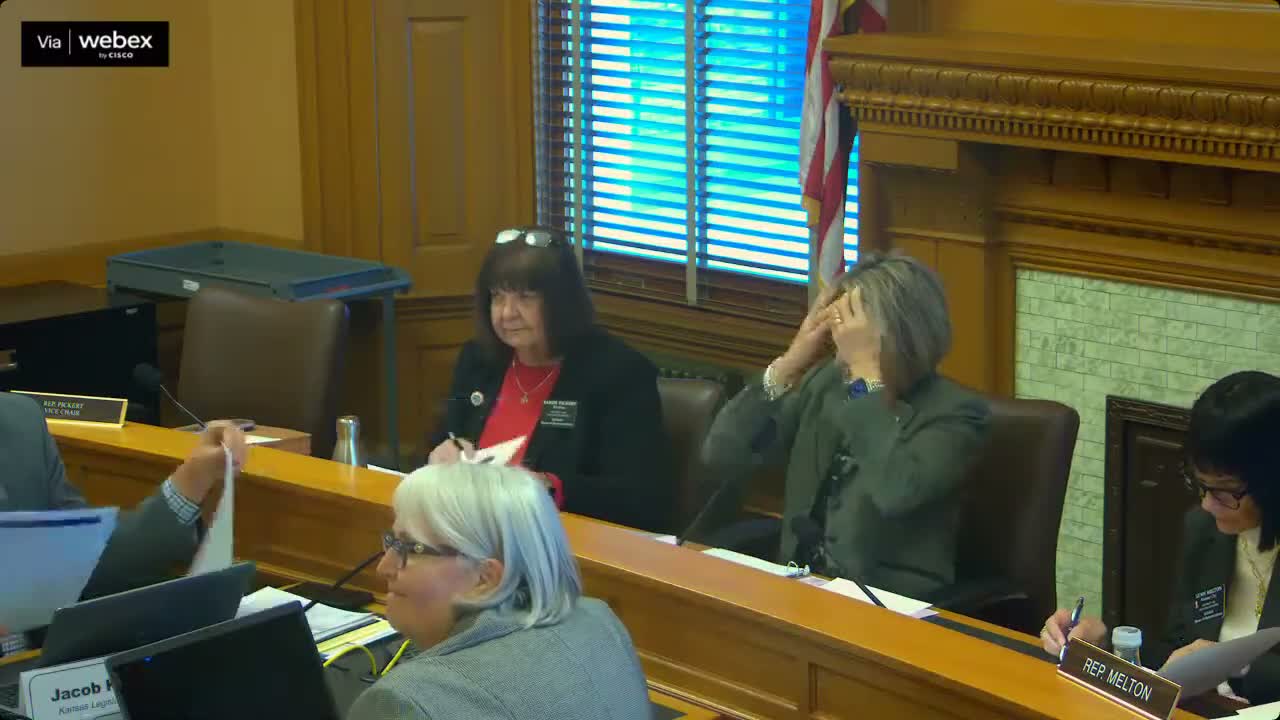
The Committee on General Government Budget heard on May 8 from judicial branch officials seeking continued and new funding to sustain specialty courts, cover operational needs and support public-facing education about the courts.
Molly Pratt, a fiscal analyst with the Legislative Research Department, opened the presentation with a budget overview, saying the judicial branch’s budget pays judges’ and staff salaries and that "approximately 89.3% of all judicial branch expenditures went toward the salaries and wages of personnel" in fiscal 2025. She said the branch submitted a revised estimate and a FY2027 request that would increase total spending by about $6 million to roughly $246.1 million.
Chief Justice Eric Rosen told the committee the branch is asking for a $1.5 million transfer to the Specialty Courts Fund and three regional coordinator positions. "Nearly 90% of the judicial branch budget goes to salaries," Rosen said, and the requested funding is intended not to operate specialty courts fully but to cover supports such as equipment, training, travel and drug testing that local programs need.
Judge Rob Whannell of the 10th Judicial District said specialty courts show measurable reductions in reoffending and gave specific court outcomes as evidence of program impact: "We could look at the 2% recidivism rate that our 2025 pre adjudication juvenile drug court had in Johnson County," and he cited low re-arrest rates among graduates of assisted outpatient and veterans treatment courts.
Pratt and Rosen also described a revised, phased plan for an interactive learning exhibit in the Supreme Court law library. Earlier requests for a larger, single-year appropriation were scaled back; Pratt said the revised estimate includes $325,000 in SGF and Rosen described the learning-center request as an initial exhibit to leverage future donor support.
On staffing, Pratt said the branch added 3.5 FTEs in the revised FY2026 estimate and is proposing an additional 3.0 FTEs for regional specialty-court coordinators in FY2027; she noted those three positions are currently budgeted as non‑FTE stopgaps. Committee members asked repeatedly for a clearer breakdown of vacancies and of which positions are filled versus vacant; Pratt offered to provide a list with counts and vacancy duration, and Amy Deckard, the judicial branch’s CFO, said as of Jan. 12 the branch had 83.5 vacant positions and manages vacancy savings into its budget.
Representatives pressed for clearer performance measures and easily readable outcomes. Representative Riley said specialty courts "are very effective," but added that the committee needs clear data to justify enhancements in a tight budget year. Whannell and Rosen emphasized that coordinators would reduce administrative burden on judges and improve statewide data collection so the legislature can assess program effectiveness.
Next steps: the committee will consider the judicial branch’s enhancement requests — including the $1.5 million transfer and the request for three coordinator positions — as part of broader budget deliberations. Officials committed to provide additional vacancy and performance data to the committee.
Molly Pratt, a fiscal analyst with the Legislative Research Department, opened the presentation with a budget overview, saying the judicial branch’s budget pays judges’ and staff salaries and that "approximately 89.3% of all judicial branch expenditures went toward the salaries and wages of personnel" in fiscal 2025. She said the branch submitted a revised estimate and a FY2027 request that would increase total spending by about $6 million to roughly $246.1 million.
Chief Justice Eric Rosen told the committee the branch is asking for a $1.5 million transfer to the Specialty Courts Fund and three regional coordinator positions. "Nearly 90% of the judicial branch budget goes to salaries," Rosen said, and the requested funding is intended not to operate specialty courts fully but to cover supports such as equipment, training, travel and drug testing that local programs need.
Judge Rob Whannell of the 10th Judicial District said specialty courts show measurable reductions in reoffending and gave specific court outcomes as evidence of program impact: "We could look at the 2% recidivism rate that our 2025 pre adjudication juvenile drug court had in Johnson County," and he cited low re-arrest rates among graduates of assisted outpatient and veterans treatment courts.
Pratt and Rosen also described a revised, phased plan for an interactive learning exhibit in the Supreme Court law library. Earlier requests for a larger, single-year appropriation were scaled back; Pratt said the revised estimate includes $325,000 in SGF and Rosen described the learning-center request as an initial exhibit to leverage future donor support.
On staffing, Pratt said the branch added 3.5 FTEs in the revised FY2026 estimate and is proposing an additional 3.0 FTEs for regional specialty-court coordinators in FY2027; she noted those three positions are currently budgeted as non‑FTE stopgaps. Committee members asked repeatedly for a clearer breakdown of vacancies and of which positions are filled versus vacant; Pratt offered to provide a list with counts and vacancy duration, and Amy Deckard, the judicial branch’s CFO, said as of Jan. 12 the branch had 83.5 vacant positions and manages vacancy savings into its budget.
Representatives pressed for clearer performance measures and easily readable outcomes. Representative Riley said specialty courts "are very effective," but added that the committee needs clear data to justify enhancements in a tight budget year. Whannell and Rosen emphasized that coordinators would reduce administrative burden on judges and improve statewide data collection so the legislature can assess program effectiveness.
Next steps: the committee will consider the judicial branch’s enhancement requests — including the $1.5 million transfer and the request for three coordinator positions — as part of broader budget deliberations. Officials committed to provide additional vacancy and performance data to the committee.
View the Full Meeting & All Its Details
This article offers just a summary. Unlock complete video, transcripts, and insights as a Founder Member.
✓
Watch full, unedited meeting videos
✓
Search every word spoken in unlimited transcripts
✓
AI summaries & real-time alerts (all government levels)
✓
Permanent access to expanding government content
30-day money-back guarantee
