KU, KU Medical Center present budget revisions highlighting stadium, cancer center and residency growth
January 22, 2026 | Committee on Higher Education Budget , Standing, HOUSE OF REPRESENTATIVES, Committees, Legislative, Kansas
This article was created by AI summarizing key points discussed. AI makes mistakes, so for full details and context, please refer to the video of the full meeting. Please report any errors so we can fix them. Report an error »
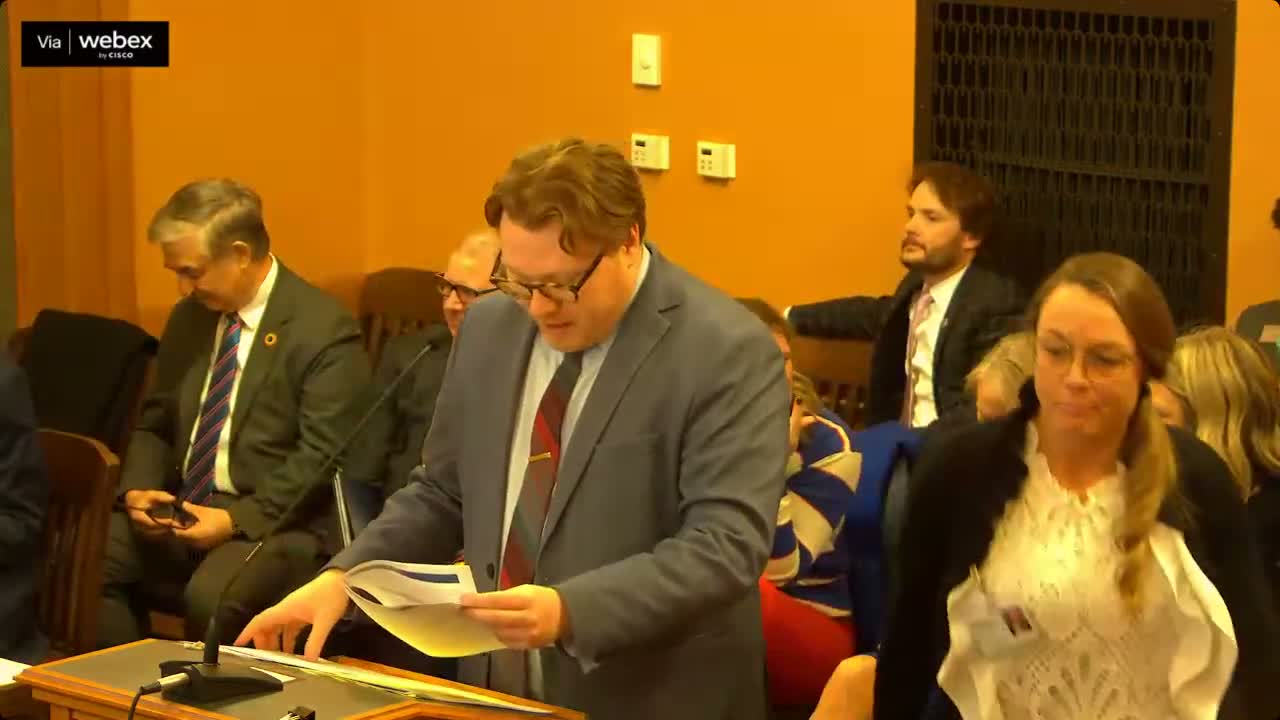
University of Kansas leaders and legislative fiscal staff outlined FY2026 revised estimates and FY2027 budget requests on Monday, telling the Legislature that capital projects and research growth are driving recent changes. Dayton Lemunian, principal fiscal analyst for legislative research, said KU’s FY2026 revised estimate includes pay plan items and reappropriations, while KU Medical Center showed large one‑time reappropriations for ongoing construction.
Lemunian told the Committee on Higher Education Budget the 2025 pay plan for KU totaled $12.8 million (including $3.7 million from the State General Fund) and that legislative language authorized up to $100 million in bonding authority for student housing on KU’s Lawrence campus. He said KU reappropriated $5.8 million in SGF (for IT infrastructure, cybersecurity and law enforcement training) and $13.3 million in unspent Educational Building Fund (EBF) dollars for capital projects. Lemunian also listed an $85.3 million increase in capital improvements driven primarily by a football stadium renovation that had previously been funded outside the state budget process but now appears in the state accounts, in part because some costs were supported with ARPA funding.
On KU Medical Center, Lemunian reported SGF reappropriations totaling $85.3 million. The largest single reappropriation listed in the packet was $72.7 million for the cancer research facility to continue construction of a new cancer center; other reappropriations included $3.4 million for the Kansas medical scholarship/psychiatry account, $6.5 million for a Wichita biomedical campus construction project (noted for transfer to Wichita State University) and $6.2 million in EBF reappropriations.
Committee members pressed analysts on FTE (full‑time equivalent) counts. Lemunian said KU Medical Center’s recent FTE growth in the budget largely reflected added residency positions and contracted affiliates, noting the packet shows 59 additional residents reflected as expenditures that are reimbursed and therefore do not necessarily correlate to increased SGF. Representative Riley asked about a multiyear increase of over 1,000 FTEs; Lemunian said he would need to dig into historical trends but confirmed the most recent increases are tied to residency and contract arrangements. Representative Haskins flagged an inconsistency in a shorthand document (141.8 vs. 166.8 FTEs); Lemunian acknowledged a copy error and confirmed the packet’s right‑hand column numbers were correct.
The hearing included questions about unexpended specialty medical student loan funds for psychiatry and OBGYN; Lemunian deferred those timing and demand questions to KU leadership. No formal votes were taken at Monday’s hearing; staff said final budget recommendations for all institutions would be made during the week of Feb. 2.
The hearing packet and analysts’ presentation also note several global SBC (special budget committee) motions that removed reappropriations for noncapital projects and a governor’s shorthand recommending retention of some reappropriations that SBC had sought to delete.
Lemunian told the Committee on Higher Education Budget the 2025 pay plan for KU totaled $12.8 million (including $3.7 million from the State General Fund) and that legislative language authorized up to $100 million in bonding authority for student housing on KU’s Lawrence campus. He said KU reappropriated $5.8 million in SGF (for IT infrastructure, cybersecurity and law enforcement training) and $13.3 million in unspent Educational Building Fund (EBF) dollars for capital projects. Lemunian also listed an $85.3 million increase in capital improvements driven primarily by a football stadium renovation that had previously been funded outside the state budget process but now appears in the state accounts, in part because some costs were supported with ARPA funding.
On KU Medical Center, Lemunian reported SGF reappropriations totaling $85.3 million. The largest single reappropriation listed in the packet was $72.7 million for the cancer research facility to continue construction of a new cancer center; other reappropriations included $3.4 million for the Kansas medical scholarship/psychiatry account, $6.5 million for a Wichita biomedical campus construction project (noted for transfer to Wichita State University) and $6.2 million in EBF reappropriations.
Committee members pressed analysts on FTE (full‑time equivalent) counts. Lemunian said KU Medical Center’s recent FTE growth in the budget largely reflected added residency positions and contracted affiliates, noting the packet shows 59 additional residents reflected as expenditures that are reimbursed and therefore do not necessarily correlate to increased SGF. Representative Riley asked about a multiyear increase of over 1,000 FTEs; Lemunian said he would need to dig into historical trends but confirmed the most recent increases are tied to residency and contract arrangements. Representative Haskins flagged an inconsistency in a shorthand document (141.8 vs. 166.8 FTEs); Lemunian acknowledged a copy error and confirmed the packet’s right‑hand column numbers were correct.
The hearing included questions about unexpended specialty medical student loan funds for psychiatry and OBGYN; Lemunian deferred those timing and demand questions to KU leadership. No formal votes were taken at Monday’s hearing; staff said final budget recommendations for all institutions would be made during the week of Feb. 2.
The hearing packet and analysts’ presentation also note several global SBC (special budget committee) motions that removed reappropriations for noncapital projects and a governor’s shorthand recommending retention of some reappropriations that SBC had sought to delete.
View the Full Meeting & All Its Details
This article offers just a summary. Unlock complete video, transcripts, and insights as a Founder Member.
✓
Watch full, unedited meeting videos
✓
Search every word spoken in unlimited transcripts
✓
AI summaries & real-time alerts (all government levels)
✓
Permanent access to expanding government content
30-day money-back guarantee
