New Mexico revenue forecast shows slowing growth; Moody’s upgrades state bond rating
January 12, 2026 | Appropriations & Finance, House of Representatives, Committees, Legislative, New Mexico
This article was created by AI summarizing key points discussed. AI makes mistakes, so for full details and context, please refer to the video of the full meeting. Please report any errors so we can fix them. Report an error »
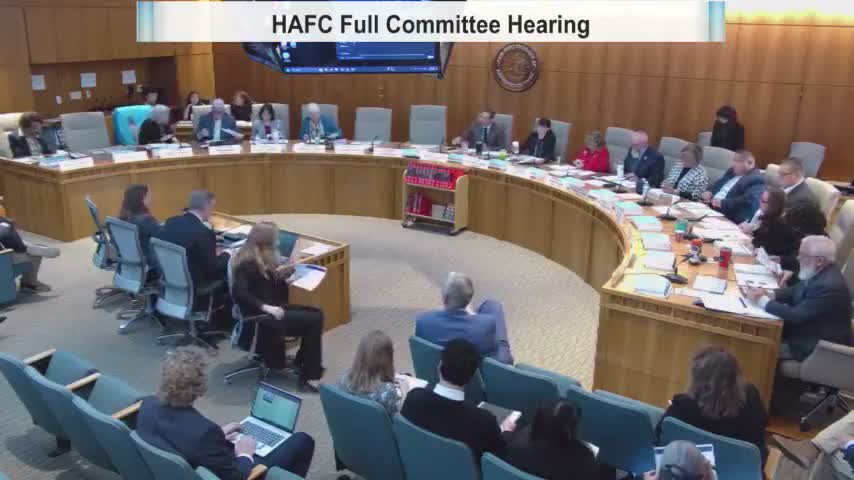
Lawmakers received a December consensus revenue update on Jan. 6, in which state revenue analysts reported that recurring revenue growth has moderated and that federal tax changes and lower oil prices are reducing future income and corporate tax receipts. "Total new money in FY '27 is estimated to be $105,700,000," Jennifer Fabian of the Legislative Finance Committee said during the presentation.
Wayne Probst of the Department of Finance and Administration highlighted both the narrower recurring outlook and a notable credit development: "On Friday, Moody’s Analytics announced that it is upgrading the state's bond rating ... the state general obligation bond rating is also being upgraded from AA2 to AA1," he said, adding the upgrades extend to transportation and other bond categories.
Why it matters: the panel said the state faces a mix of recurring downside pressure from personal and corporate income taxes — including behavior changes tied to the federal HR 1 budget reconciliation bill — and offsetting one‑time gains. Presenters flagged a $362.6 million, one‑time State Land Office lease sale gain coded as nonrecurring revenue and emphasized that investment earnings and reserve levels helped shield the general fund from oil‑price volatility.
Key details from the forecast included a downward revision to corporate income tax (SIT) receipts tied to weaker oil and gas expectations and taxpayer adjustments after federal tax changes; analysts described PIT declines in FY25 as intentional after recent state rate changes. Presenters also noted risks from missing federal data and potential further oil‑price weakness that could affect severance revenues.
What’s next: Members asked for more granular breakouts (for example, education versus health employment in the gross receipts base) and asked revenue agencies to supply historical spreadsheets. Officials said they would provide additional sector breakouts and stress‑test detail to committee members.
Wayne Probst of the Department of Finance and Administration highlighted both the narrower recurring outlook and a notable credit development: "On Friday, Moody’s Analytics announced that it is upgrading the state's bond rating ... the state general obligation bond rating is also being upgraded from AA2 to AA1," he said, adding the upgrades extend to transportation and other bond categories.
Why it matters: the panel said the state faces a mix of recurring downside pressure from personal and corporate income taxes — including behavior changes tied to the federal HR 1 budget reconciliation bill — and offsetting one‑time gains. Presenters flagged a $362.6 million, one‑time State Land Office lease sale gain coded as nonrecurring revenue and emphasized that investment earnings and reserve levels helped shield the general fund from oil‑price volatility.
Key details from the forecast included a downward revision to corporate income tax (SIT) receipts tied to weaker oil and gas expectations and taxpayer adjustments after federal tax changes; analysts described PIT declines in FY25 as intentional after recent state rate changes. Presenters also noted risks from missing federal data and potential further oil‑price weakness that could affect severance revenues.
What’s next: Members asked for more granular breakouts (for example, education versus health employment in the gross receipts base) and asked revenue agencies to supply historical spreadsheets. Officials said they would provide additional sector breakouts and stress‑test detail to committee members.
View the Full Meeting & All Its Details
This article offers just a summary. Unlock complete video, transcripts, and insights as a Founder Member.
✓
Watch full, unedited meeting videos
✓
Search every word spoken in unlimited transcripts
✓
AI summaries & real-time alerts (all government levels)
✓
Permanent access to expanding government content
30-day money-back guarantee
