Judiciary committee hears emotional testimony on bill to increase penalties for endangering children under 6
January 23, 2026 | Committee on Judiciary, Standing, HOUSE OF REPRESENTATIVES, Committees, Legislative, Kansas
This article was created by AI summarizing key points discussed. AI makes mistakes, so for full details and context, please refer to the video of the full meeting. Please report any errors so we can fix them. Report an error »
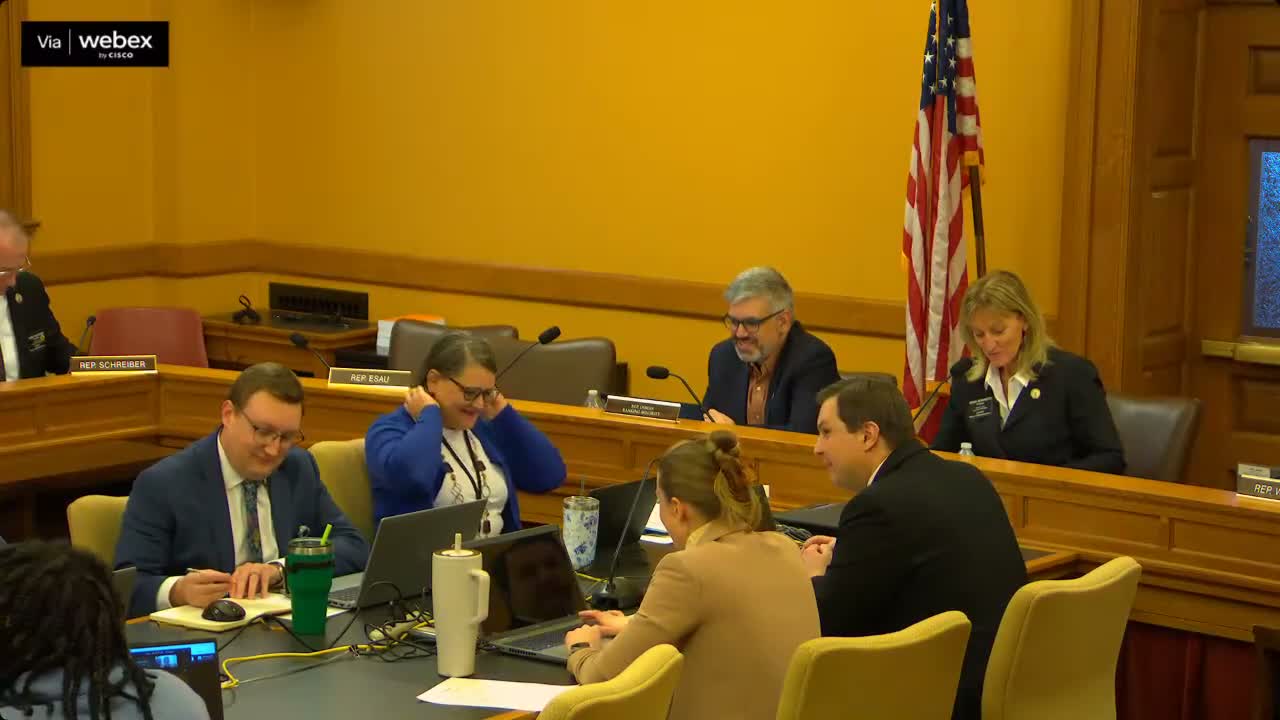
The Committee on Judiciary opened a hearing on House Bill 24-12, a proposal to increase criminal penalties for endangering a child and aggravated endangering when the victim is younger than 6.
Jason Thompson of the Revisor’s Office told the committee the bill would amend KSA 21-5601, raising many sentencing grid levels by one when the victim is under 6 and taking effect July 1 if adopted. "Class A misdemeanor becomes a severity level 9 if the child is under 6," Thompson said, summarizing the changes to the sentencing grid.
Proponents urged passage with personal testimony about a June 2024 daycare incident. Representative Ken Collins, who sponsored the bill, said he introduced it after meeting the parents of Benjamin Cannon and argued existing sentences in that case were "very lenient." Shelby Cannon, Benny’s mother, described the injuries and lifelong care her son requires after being left unattended as an infant: "My child cannot speak for himself and may never get to," she said, and she urged the committee to "support House Bill 24-12, not just for my son, but for every Kansas child." Lisa Eastwood, Benny’s grandmother, told lawmakers the harm "ripples through the entire family" and asked the committee to hold adults "meaningfully accountable." Jordan Cheshire of Project Heaven, a child-advocacy group, said the bill "does not create new crimes" but narrows criminal statute application to recognize special vulnerability of very young children.
Ellen Johnson testified in opposition, drawing on experience with addicted parents and the child-welfare system. She warned that harsher penalties can reduce community reporting and could place children into foster care where she said abuse is sometimes high. "When consequences don't match the harm, families like ours are left to carry the rest," Shelby Cannon said; Johnson countered that increased penalties can discourage reporting and urged alternatives such as specialty family courts and victim-impact panels.
The committee closed the hearing without a vote. The chair explained that the committee may "work" the bill in the coming days—meaning members could vote to send it to the full House—and that additional steps remain before final action. No committee vote on HB 24-12 was recorded in the transcript of this meeting.
What happens next: The committee may take up HB 24-12 for a work session (a committee-level vote) in the days ahead; if approved by the committee, the bill would go to the full House.
Jason Thompson of the Revisor’s Office told the committee the bill would amend KSA 21-5601, raising many sentencing grid levels by one when the victim is under 6 and taking effect July 1 if adopted. "Class A misdemeanor becomes a severity level 9 if the child is under 6," Thompson said, summarizing the changes to the sentencing grid.
Proponents urged passage with personal testimony about a June 2024 daycare incident. Representative Ken Collins, who sponsored the bill, said he introduced it after meeting the parents of Benjamin Cannon and argued existing sentences in that case were "very lenient." Shelby Cannon, Benny’s mother, described the injuries and lifelong care her son requires after being left unattended as an infant: "My child cannot speak for himself and may never get to," she said, and she urged the committee to "support House Bill 24-12, not just for my son, but for every Kansas child." Lisa Eastwood, Benny’s grandmother, told lawmakers the harm "ripples through the entire family" and asked the committee to hold adults "meaningfully accountable." Jordan Cheshire of Project Heaven, a child-advocacy group, said the bill "does not create new crimes" but narrows criminal statute application to recognize special vulnerability of very young children.
Ellen Johnson testified in opposition, drawing on experience with addicted parents and the child-welfare system. She warned that harsher penalties can reduce community reporting and could place children into foster care where she said abuse is sometimes high. "When consequences don't match the harm, families like ours are left to carry the rest," Shelby Cannon said; Johnson countered that increased penalties can discourage reporting and urged alternatives such as specialty family courts and victim-impact panels.
The committee closed the hearing without a vote. The chair explained that the committee may "work" the bill in the coming days—meaning members could vote to send it to the full House—and that additional steps remain before final action. No committee vote on HB 24-12 was recorded in the transcript of this meeting.
What happens next: The committee may take up HB 24-12 for a work session (a committee-level vote) in the days ahead; if approved by the committee, the bill would go to the full House.
Don't Miss a Word: See the Full Meeting!
Go beyond summaries. Unlock every video, transcript, and key insight with a Founder Membership.
✓
Get instant access to full meeting videos
✓
Search and clip any phrase from complete transcripts
✓
Receive AI-powered summaries & custom alerts
✓
Enjoy lifetime, unrestricted access to government data
30-day money-back guarantee
