Committee hears briefing on juvenile justice reforms and crossover youth
January 22, 2026 | Judiciary, Standing, Senate, Committees, Legislative, Kansas
This article was created by AI summarizing key points discussed. AI makes mistakes, so for full details and context, please refer to the video of the full meeting. Please report any errors so we can fix them. Report an error »
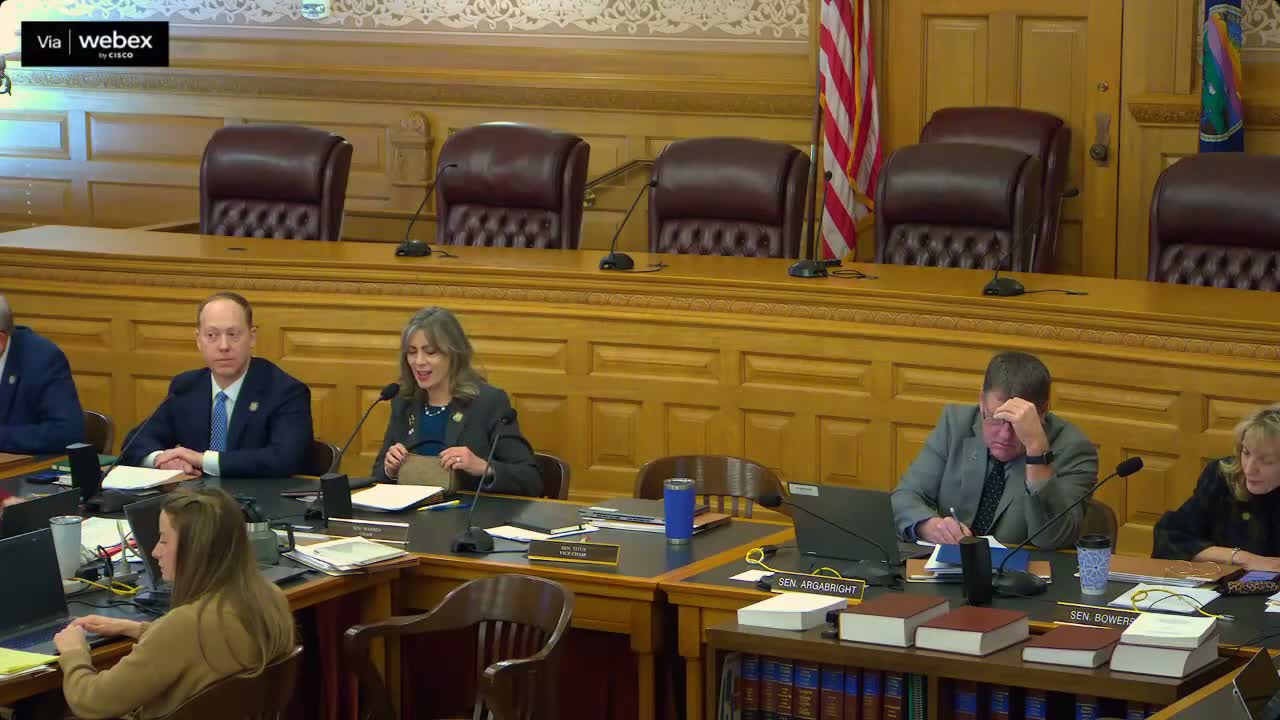
Natalie Scott, the reviser, and officials from the Kansas Juvenile Justice Oversight Committee (JJOC), the Department for Children and Families (DCF), and the Kansas Department of Corrections (DOC) briefed the Judiciary committee on recent juvenile justice reforms and how the state identifies and serves "crossover youth"—young people concurrently involved in both child welfare and juvenile justice systems.
Scott summarized key legislative changes since 2016, referencing earlier actions in the transcript as "senate bill 3 67," which the committee discussed as limiting circumstances for removing juveniles from parental custody, setting a 45-day cumulative detention cap, raising the minimum age for most adult prosecution to 14, and directing creation of a fund now called the evidence-based programs account. She said subsequent bills (identified in the transcript as "senate bill 42" and "senate bill 179") updated rules for diversion, detention eligibility and the juvenile crisis intervention center concept.
Randy Regier, vice chair of the JJOC, described the committee's oversight role and work groups and said JJOC membership includes 21 stakeholders across four subcommittees. Regier presented intake-related figures from FY25 and said the majority of youth with firearm-involved intakes were detained; he stated in the transcript that roughly 85% of youth with a firearm-related intake were detained but some slide figures were unclear in the recording.
Tanya Keyes, deputy secretary for programs and services at DCF, described DCF priorities: preventing out-of-home placement, expanding in-home and therapeutic supports, increasing licensed therapeutic family foster homes ("over 100" in the transcript), and piloting a "no eject, no reject" continuum through a request for proposals. She told the committee that Kansas has approved children's behavior interventionists as a Medicaid service and that O'Connell Youth Ranch is pursuing evidence-based-program-account funds to open a juvenile crisis intervention center. Keyes provided a working definition of "crossover youth" used by DCF (Kansas youth age 10 and older with concurrent involvement in child welfare and juvenile justice at a point in time) and said DCF has limited point-in-time data; for example, on the referenced day there were 36 youth in placements categorized as secure detention who met both child welfare and juvenile justice definitions and an additional 8 youth in DCF custody placed at the Kansas Juvenile Correctional Complex (KJCC).
Megan Milner, deputy secretary for the Department of Corrections, explained the distinction between locally run juvenile detention centers and KJCC, the state's single secure juvenile correctional facility. Milner said there are nine juvenile detention centers statewide, highlighted the statutory 45-day cumulative detention limit, and provided program counts cited in the transcript: about 650 juveniles on community corrections probation in FY25 and a KJCC daily average of roughly 150–155 youth. She said DOC-funded initiatives and evidence-based-program-account grants support behavioral health services, and described the "Stepping Up for Youth" initiative intended to identify youth with behavioral health needs and connect them to community services earlier.
Committee members pressed for data precision and methodology. Senator Clays questioned how "evidence-based" programs are vetted, citing concerns that some federal clearinghouses can list programs inconsistently; officials replied that grant-funded programs must meet at least a "promising practice" threshold for evidence and that DOC manages approvals with JJOC input. Milner confirmed the state uses a standard risk-assessment tool, the Youth Level of Service (YLS), and offered to provide more detailed breakdowns by risk level on follow-up.
What happens next: committee members requested follow-up data in writing on the intake counts and the population breakdowns (the presenters acknowledged there are reporting limitations for some community-supervision populations). The committee scheduled a full hearing for the next day on a bill coming from the House and closed the briefing.
Representative quotes in the transcript include: "A juvenile can be admitted to those types of centers for no more than 30 days" (Natalie Scott), "85 percent of those kids were detained" (Randy Regier, on firearm-related intakes), "we are building capacity across the state" (Tanya Keyes), and "we've been averaging roughly 150 to 155 youth every day at KJCC" (Megan Milner).
Notes on data and wording: where transcript slide numbers or verbal figures were unclear, this article reports the numbers as presented to the committee and notes data limitations and the presenters' offers to follow up with clarified counts.
Scott summarized key legislative changes since 2016, referencing earlier actions in the transcript as "senate bill 3 67," which the committee discussed as limiting circumstances for removing juveniles from parental custody, setting a 45-day cumulative detention cap, raising the minimum age for most adult prosecution to 14, and directing creation of a fund now called the evidence-based programs account. She said subsequent bills (identified in the transcript as "senate bill 42" and "senate bill 179") updated rules for diversion, detention eligibility and the juvenile crisis intervention center concept.
Randy Regier, vice chair of the JJOC, described the committee's oversight role and work groups and said JJOC membership includes 21 stakeholders across four subcommittees. Regier presented intake-related figures from FY25 and said the majority of youth with firearm-involved intakes were detained; he stated in the transcript that roughly 85% of youth with a firearm-related intake were detained but some slide figures were unclear in the recording.
Tanya Keyes, deputy secretary for programs and services at DCF, described DCF priorities: preventing out-of-home placement, expanding in-home and therapeutic supports, increasing licensed therapeutic family foster homes ("over 100" in the transcript), and piloting a "no eject, no reject" continuum through a request for proposals. She told the committee that Kansas has approved children's behavior interventionists as a Medicaid service and that O'Connell Youth Ranch is pursuing evidence-based-program-account funds to open a juvenile crisis intervention center. Keyes provided a working definition of "crossover youth" used by DCF (Kansas youth age 10 and older with concurrent involvement in child welfare and juvenile justice at a point in time) and said DCF has limited point-in-time data; for example, on the referenced day there were 36 youth in placements categorized as secure detention who met both child welfare and juvenile justice definitions and an additional 8 youth in DCF custody placed at the Kansas Juvenile Correctional Complex (KJCC).
Megan Milner, deputy secretary for the Department of Corrections, explained the distinction between locally run juvenile detention centers and KJCC, the state's single secure juvenile correctional facility. Milner said there are nine juvenile detention centers statewide, highlighted the statutory 45-day cumulative detention limit, and provided program counts cited in the transcript: about 650 juveniles on community corrections probation in FY25 and a KJCC daily average of roughly 150–155 youth. She said DOC-funded initiatives and evidence-based-program-account grants support behavioral health services, and described the "Stepping Up for Youth" initiative intended to identify youth with behavioral health needs and connect them to community services earlier.
Committee members pressed for data precision and methodology. Senator Clays questioned how "evidence-based" programs are vetted, citing concerns that some federal clearinghouses can list programs inconsistently; officials replied that grant-funded programs must meet at least a "promising practice" threshold for evidence and that DOC manages approvals with JJOC input. Milner confirmed the state uses a standard risk-assessment tool, the Youth Level of Service (YLS), and offered to provide more detailed breakdowns by risk level on follow-up.
What happens next: committee members requested follow-up data in writing on the intake counts and the population breakdowns (the presenters acknowledged there are reporting limitations for some community-supervision populations). The committee scheduled a full hearing for the next day on a bill coming from the House and closed the briefing.
Representative quotes in the transcript include: "A juvenile can be admitted to those types of centers for no more than 30 days" (Natalie Scott), "85 percent of those kids were detained" (Randy Regier, on firearm-related intakes), "we are building capacity across the state" (Tanya Keyes), and "we've been averaging roughly 150 to 155 youth every day at KJCC" (Megan Milner).
Notes on data and wording: where transcript slide numbers or verbal figures were unclear, this article reports the numbers as presented to the committee and notes data limitations and the presenters' offers to follow up with clarified counts.
Don't Miss a Word: See the Full Meeting!
Go beyond summaries. Unlock every video, transcript, and key insight with a Founder Membership.
✓
Get instant access to full meeting videos
✓
Search and clip any phrase from complete transcripts
✓
Receive AI-powered summaries & custom alerts
✓
Enjoy lifetime, unrestricted access to government data
30-day money-back guarantee
