Lawmakers weigh large cost to raise personal care services rates as workforce shortages bite
January 24, 2026 | Appropriations & Finance, House of Representatives, Committees, Legislative, New Mexico
This article was created by AI summarizing key points discussed. AI makes mistakes, so for full details and context, please refer to the video of the full meeting. Please report any errors so we can fix them. Report an error »
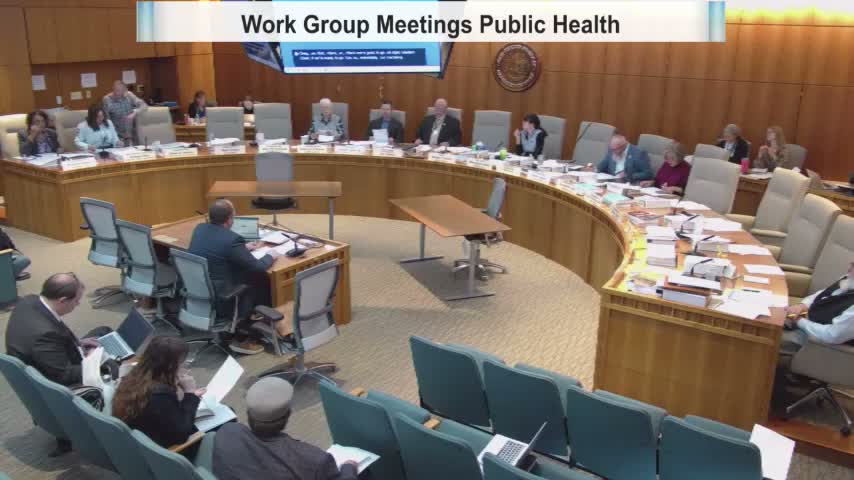
Santa Fe — Personal care services and Medicaid-funded long-term supports drew sustained attention at the House public health working group on Jan. 26, with lawmakers warning that low pay and administrative margins are worsening a workforce crisis.
Eric Chinye, the Health Care Authority analyst assigned to the file, presented a HAFC staff scenario that reallocated several LFC recommendations to boost Medicaid behavioral-health capitation and to add recurring coverage for federal subsidy loss above 400% of federal poverty (about $38.1 million). In answer to member questions, Chinye summarized personal care services (PCS) and the two major delivery models: consumer-delegated (agency-billed) and consumer-directed (client hires caregiver). HCA cited recommended managed-care payment rates of $20.40 per hour for consumer-delegated PCS and $17.20 per hour for consumer-directed PCS, and reported roughly 28,000 recipients and about 195 billing providers.
Members expressed alarm that those recommended rates do not translate directly into worker pay once agencies deduct administrative costs, liability insurance and payroll taxes. Representative Dow said a modest wage increase entails a large state cost; staff estimated roughly $1.3 million in recurring general fund for each 1% across-the-board PCS rate increase. Representative Dow and others detailed gaps in the continuum of care for children in custody and raised questions about whether managed-care organizations (MCOs) are sufficiently held to direct increased payments into caregiver wages.
Several members referenced ongoing legislation (including House Bill 83) seeking large increases and wage pass-through requirements for PCS; Representative Dow — sponsor of a bill mentioned in the hearing record — said his proposal would require 70% of rate increases to go to wages. HCA said the state has raised PCS-related rates substantially over recent years (a cumulative increase LFC estimated at roughly 51% over seven years) but acknowledged gaps remain.
What lawmakers asked for
- Detailed accounting of administrative fees and wage pass-throughs for both delegated and directed PCS models.
- Clarification on payroll/tax treatment for consumer-directed caregivers and use of fiscal intermediaries.
- A feasibility analysis (cost and phasing) for increases that would materially raise caregiver wages while constraining administrative leakage.
Next steps
The public health working group flagged PCS for catch-up cleanup and asked staff to bring more specific cost modeling, pass-through and tax-treatment data. Members said they want a multi-year plan that balances wage improvements with available recurring revenue.
Eric Chinye, the Health Care Authority analyst assigned to the file, presented a HAFC staff scenario that reallocated several LFC recommendations to boost Medicaid behavioral-health capitation and to add recurring coverage for federal subsidy loss above 400% of federal poverty (about $38.1 million). In answer to member questions, Chinye summarized personal care services (PCS) and the two major delivery models: consumer-delegated (agency-billed) and consumer-directed (client hires caregiver). HCA cited recommended managed-care payment rates of $20.40 per hour for consumer-delegated PCS and $17.20 per hour for consumer-directed PCS, and reported roughly 28,000 recipients and about 195 billing providers.
Members expressed alarm that those recommended rates do not translate directly into worker pay once agencies deduct administrative costs, liability insurance and payroll taxes. Representative Dow said a modest wage increase entails a large state cost; staff estimated roughly $1.3 million in recurring general fund for each 1% across-the-board PCS rate increase. Representative Dow and others detailed gaps in the continuum of care for children in custody and raised questions about whether managed-care organizations (MCOs) are sufficiently held to direct increased payments into caregiver wages.
Several members referenced ongoing legislation (including House Bill 83) seeking large increases and wage pass-through requirements for PCS; Representative Dow — sponsor of a bill mentioned in the hearing record — said his proposal would require 70% of rate increases to go to wages. HCA said the state has raised PCS-related rates substantially over recent years (a cumulative increase LFC estimated at roughly 51% over seven years) but acknowledged gaps remain.
What lawmakers asked for
- Detailed accounting of administrative fees and wage pass-throughs for both delegated and directed PCS models.
- Clarification on payroll/tax treatment for consumer-directed caregivers and use of fiscal intermediaries.
- A feasibility analysis (cost and phasing) for increases that would materially raise caregiver wages while constraining administrative leakage.
Next steps
The public health working group flagged PCS for catch-up cleanup and asked staff to bring more specific cost modeling, pass-through and tax-treatment data. Members said they want a multi-year plan that balances wage improvements with available recurring revenue.
View the Full Meeting & All Its Details
This article offers just a summary. Unlock complete video, transcripts, and insights as a Founder Member.
✓
Watch full, unedited meeting videos
✓
Search every word spoken in unlimited transcripts
✓
AI summaries & real-time alerts (all government levels)
✓
Permanent access to expanding government content
30-day money-back guarantee
