Kansas Judiciary Committee hears wide testimony on HB 23-29 to expand juvenile placements and increase detention options
January 23, 2026 | Judiciary, Standing, Senate, Committees, Legislative, Kansas
This article was created by AI summarizing key points discussed. AI makes mistakes, so for full details and context, please refer to the video of the full meeting. Please report any errors so we can fix them. Report an error »
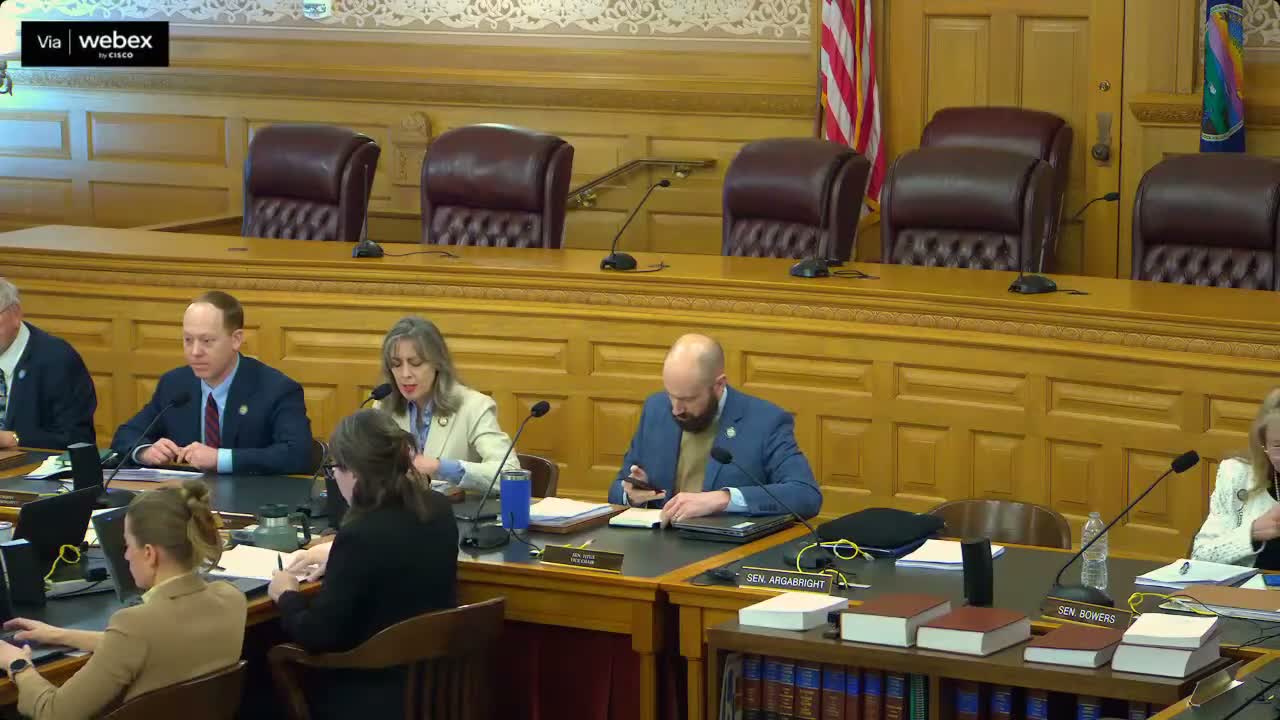
Chair Warren opened the Senate Judiciary Committee hearing on House Bill 23-29, saying the bill would expand placement options for juvenile offenders and alter detention and sentencing rules. The committee heard from a broad cross section of proponents and neutral witnesses before adjourning and continuing opponents' testimony to Jan. 26.
The bill would let a court place a juvenile in the custody of the Secretary of Corrections and order placement in a youth residential facility; increase cumulative detention from 45 to 90 days; raise the minimum and maximum time a juvenile who used a firearm can be committed from 6–18 months to 12–24 months; and require the secretary to contract for 35 to 45 non‑foster residential beds (with no more than 15 beds in a single facility). The reviser also noted the bill would authorize KDOC to expend up to $10,000,000 in any fiscal year from the evidence‑based programs account for those contracts.
Proponents — including foster‑care and child‑welfare providers, county commissioners, law‑enforcement representatives and child‑welfare agencies — said the 2016 reforms left a small but serious group of juveniles without appropriate placement options and that those youth are being placed into foster homes or congregate care meant for abuse and neglect cases. Angela Hedrick, vice president of operations at KVC Kansas, described episodes where a youth who had become violent was taken to intake but “was not detained” and later “we were forced to pick him up in under 4 hours and return him to the same facility,” a pattern proponents said creates safety risks for other children and staff.
Sedgwick County Commissioner Jim Howell said the bill is a "surgical fix" to return discretion to judges and provide a small number of placements — "This is 25 to 50 beds," he said — not a wholesale return to past incarceration levels. Multiple prosecutors, law‑enforcement officials and custody supervisors told the committee they have seen increases in juvenile firearm incidents since 2016 and asked for tools to hold medium‑ and high‑risk youth accountable.
Neutral witnesses raised fiscal and policy concerns. Stephanie Uberl of the Council of State Governments Justice Center said the changes could increase KDOC and taxpayer costs and risk diverting money intended for community‑based, evidence‑based programs: "This bill would increase costs for KDOC and Kansas taxpayers, including reallocating the $10,000,000 intended to support community based services," she testified. Uberl and the Kansas Community Corrections Association said removing JIAC discretion and mandating override detention for certain allegations could put low‑risk youths into detention contrary to evidence‑based practice.
Committee members pressed for details on how the proposed beds would be targeted and funded. Witnesses and the reviser agreed the bill does not specify therapeutic criteria for the contracted beds; proponents urged using the evidence‑based programs fund to pay for higher‑quality, evidence‑based residential programs and training for staff to avoid repeating historic failures in group care.
The committee did not take a final vote on the bill. Chair Warren recessed the hearing and scheduled opponents' testimony for Monday, Jan. 26 at 10:30 a.m.
The bill would let a court place a juvenile in the custody of the Secretary of Corrections and order placement in a youth residential facility; increase cumulative detention from 45 to 90 days; raise the minimum and maximum time a juvenile who used a firearm can be committed from 6–18 months to 12–24 months; and require the secretary to contract for 35 to 45 non‑foster residential beds (with no more than 15 beds in a single facility). The reviser also noted the bill would authorize KDOC to expend up to $10,000,000 in any fiscal year from the evidence‑based programs account for those contracts.
Proponents — including foster‑care and child‑welfare providers, county commissioners, law‑enforcement representatives and child‑welfare agencies — said the 2016 reforms left a small but serious group of juveniles without appropriate placement options and that those youth are being placed into foster homes or congregate care meant for abuse and neglect cases. Angela Hedrick, vice president of operations at KVC Kansas, described episodes where a youth who had become violent was taken to intake but “was not detained” and later “we were forced to pick him up in under 4 hours and return him to the same facility,” a pattern proponents said creates safety risks for other children and staff.
Sedgwick County Commissioner Jim Howell said the bill is a "surgical fix" to return discretion to judges and provide a small number of placements — "This is 25 to 50 beds," he said — not a wholesale return to past incarceration levels. Multiple prosecutors, law‑enforcement officials and custody supervisors told the committee they have seen increases in juvenile firearm incidents since 2016 and asked for tools to hold medium‑ and high‑risk youth accountable.
Neutral witnesses raised fiscal and policy concerns. Stephanie Uberl of the Council of State Governments Justice Center said the changes could increase KDOC and taxpayer costs and risk diverting money intended for community‑based, evidence‑based programs: "This bill would increase costs for KDOC and Kansas taxpayers, including reallocating the $10,000,000 intended to support community based services," she testified. Uberl and the Kansas Community Corrections Association said removing JIAC discretion and mandating override detention for certain allegations could put low‑risk youths into detention contrary to evidence‑based practice.
Committee members pressed for details on how the proposed beds would be targeted and funded. Witnesses and the reviser agreed the bill does not specify therapeutic criteria for the contracted beds; proponents urged using the evidence‑based programs fund to pay for higher‑quality, evidence‑based residential programs and training for staff to avoid repeating historic failures in group care.
The committee did not take a final vote on the bill. Chair Warren recessed the hearing and scheduled opponents' testimony for Monday, Jan. 26 at 10:30 a.m.
View the Full Meeting & All Its Details
This article offers just a summary. Unlock complete video, transcripts, and insights as a Founder Member.
✓
Watch full, unedited meeting videos
✓
Search every word spoken in unlimited transcripts
✓
AI summaries & real-time alerts (all government levels)
✓
Permanent access to expanding government content
30-day money-back guarantee
