Lawmakers press PED, LASC to tighten oversight after virtual programs shift 3,000 students
January 23, 2026 | Education, Senate, Committees, Legislative, New Mexico
This article was created by AI summarizing key points discussed. AI makes mistakes, so for full details and context, please refer to the video of the full meeting. Please report any errors so we can fix them. Report an error »
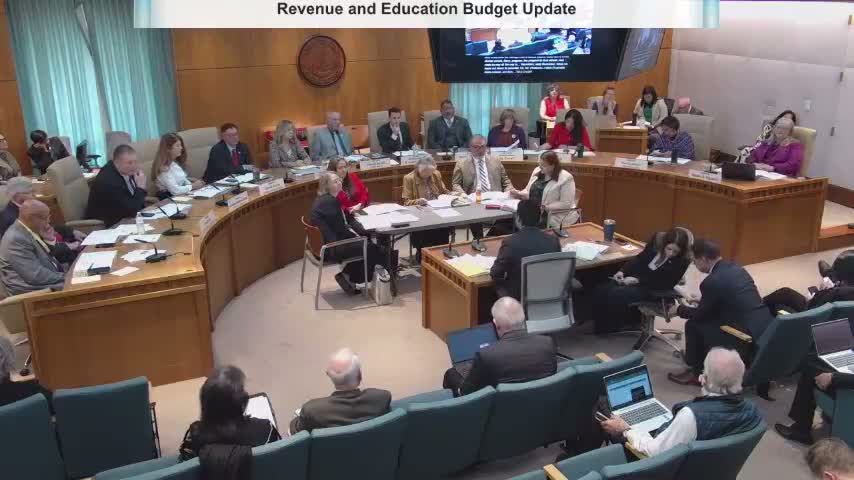
Lawmakers pressed education staff on gaps in oversight for virtual K‑12 programs after staff described a recent episode in which a contractor’s move produced large enrollment shifts.
Daniel, LASC school finance staff, described the Gallup‑area case: Gallup County Schools ran a virtual program contracted to Stride K12; Gallup terminated the contract after concerns and the contractor moved its program to Santa Rosa and Chama, bringing roughly 3,000 students to those smaller districts.
"They ended up, running into some issues with their contractor, K12 Stride," Daniel said. "The contractor then proceeded to move their program to Chama and Santa Rosa. And with the contractor came 3,000 students that were previously at Gallup‑McKinley County Schools."
Committee members expressed alarm that prior‑year membership funding rules meant Gallup continued to receive last year’s funding for those students even as new host districts generated growth‑unit funding. Daniel and deputy staff explained growth units are calculated from a 40‑day count and that sudden transfers can generate double funding across fiscal years.
Greg Froster of the Public Education Department said reorganization requests to create virtual programs were submitted after districts had already reorganized and that PED had not approved those requests to date.
"They did submit [reorganization requests]," Froster said, "but those have not been approved by the public education department to date."
Staff confirmed a statutory gap: PED is not currently required by statute to approve a virtual program, leaving room for expansion without agency approval. Daniel said LESC staff are drafting language, in consultation with LFC and PED, that could require PED approval for virtual programs and give PED authority to consider a contractor’s historical performance when evaluating expansion requests.
The implications: members said the lack of approval and inconsistent oversight can expose the SEG system to large, unforeseen costs and can allow providers with poor track records to scale without review. Several members urged statutory or rule changes and said the issue will be on LESC’s summer work plan.
(Reporting based on committee Q&A and staff presentations.)
Daniel, LASC school finance staff, described the Gallup‑area case: Gallup County Schools ran a virtual program contracted to Stride K12; Gallup terminated the contract after concerns and the contractor moved its program to Santa Rosa and Chama, bringing roughly 3,000 students to those smaller districts.
"They ended up, running into some issues with their contractor, K12 Stride," Daniel said. "The contractor then proceeded to move their program to Chama and Santa Rosa. And with the contractor came 3,000 students that were previously at Gallup‑McKinley County Schools."
Committee members expressed alarm that prior‑year membership funding rules meant Gallup continued to receive last year’s funding for those students even as new host districts generated growth‑unit funding. Daniel and deputy staff explained growth units are calculated from a 40‑day count and that sudden transfers can generate double funding across fiscal years.
Greg Froster of the Public Education Department said reorganization requests to create virtual programs were submitted after districts had already reorganized and that PED had not approved those requests to date.
"They did submit [reorganization requests]," Froster said, "but those have not been approved by the public education department to date."
Staff confirmed a statutory gap: PED is not currently required by statute to approve a virtual program, leaving room for expansion without agency approval. Daniel said LESC staff are drafting language, in consultation with LFC and PED, that could require PED approval for virtual programs and give PED authority to consider a contractor’s historical performance when evaluating expansion requests.
The implications: members said the lack of approval and inconsistent oversight can expose the SEG system to large, unforeseen costs and can allow providers with poor track records to scale without review. Several members urged statutory or rule changes and said the issue will be on LESC’s summer work plan.
(Reporting based on committee Q&A and staff presentations.)
Don't Miss a Word: See the Full Meeting!
Go beyond summaries. Unlock every video, transcript, and key insight with a Founder Membership.
✓
Get instant access to full meeting videos
✓
Search and clip any phrase from complete transcripts
✓
Receive AI-powered summaries & custom alerts
✓
Enjoy lifetime, unrestricted access to government data
30-day money-back guarantee
