Senate committee adopts 30-foot buffer for first responders after amendment on mens rea
January 22, 2026 | 2026 Legislature WV, West Virginia
This article was created by AI summarizing key points discussed. AI makes mistakes, so for full details and context, please refer to the video of the full meeting. Please report any errors so we can fix them. Report an error »
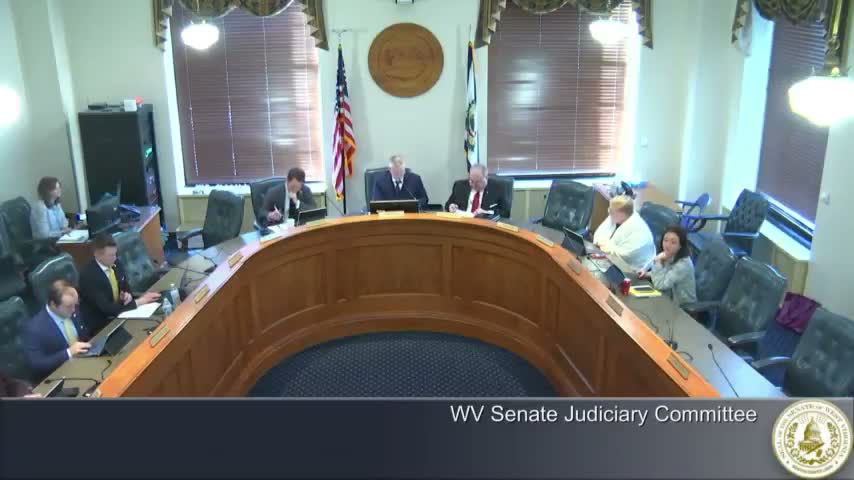
A Senate committee on Monday adopted a committee substitute for Senate Bill 4 that would make it a misdemeanor to approach or remain within 30 feet of a first responder after a verbal warning when the person either acts in a way to impede or interfere with the responder’s duties, threatens or menaces the responder, or harasses the responder. The committee approved an amendment clarifying the language and then reported the substitute to the full Senate with a recommendation that it pass.
Counsel explained the proposal as a new section of law that would be added as West Virginia Code 61-5-30. “This bill creates a new section of code 61 5 30,” counsel told the committee, saying it defines a new misdemeanor with penalties ranging from $50 to $500 or up to one year in jail, or both.
Several senators pressed counsel on drafting details. The senator for Marion asked how the proposal differs from the existing obstruction statute in West Virginia, Code 61-5-17; counsel said the new section is designed as a preventative “barrier” statute that targets being within the 30-foot zone combined with particular intent or conduct, whereas obstruction typically requires actual interference.
Counsel also acknowledged unresolved drafting questions: the bill uses terms such as “impeding or interfering” and “substantial emotional distress” without precise statutory definitions and relies on circumstantial evidence and jury determinations to establish intent. Counsel noted that federal courts in other states have preliminarily enjoined similar measures, saying there have been challenges in Louisiana and Indiana but arguing that the committee substitute’s intent and objective-language elements are intended to address constitutional concerns.
Lonnie Faircloth, who identified himself as president of the Western Union Troopers Association, testified in support of the 30-foot buffer, citing academy timing statistics. “I agree with this law and I agree with the 30 feet,” Faircloth said, and told senators that someone can cover about 25 feet in 1.67 seconds while average firearm-draw times can be longer, which he said supports giving officers a safety buffer.
The committee debated a proposed amendment offered by the senator for Marion to alter the bill’s mens rea language — removing an “intent to” phrasing and instead requiring that a person actually impede, threaten/menace, or harass. After further refinement (the amendment was reformed to insert the word “menace” after “threaten” for clarity), the committee adopted the amendment by voice vote and then agreed to the committee substitute as amended. The chair declared the motion adopted and the vice chair moved that the substitute be reported to the full Senate with a recommendation that it pass.
The committee did not record a roll-call tally on the voice votes and did not set an effective date in committee. The measure will next be scheduled for floor consideration in the Senate.
Counsel explained the proposal as a new section of law that would be added as West Virginia Code 61-5-30. “This bill creates a new section of code 61 5 30,” counsel told the committee, saying it defines a new misdemeanor with penalties ranging from $50 to $500 or up to one year in jail, or both.
Several senators pressed counsel on drafting details. The senator for Marion asked how the proposal differs from the existing obstruction statute in West Virginia, Code 61-5-17; counsel said the new section is designed as a preventative “barrier” statute that targets being within the 30-foot zone combined with particular intent or conduct, whereas obstruction typically requires actual interference.
Counsel also acknowledged unresolved drafting questions: the bill uses terms such as “impeding or interfering” and “substantial emotional distress” without precise statutory definitions and relies on circumstantial evidence and jury determinations to establish intent. Counsel noted that federal courts in other states have preliminarily enjoined similar measures, saying there have been challenges in Louisiana and Indiana but arguing that the committee substitute’s intent and objective-language elements are intended to address constitutional concerns.
Lonnie Faircloth, who identified himself as president of the Western Union Troopers Association, testified in support of the 30-foot buffer, citing academy timing statistics. “I agree with this law and I agree with the 30 feet,” Faircloth said, and told senators that someone can cover about 25 feet in 1.67 seconds while average firearm-draw times can be longer, which he said supports giving officers a safety buffer.
The committee debated a proposed amendment offered by the senator for Marion to alter the bill’s mens rea language — removing an “intent to” phrasing and instead requiring that a person actually impede, threaten/menace, or harass. After further refinement (the amendment was reformed to insert the word “menace” after “threaten” for clarity), the committee adopted the amendment by voice vote and then agreed to the committee substitute as amended. The chair declared the motion adopted and the vice chair moved that the substitute be reported to the full Senate with a recommendation that it pass.
The committee did not record a roll-call tally on the voice votes and did not set an effective date in committee. The measure will next be scheduled for floor consideration in the Senate.
View the Full Meeting & All Its Details
This article offers just a summary. Unlock complete video, transcripts, and insights as a Founder Member.
✓
Watch full, unedited meeting videos
✓
Search every word spoken in unlimited transcripts
✓
AI summaries & real-time alerts (all government levels)
✓
Permanent access to expanding government content
30-day money-back guarantee
