Kirkland judges and coordinators outline five-year Community Court program and results
January 20, 2026 | Kirkland, King County, Washington
This article was created by AI summarizing key points discussed. AI makes mistakes, so for full details and context, please refer to the video of the full meeting. Please report any errors so we can fix them. Report an error »
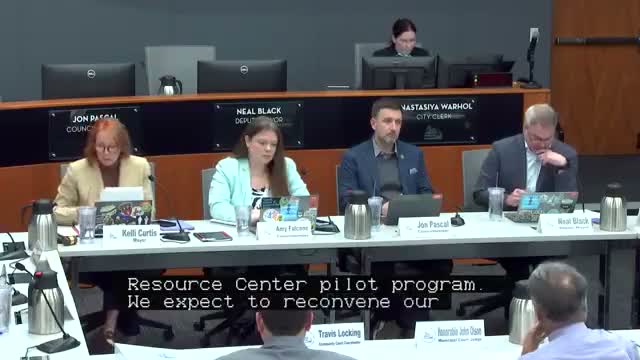
Judge John Olsen and Community Court coordinator Travis Locking presented the council with a five-year overview of Kirkland's Community Court, a problem-solving docket designed for lower-level offenses that aims to address underlying issues such as substance use, mental health and homelessness.
"Community court's whole concept is to look at different ways to work with offenders in your community to try something different than traditional court," Judge Olsen said, describing the court as a specialist, problem-solving model that emphasizes weekly engagement and individualized conditions.
Locking and Olsen described the program's intake and contract process, known as an SOC (stipulated order of continuance). Defendants are invited to opt in after observing a calendar; those who enter an SOC agree to weekly attendance, community service, and completion of assessments and treatment when required. If participants complete agreed conditions within roughly 16 weeks (with many taking longer), the court dismisses the underlying case.
Program data summarized for Council covered referrals and outcomes since the program began in 2021. Presenters reported about 275 referrals in total with a 25% graduation rate for all referrals; staff clarified that dozens of referrals never engaged (about 45% never opted in or never made contact), and among people who do opt in the effective graduation rate is higher. Judge Olsen and Locking emphasized that the program is resource-intensive but credited weekly judicial engagement and volunteer navigators with improving success rates.
Olsen and Locking also highlighted challenges: access to treatment and assessment is a recurring barrier because many participants lack insurance or reliable transportation to off-site providers. Council members pressed staff on capacity and donations: Councilmember Falcone asked whether the program could support more than roughly 20 participants (staff said capacity could be expanded toward 30 with additional resources), and Locking explained that clothing and hygiene donations can be dropped at court and screened for dignity and usefulness.
The court team described volunteer navigators, a boutique of donated clothing and essentials, a virtual resource center shared across jurisdictions, and a new eight-module life-skills curriculum intended to complement community service hours. They reported low recidivism among graduates so far (presenters cited an 8.7% rate) and said continued community partners' support is critical.
Council thanked the presenters and asked staff to share graduation dates so council members can attend.
"Community court's whole concept is to look at different ways to work with offenders in your community to try something different than traditional court," Judge Olsen said, describing the court as a specialist, problem-solving model that emphasizes weekly engagement and individualized conditions.
Locking and Olsen described the program's intake and contract process, known as an SOC (stipulated order of continuance). Defendants are invited to opt in after observing a calendar; those who enter an SOC agree to weekly attendance, community service, and completion of assessments and treatment when required. If participants complete agreed conditions within roughly 16 weeks (with many taking longer), the court dismisses the underlying case.
Program data summarized for Council covered referrals and outcomes since the program began in 2021. Presenters reported about 275 referrals in total with a 25% graduation rate for all referrals; staff clarified that dozens of referrals never engaged (about 45% never opted in or never made contact), and among people who do opt in the effective graduation rate is higher. Judge Olsen and Locking emphasized that the program is resource-intensive but credited weekly judicial engagement and volunteer navigators with improving success rates.
Olsen and Locking also highlighted challenges: access to treatment and assessment is a recurring barrier because many participants lack insurance or reliable transportation to off-site providers. Council members pressed staff on capacity and donations: Councilmember Falcone asked whether the program could support more than roughly 20 participants (staff said capacity could be expanded toward 30 with additional resources), and Locking explained that clothing and hygiene donations can be dropped at court and screened for dignity and usefulness.
The court team described volunteer navigators, a boutique of donated clothing and essentials, a virtual resource center shared across jurisdictions, and a new eight-module life-skills curriculum intended to complement community service hours. They reported low recidivism among graduates so far (presenters cited an 8.7% rate) and said continued community partners' support is critical.
Council thanked the presenters and asked staff to share graduation dates so council members can attend.
Don't Miss a Word: See the Full Meeting!
Go beyond summaries. Unlock every video, transcript, and key insight with a Founder Membership.
✓
Get instant access to full meeting videos
✓
Search and clip any phrase from complete transcripts
✓
Receive AI-powered summaries & custom alerts
✓
Enjoy lifetime, unrestricted access to government data
30-day money-back guarantee
