Port Royal staff roll out new multifamily rules after 18-month moratorium
January 24, 2026 | Beaufort County, South Carolina
This article was created by AI summarizing key points discussed. AI makes mistakes, so for full details and context, please refer to the video of the full meeting. Please report any errors so we can fix them. Report an error »
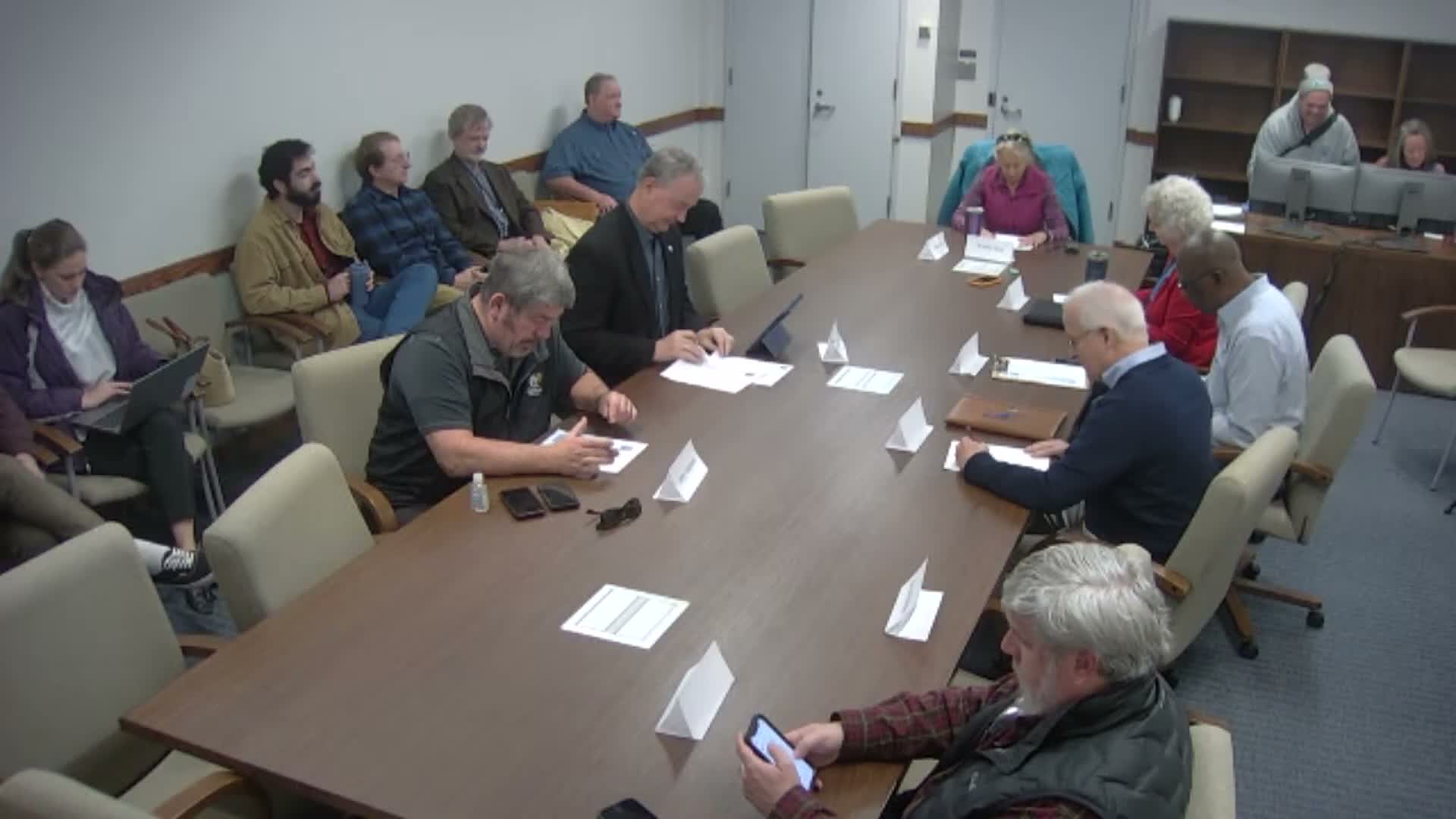
PORT ROYAL ' Planning staff on Tuesday presented a broad rewrite of the town's multifamily and development standards designed to curb large, uniform apartment complexes and encourage a mix of housing types.
Noah Krafft, a member of town planning staff, told council members the process began after the council imposed a moratorium in May 2024 on development review permits for anything other than detached single-family houses. The moratorium was extended to allow a comprehensive code review and, Krafft said, was lifted in November after roughly 18 months.
Krafft described several core changes staff drafted with consultant Lauren Kelly of Moser Kelly Design: a clarified set of building-type definitions so townhouses, duplexes and triplexes are not treated inconsistently as "multifamily"; a building-type diversity requirement that forces larger projects to include different housing forms; and the elevation of cottage courts from a single building type to a development type.
"We were turning into that bedroom community," Krafft said, describing recent apartment projects along Savannah Highway and Robert Smalls Parkway. To prevent future developments made up entirely of identical mid-rise buildings, the proposed standards require a mix of building types in denser districts: in T4/T5 districts, developments with more than 20 buildings or more than 72 units must include multiple building types rather than repeating a single building product.
Krafft walked council members through an example concept for a site behind the Piggly Wiggly shopping center that had been proposed as 233 townhomes. Under the new rules for a T4 neighborhood center, developers would be required to incorporate at least five different building types and at least two different types per block, he said.
The code rewrite also consolidates and simplifies many technical standards. Krafft said architectural requirements were condensed from lengthy chapter text into shorter tables and that setback and district standards were consolidated to make the code easier to use for architects and homeowners.
Another major change addresses public and civic spaces: the town rewrote civic-space categories to match local places (for example, Sands Beach and Traveling Buoy Park) and added usability requirements (public art, seating, pathways). Krafft said the code adds distance standards so residents in a new development are within a specified walking distance of civic amenities (Krafft cited roughly 1,500 feet or a quarter-mile as a working figure, depending on the project scale).
Council members asked about cost effects and affordability. Krafft said design-standard relaxations outside the village may reduce some costs but that the town lacks authority to mandate inclusionary zoning; he recommended state-level enabling legislation for mandatory inclusionary requirements and discussed using incentives such as density bonuses as a potential tool while noting trade-offs for the town's tax base.
Krafft and other staff said developers' reactions have varied: some are probing for loopholes while others are already revising plans to meet the new standards. He also cautioned that several large, vested sites approved before the changes remain in the pipeline and will be built under prior rules.
The presentation detailed the process, public workshops ("six to eight" sessions), and the consultant engagement that led to the package, but the transcript provided does not record a council vote on the code changes. Council members expressed appreciation for the staff work and moved on to other agenda items.
Next steps: staff presentation was informational in the recorded segment; the transcript does not show a recorded final vote or ordinance adoption in the provided excerpt.
Noah Krafft, a member of town planning staff, told council members the process began after the council imposed a moratorium in May 2024 on development review permits for anything other than detached single-family houses. The moratorium was extended to allow a comprehensive code review and, Krafft said, was lifted in November after roughly 18 months.
Krafft described several core changes staff drafted with consultant Lauren Kelly of Moser Kelly Design: a clarified set of building-type definitions so townhouses, duplexes and triplexes are not treated inconsistently as "multifamily"; a building-type diversity requirement that forces larger projects to include different housing forms; and the elevation of cottage courts from a single building type to a development type.
"We were turning into that bedroom community," Krafft said, describing recent apartment projects along Savannah Highway and Robert Smalls Parkway. To prevent future developments made up entirely of identical mid-rise buildings, the proposed standards require a mix of building types in denser districts: in T4/T5 districts, developments with more than 20 buildings or more than 72 units must include multiple building types rather than repeating a single building product.
Krafft walked council members through an example concept for a site behind the Piggly Wiggly shopping center that had been proposed as 233 townhomes. Under the new rules for a T4 neighborhood center, developers would be required to incorporate at least five different building types and at least two different types per block, he said.
The code rewrite also consolidates and simplifies many technical standards. Krafft said architectural requirements were condensed from lengthy chapter text into shorter tables and that setback and district standards were consolidated to make the code easier to use for architects and homeowners.
Another major change addresses public and civic spaces: the town rewrote civic-space categories to match local places (for example, Sands Beach and Traveling Buoy Park) and added usability requirements (public art, seating, pathways). Krafft said the code adds distance standards so residents in a new development are within a specified walking distance of civic amenities (Krafft cited roughly 1,500 feet or a quarter-mile as a working figure, depending on the project scale).
Council members asked about cost effects and affordability. Krafft said design-standard relaxations outside the village may reduce some costs but that the town lacks authority to mandate inclusionary zoning; he recommended state-level enabling legislation for mandatory inclusionary requirements and discussed using incentives such as density bonuses as a potential tool while noting trade-offs for the town's tax base.
Krafft and other staff said developers' reactions have varied: some are probing for loopholes while others are already revising plans to meet the new standards. He also cautioned that several large, vested sites approved before the changes remain in the pipeline and will be built under prior rules.
The presentation detailed the process, public workshops ("six to eight" sessions), and the consultant engagement that led to the package, but the transcript provided does not record a council vote on the code changes. Council members expressed appreciation for the staff work and moved on to other agenda items.
Next steps: staff presentation was informational in the recorded segment; the transcript does not show a recorded final vote or ordinance adoption in the provided excerpt.
Don't Miss a Word: See the Full Meeting!
Go beyond summaries. Unlock every video, transcript, and key insight with a Founder Membership.
✓
Get instant access to full meeting videos
✓
Search and clip any phrase from complete transcripts
✓
Receive AI-powered summaries & custom alerts
✓
Enjoy lifetime, unrestricted access to government data
30-day money-back guarantee
