Cheltenham leaders defend low‑enrollment sections as they propose new courses including state‑mandated financial literacy
December 30, 2024 | Cheltenham SD, School Districts, Pennsylvania
This article was created by AI summarizing key points discussed. AI makes mistakes, so for full details and context, please refer to the video of the full meeting. Please report any errors so we can fix them. Report an error »
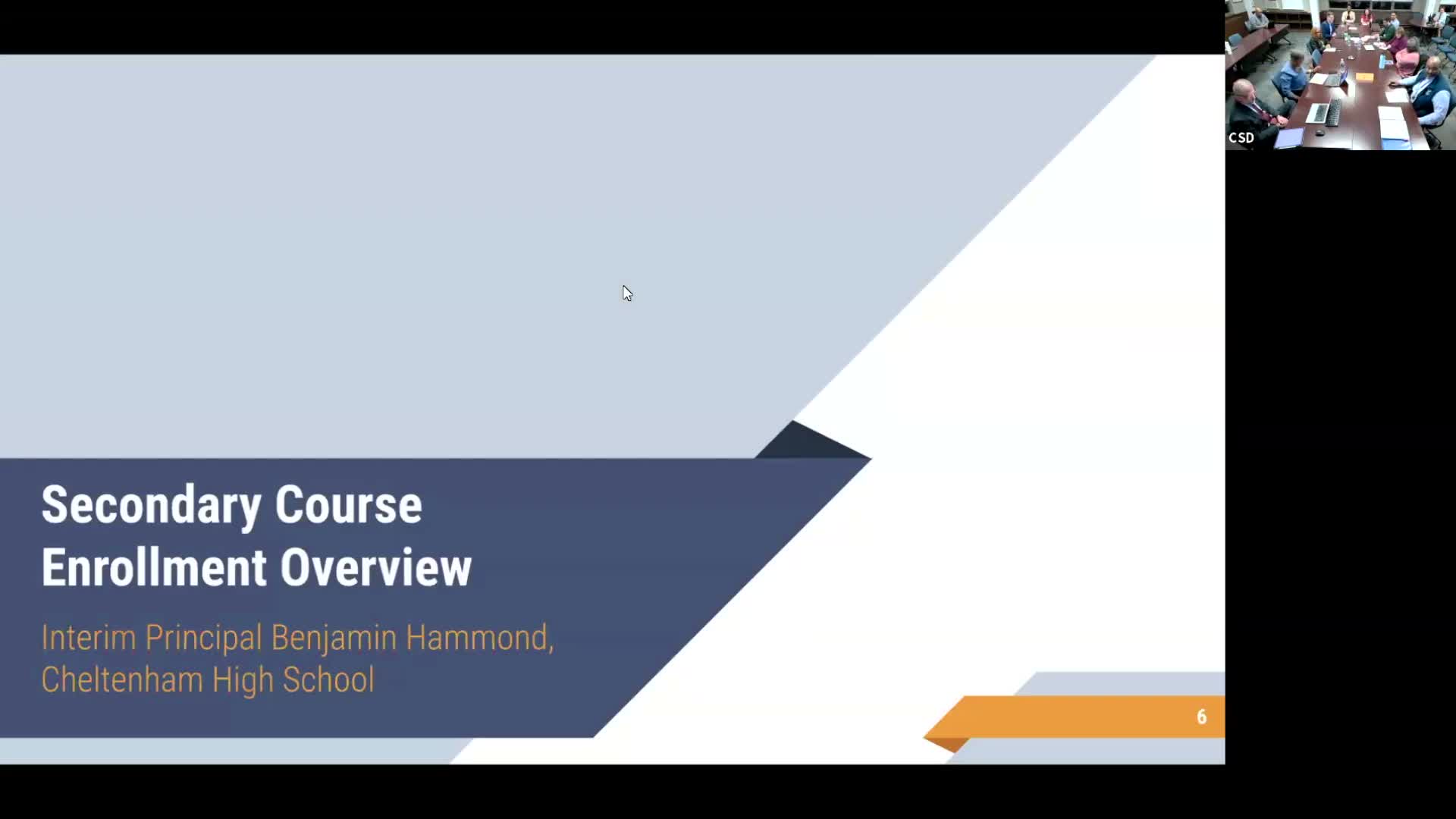
Cheltenham School District officials told the Educational Affairs Committee on Dec. 17 that apparent under‑enrollment in some high‑school sections reflects scheduling design, staffing and a board policy that lets the district choose not to run courses with fewer than 15 students.
"Board policy 1.26 ... technically says that if a course is under 15, we have the right to not offer or run that course after talking with the board," interim high‑school principal Dr. Benjamin Hammond said as he explained how courses, sections and singletons are counted. Hammond and other staff said some AP, language and music offerings look under‑enrolled on paper but are retained because of scheduling constraints, combined sections, dual‑enrollment options, shared ESL staffing and to preserve student choice.
That explanation prefaced presentations of four course proposals from high‑school leaders. Mark Cobb, a vice principal, said the district will add a state‑mandated financial‑literacy half‑credit for the class of 2027, using materials from the Pennsylvania Department of Education and SAS; Cobb said the course will be interdisciplinary and taught by staff in business, math and social studies. "Thanks to the Commonwealth of Pennsylvania, we have a new mandate, and we are gonna be adding a financial literacy course to our course catalog effective next year," Cobb said.
Cobb also described a Social Justice and Protest Movements course framed around Learning for Justice standards, to be offered to grades 9–12; district materials show an initial proposal of four sections. He proposed introducing an Algebra I Honors course as part of a planned review of secondary math materials, and redesigning choir offerings by creating a freshman choir in the fall and a combined concert choir in the spring to address uneven high‑voice/low‑voice enrollment.
Board members generally welcomed the proposals but asked practical questions about enrollment growth and staffing. One board member urged patience, noting new courses often need time and clear instructors to gain traction. Hammond and Cobb said course requests and an April projection process will determine which sections run and that the administration will return with April projections showing which courses are likely to run in the next school year.
The committee did not take formal votes on the new course proposals during the meeting; the district indicated some items will return for further review and final recommendation during the budget and scheduling cycle.
Next steps: the high school will share enrollment projections in April and the administration will return with recommendations tied to the district's budget and secondary‑math materials review.
"Board policy 1.26 ... technically says that if a course is under 15, we have the right to not offer or run that course after talking with the board," interim high‑school principal Dr. Benjamin Hammond said as he explained how courses, sections and singletons are counted. Hammond and other staff said some AP, language and music offerings look under‑enrolled on paper but are retained because of scheduling constraints, combined sections, dual‑enrollment options, shared ESL staffing and to preserve student choice.
That explanation prefaced presentations of four course proposals from high‑school leaders. Mark Cobb, a vice principal, said the district will add a state‑mandated financial‑literacy half‑credit for the class of 2027, using materials from the Pennsylvania Department of Education and SAS; Cobb said the course will be interdisciplinary and taught by staff in business, math and social studies. "Thanks to the Commonwealth of Pennsylvania, we have a new mandate, and we are gonna be adding a financial literacy course to our course catalog effective next year," Cobb said.
Cobb also described a Social Justice and Protest Movements course framed around Learning for Justice standards, to be offered to grades 9–12; district materials show an initial proposal of four sections. He proposed introducing an Algebra I Honors course as part of a planned review of secondary math materials, and redesigning choir offerings by creating a freshman choir in the fall and a combined concert choir in the spring to address uneven high‑voice/low‑voice enrollment.
Board members generally welcomed the proposals but asked practical questions about enrollment growth and staffing. One board member urged patience, noting new courses often need time and clear instructors to gain traction. Hammond and Cobb said course requests and an April projection process will determine which sections run and that the administration will return with April projections showing which courses are likely to run in the next school year.
The committee did not take formal votes on the new course proposals during the meeting; the district indicated some items will return for further review and final recommendation during the budget and scheduling cycle.
Next steps: the high school will share enrollment projections in April and the administration will return with recommendations tied to the district's budget and secondary‑math materials review.
Don't Miss a Word: See the Full Meeting!
Go beyond summaries. Unlock every video, transcript, and key insight with a Founder Membership.
✓
Get instant access to full meeting videos
✓
Search and clip any phrase from complete transcripts
✓
Receive AI-powered summaries & custom alerts
✓
Enjoy lifetime, unrestricted access to government data
30-day money-back guarantee
