Fort Thomas design board conditionally backs homeowner plan, bars east‑side demolition
January 23, 2026 | Fort Thomas, Campbell County, Kentucky
This article was created by AI summarizing key points discussed. AI makes mistakes, so for full details and context, please refer to the video of the full meeting. Please report any errors so we can fix them. Report an error »
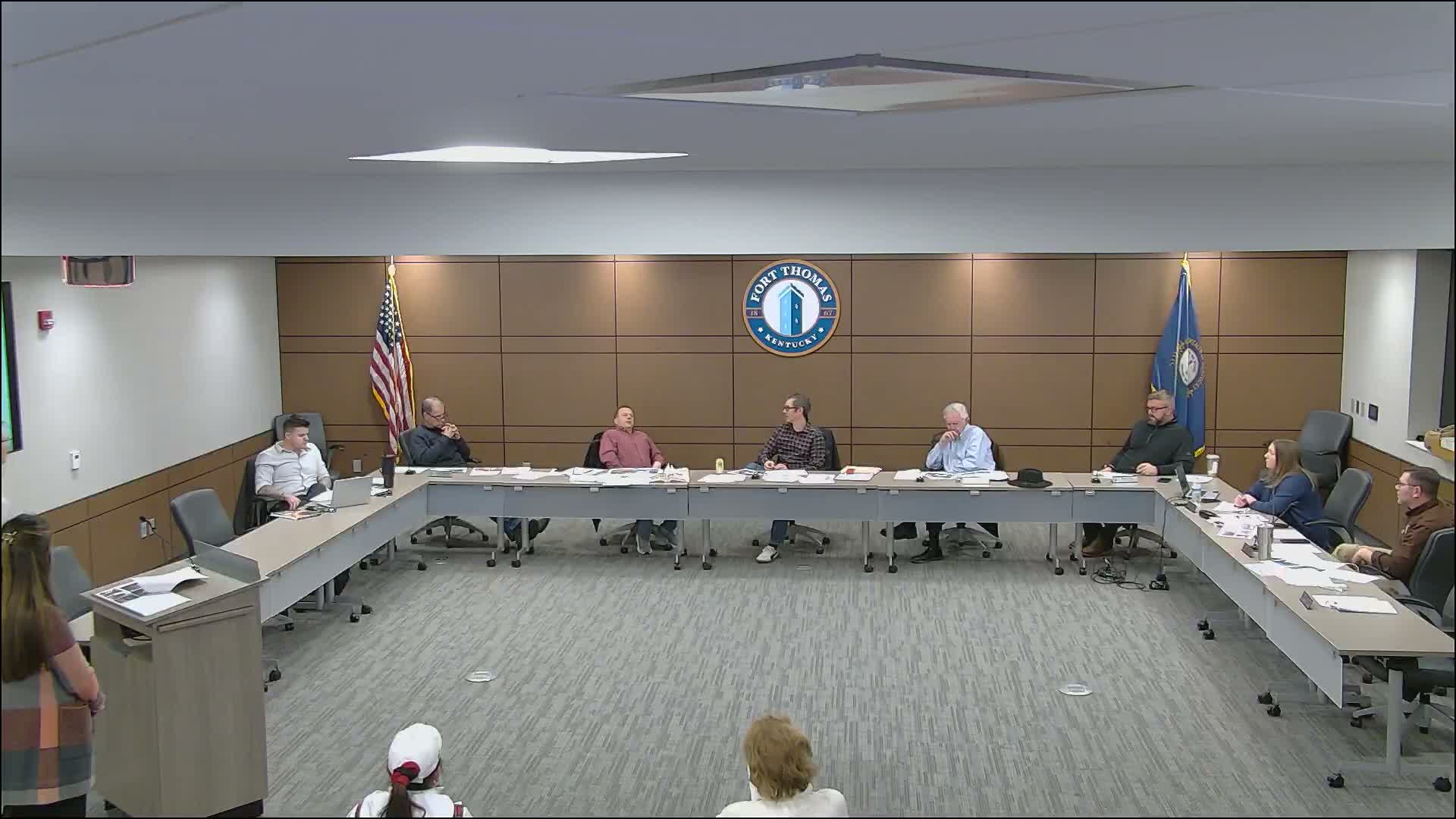
The Fort Thomas Design Review Board on Jan. 26 passed a nonbinding motion to conditionally approve a homeowner's proposed addition, but board members said the applicant must maintain the existing east (riverside) exterior wall and return with updated exterior elevations, compatible materials and revised fenestration for further review.
The maker of the motion, Mark, told the board he would be willing to support the plan "with exception to the demolition of the existing exterior on the East Side" and asked that homeowners "return presenting updated exterior elevations providing more appropriate and compatible exterior materials." He also noted that the shake siding shown in the application renderings was identified in staff materials as not compatible with the historic building.
The motion required the applicant to preserve the east wall and associated roof massing, and to come back with material samples and revised fenestration. After clarifying language, a board member seconded the motion and the chair called the nonbinding motion passed by voice vote.
Public commenters urged strict application of the memorandum of agreement (MOA) and Secretary of the Interior standards. Sharon McKnight of 62 Miller Lane asked whether the MOA and the 'shall' language in the preservation principles are mandatory, saying that "these rules are mandatory. They are not discretionary," and urging clearer guidance so applicants understand the requirements. Joan Farris of 66 Boerne Lane asked whether staff's recommendation had changed; Wes, the staff reviewer, said his recommendation to deny the application "stands" based on the project as presented, citing demolition of the east facade, altered fenestration and the size of the addition as his principal concerns.
Board discussion before the vote focused on preserving visible historic elements (porch edge, corner column and the original footprint), balancing massing with the historic character, and on practical issues such as garage access and whether a larger garage opening might be necessary to avoid a retaining wall. Several members said that additions should generally be placed on rear elevations and that visibility from the public right of way is an objective factor the board considers when assessing compatibility.
Under the conditions adopted in the motion, the applicant is expected to return with updated renderings, material samples and clarified elevations to demonstrate how the addition will be "compatible in size, scale, and proportion" with the historic building. The board did not adopt a final, binding approval tonight; members described the motion as informative and a way to give direction to the applicant.
The board adjourned after the vote. The applicant must present revised plans at a future meeting for the board to consider a formal, final decision.
The maker of the motion, Mark, told the board he would be willing to support the plan "with exception to the demolition of the existing exterior on the East Side" and asked that homeowners "return presenting updated exterior elevations providing more appropriate and compatible exterior materials." He also noted that the shake siding shown in the application renderings was identified in staff materials as not compatible with the historic building.
The motion required the applicant to preserve the east wall and associated roof massing, and to come back with material samples and revised fenestration. After clarifying language, a board member seconded the motion and the chair called the nonbinding motion passed by voice vote.
Public commenters urged strict application of the memorandum of agreement (MOA) and Secretary of the Interior standards. Sharon McKnight of 62 Miller Lane asked whether the MOA and the 'shall' language in the preservation principles are mandatory, saying that "these rules are mandatory. They are not discretionary," and urging clearer guidance so applicants understand the requirements. Joan Farris of 66 Boerne Lane asked whether staff's recommendation had changed; Wes, the staff reviewer, said his recommendation to deny the application "stands" based on the project as presented, citing demolition of the east facade, altered fenestration and the size of the addition as his principal concerns.
Board discussion before the vote focused on preserving visible historic elements (porch edge, corner column and the original footprint), balancing massing with the historic character, and on practical issues such as garage access and whether a larger garage opening might be necessary to avoid a retaining wall. Several members said that additions should generally be placed on rear elevations and that visibility from the public right of way is an objective factor the board considers when assessing compatibility.
Under the conditions adopted in the motion, the applicant is expected to return with updated renderings, material samples and clarified elevations to demonstrate how the addition will be "compatible in size, scale, and proportion" with the historic building. The board did not adopt a final, binding approval tonight; members described the motion as informative and a way to give direction to the applicant.
The board adjourned after the vote. The applicant must present revised plans at a future meeting for the board to consider a formal, final decision.
View the Full Meeting & All Its Details
This article offers just a summary. Unlock complete video, transcripts, and insights as a Founder Member.
✓
Watch full, unedited meeting videos
✓
Search every word spoken in unlimited transcripts
✓
AI summaries & real-time alerts (all government levels)
✓
Permanent access to expanding government content
30-day money-back guarantee
