Audit finds major compliance gaps in ADE school safety grants; department outlines fixes
January 21, 2026 | 2026 Legislature Arizona, Arizona
This article was created by AI summarizing key points discussed. AI makes mistakes, so for full details and context, please refer to the video of the full meeting. Please report any errors so we can fix them. Report an error »
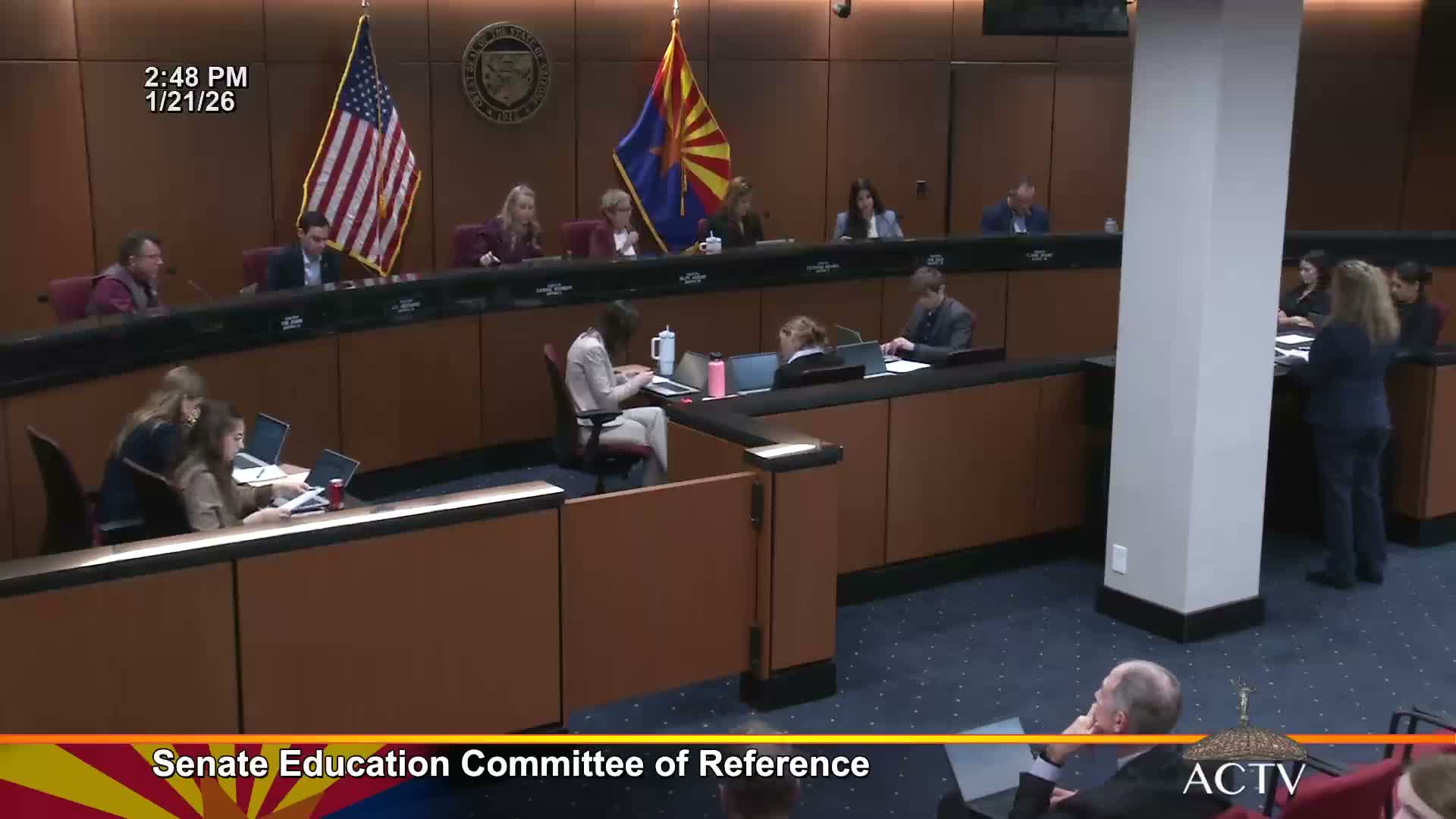
An Arizona Auditor General performance audit found widespread compliance gaps in the Arizona Department of Education’s School Safety Program, and the department told the Senate Education Committee it has accepted the audit’s recommendations and begun steps to address them.
Cassie Deco of the Auditor General’s Office summarized the audit findings: program expansion and legislative appropriations increased grant awards to more than $128 million in fiscal year 2025 and supported roughly 1,086 school-safety positions on over 1,100 campuses. In a sample of 16 schools, the audit found 15 did not comply with one or more program requirements, including failing to develop complete operational plans (11 schools), not meeting safety-team requirements (13 schools), incomplete or missing training records (5 schools), and missing activity logs to show funded personnel were used for safety purposes. The audit also found the department made some reimbursements without receipt of supporting expenditure reports, citing a FY2022 instance in which ADE reimbursed a school more than $43,000 without expenditure documentation.
The Auditor General recommended five actions, including stronger monitoring of grantees, conducting site visits and risk assessments, developing written compliance policies and procedures, and ensuring expenditure reports support reimbursements. The Auditor General said it will follow up in six months to assess implementation.
Mike Kurtenbach, ADE director of school safety, acknowledged the findings and described steps ADE has taken or plans to take: assigning program specialists to alphabetized caseloads so each grantee has a single point of contact; initiating site visits; conducting representative desk reviews; requiring encrypted submission of emergency operations plans rather than attestations; and rolling out additional training beginning in July. Kurtenbach said the FY2022 discrepancy cited in the audit was a one-time issue and that no such discrepancies were found in FY2024. He said ADE’s grants-management team remains small relative to program growth and emphasized the department will implement the recommendations.
Senator Miranda raised whether emergency operations plans contemplate responses to federal enforcement actions such as ICE; ADE replied that EOPs are designed to address on-campus safety threats (for example, armed intruders or external threats) and do not contemplate agency enforcement actions. Senator Miranda indicated she would seek follow-up discussions with ADE.
The Auditor General’s report and ADE testimony make clear the department agrees with the audit’s recommendations and will be subject to a six-month follow-up by the Auditor General’s Office.
Cassie Deco of the Auditor General’s Office summarized the audit findings: program expansion and legislative appropriations increased grant awards to more than $128 million in fiscal year 2025 and supported roughly 1,086 school-safety positions on over 1,100 campuses. In a sample of 16 schools, the audit found 15 did not comply with one or more program requirements, including failing to develop complete operational plans (11 schools), not meeting safety-team requirements (13 schools), incomplete or missing training records (5 schools), and missing activity logs to show funded personnel were used for safety purposes. The audit also found the department made some reimbursements without receipt of supporting expenditure reports, citing a FY2022 instance in which ADE reimbursed a school more than $43,000 without expenditure documentation.
The Auditor General recommended five actions, including stronger monitoring of grantees, conducting site visits and risk assessments, developing written compliance policies and procedures, and ensuring expenditure reports support reimbursements. The Auditor General said it will follow up in six months to assess implementation.
Mike Kurtenbach, ADE director of school safety, acknowledged the findings and described steps ADE has taken or plans to take: assigning program specialists to alphabetized caseloads so each grantee has a single point of contact; initiating site visits; conducting representative desk reviews; requiring encrypted submission of emergency operations plans rather than attestations; and rolling out additional training beginning in July. Kurtenbach said the FY2022 discrepancy cited in the audit was a one-time issue and that no such discrepancies were found in FY2024. He said ADE’s grants-management team remains small relative to program growth and emphasized the department will implement the recommendations.
Senator Miranda raised whether emergency operations plans contemplate responses to federal enforcement actions such as ICE; ADE replied that EOPs are designed to address on-campus safety threats (for example, armed intruders or external threats) and do not contemplate agency enforcement actions. Senator Miranda indicated she would seek follow-up discussions with ADE.
The Auditor General’s report and ADE testimony make clear the department agrees with the audit’s recommendations and will be subject to a six-month follow-up by the Auditor General’s Office.
View the Full Meeting & All Its Details
This article offers just a summary. Unlock complete video, transcripts, and insights as a Founder Member.
✓
Watch full, unedited meeting videos
✓
Search every word spoken in unlimited transcripts
✓
AI summaries & real-time alerts (all government levels)
✓
Permanent access to expanding government content
30-day money-back guarantee
