Senate panel advances bill seeking long‑term liability for providers who treat minors for gender transition
January 21, 2026 | 2026 Legislature Arizona, Arizona
This article was created by AI summarizing key points discussed. AI makes mistakes, so for full details and context, please refer to the video of the full meeting. Please report any errors so we can fix them. Report an error »
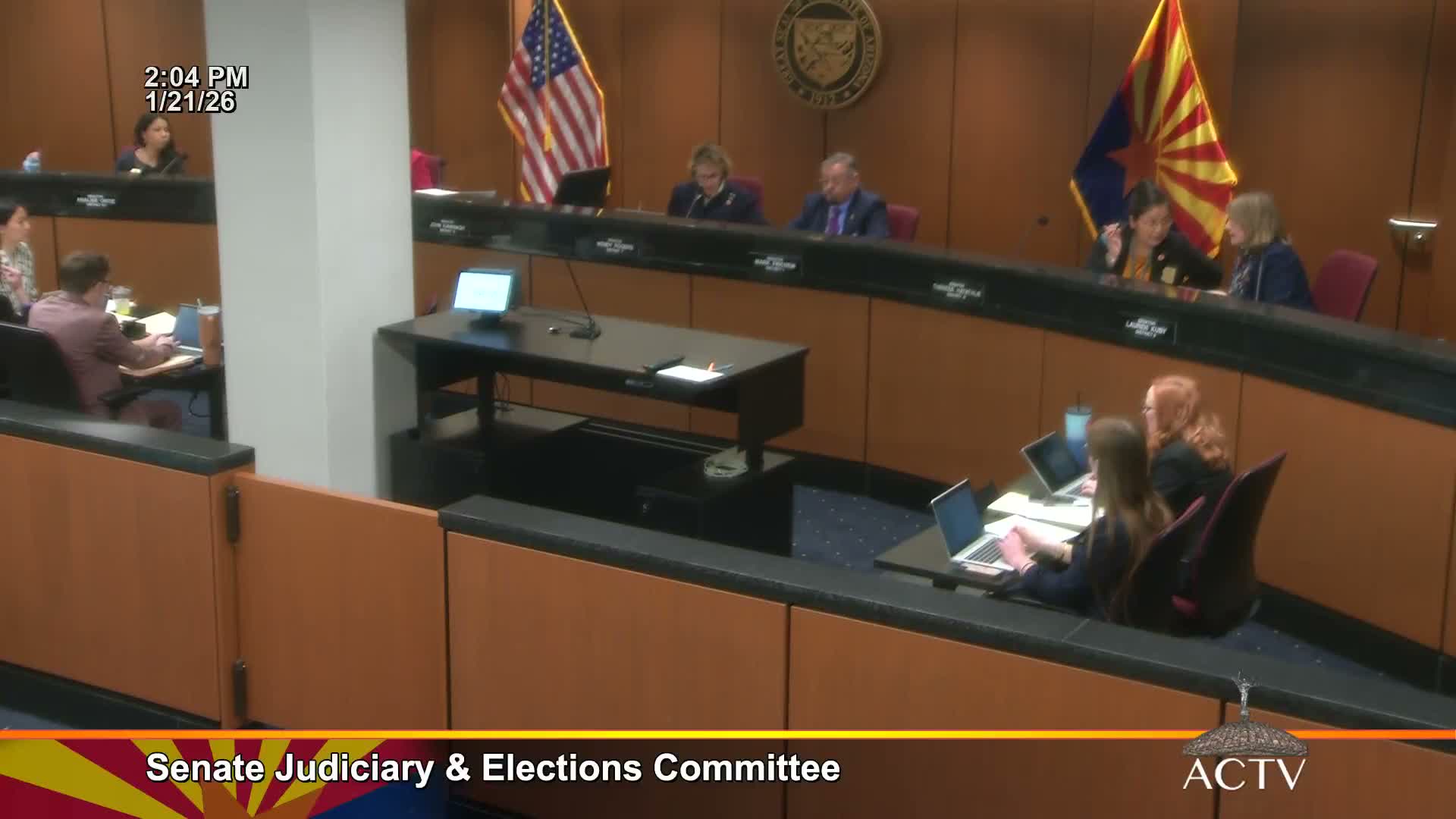
Sponsor and proponents framed SB1015 as a response to detransition cases and gaps in redress for irreversible outcomes for minors. The measure establishes strict personal liability for any health professional who provides a gender transition procedure to a minor, requires providers to cover costs of subsequent detransition procedures sought within 25 years of the original treatment, and voids contractual waivers of that liability. The bill also permits affected persons to bring suit before they turn 26 or within four years after they discover a causal injury.
Testimony split sharply. Chloe Cole, a self‑identified detransitioner, described starting puberty blockers and hormones in middle school and receiving a double mastectomy before she was old enough to drive, saying she suffered lifelong harms and urging passage to create a “safe off‑ramp” and access to care and compensation. A father who testified, Edward Hudacco, described a family court and medical‑care dispute involving UCSF and alleged procedures he says were done without his knowledge; he said he is pursuing federal civil and tort claims and supported SB1015 as a path to accountability.
Proponents, including Dr. Travis Morel of Do No Harm, cited studies and asserted higher regret and detransition rates among some groups, arguing strict liability would create incentives for caution and better documentation. Opponents included Marilyn Rodriguez of the ACLU of Arizona and several medical‑care witnesses who said the measure creates unequal liability based on patient identity, risks discriminating against transgender patients, could make providers uninsurable and chill access to care, and may invite legal challenges under equal‑protection law.
Committee members pressed witnesses on evidence, peer‑reviewed data and whether the state or private malpractice frameworks are the right venue to address research gaps and harms. Some members warned that turning scientific, clinical judgment into a primarily legal question risks chilling speech and practice; others argued that existing disciplinary tools and civil remedies are insufficient when harms are substantial and irreversible.
The committee adopted a due‑pass recommendation on SB1015 by a 4‑3 vote. Sponsors indicated willingness to consider amendments addressing data collection, insurance implications and narrow definitions of covered procedures. No floor action was included in the committee record; the bill now moves to the next committee stage.
Testimony split sharply. Chloe Cole, a self‑identified detransitioner, described starting puberty blockers and hormones in middle school and receiving a double mastectomy before she was old enough to drive, saying she suffered lifelong harms and urging passage to create a “safe off‑ramp” and access to care and compensation. A father who testified, Edward Hudacco, described a family court and medical‑care dispute involving UCSF and alleged procedures he says were done without his knowledge; he said he is pursuing federal civil and tort claims and supported SB1015 as a path to accountability.
Proponents, including Dr. Travis Morel of Do No Harm, cited studies and asserted higher regret and detransition rates among some groups, arguing strict liability would create incentives for caution and better documentation. Opponents included Marilyn Rodriguez of the ACLU of Arizona and several medical‑care witnesses who said the measure creates unequal liability based on patient identity, risks discriminating against transgender patients, could make providers uninsurable and chill access to care, and may invite legal challenges under equal‑protection law.
Committee members pressed witnesses on evidence, peer‑reviewed data and whether the state or private malpractice frameworks are the right venue to address research gaps and harms. Some members warned that turning scientific, clinical judgment into a primarily legal question risks chilling speech and practice; others argued that existing disciplinary tools and civil remedies are insufficient when harms are substantial and irreversible.
The committee adopted a due‑pass recommendation on SB1015 by a 4‑3 vote. Sponsors indicated willingness to consider amendments addressing data collection, insurance implications and narrow definitions of covered procedures. No floor action was included in the committee record; the bill now moves to the next committee stage.
View the Full Meeting & All Its Details
This article offers just a summary. Unlock complete video, transcripts, and insights as a Founder Member.
✓
Watch full, unedited meeting videos
✓
Search every word spoken in unlimited transcripts
✓
AI summaries & real-time alerts (all government levels)
✓
Permanent access to expanding government content
30-day money-back guarantee
