Committee advances bill allowing AG, county attorneys to sue researchers for fraudulent studies
January 21, 2026 | 2026 Legislature Arizona, Arizona
This article was created by AI summarizing key points discussed. AI makes mistakes, so for full details and context, please refer to the video of the full meeting. Please report any errors so we can fix them. Report an error »
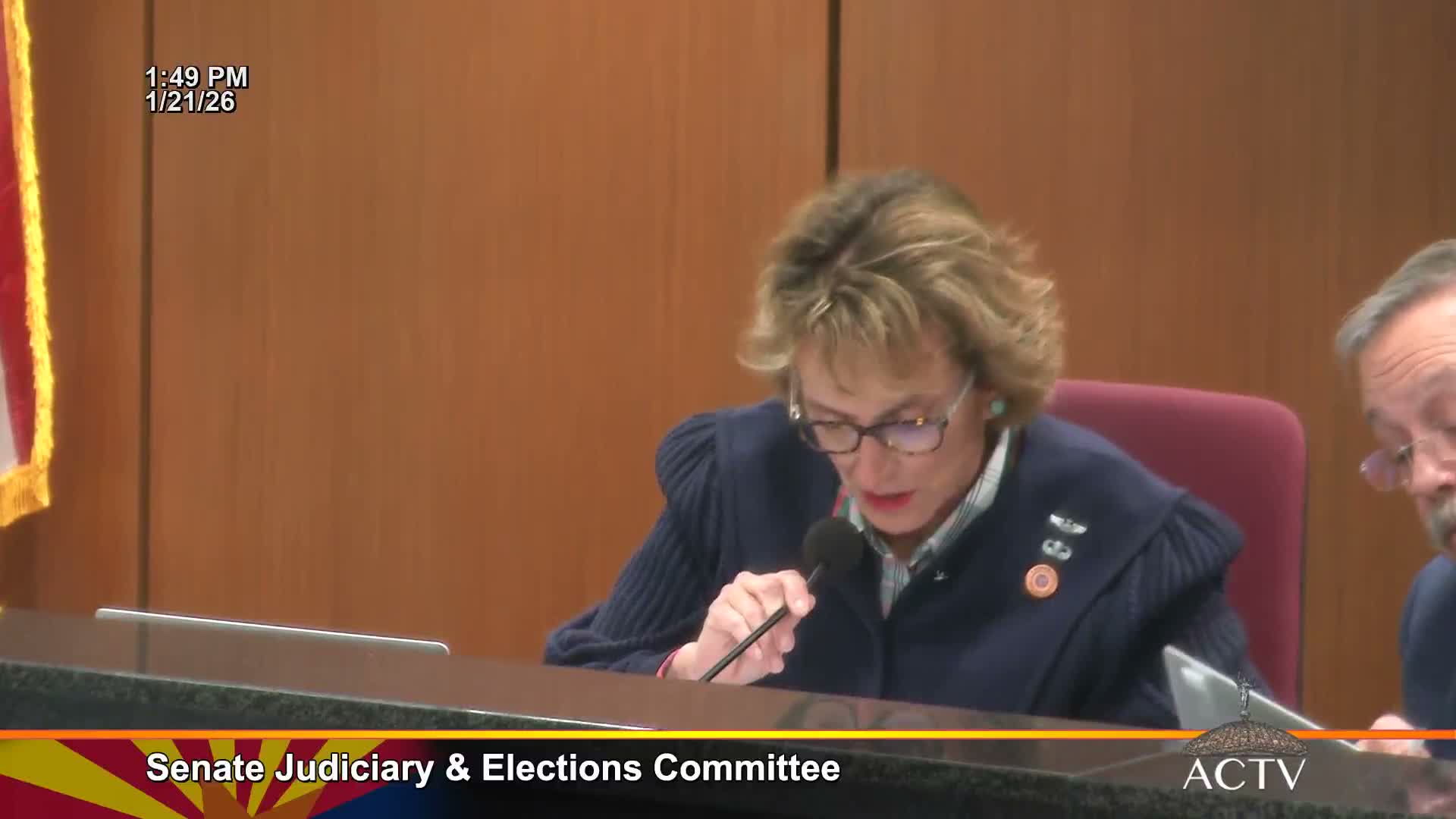
Sponsor introduced SB1066 as a civil‑liability mechanism to hold researchers accountable for knowingly or recklessly publishing fraudulent scientific research. The bill authorizes the Attorney General or a county attorney to commence civil actions within four years of publication; private parties who suffer damages could sue in superior court and recover damages sustained. The measure includes limited exceptions where researchers preregister hypotheses or publish methods and data on open access platforms.
Lawrence Burke Fyles, the bill originator, testified about pervasive research fraud, citing an increase in retractions (citing Retraction Watch) and historical examples such as manipulated images in an Alzheimer's study. Fyles argued that current remedies (retractions, institutional discipline) do not impose sufficient personal financial liability to deter deliberate misconduct.
Committee members questioned how prosecutors would decide what constitutes fraudulent science, the interaction with peer review and scientific judgment, and whether litigation would chill legitimate research. Supporters said the bill targets deliberate falsification, not honest error; skeptics warned of chilling effects, legal uncertainty and the risk of transforming scientific disputes into prosecutorial decisions.
The committee voted to recommend SB1066 for a due‑pass (4 ayes, 3 noes). Chair and sponsors said they would accept technical fixes.
Lawrence Burke Fyles, the bill originator, testified about pervasive research fraud, citing an increase in retractions (citing Retraction Watch) and historical examples such as manipulated images in an Alzheimer's study. Fyles argued that current remedies (retractions, institutional discipline) do not impose sufficient personal financial liability to deter deliberate misconduct.
Committee members questioned how prosecutors would decide what constitutes fraudulent science, the interaction with peer review and scientific judgment, and whether litigation would chill legitimate research. Supporters said the bill targets deliberate falsification, not honest error; skeptics warned of chilling effects, legal uncertainty and the risk of transforming scientific disputes into prosecutorial decisions.
The committee voted to recommend SB1066 for a due‑pass (4 ayes, 3 noes). Chair and sponsors said they would accept technical fixes.
View the Full Meeting & All Its Details
This article offers just a summary. Unlock complete video, transcripts, and insights as a Founder Member.
✓
Watch full, unedited meeting videos
✓
Search every word spoken in unlimited transcripts
✓
AI summaries & real-time alerts (all government levels)
✓
Permanent access to expanding government content
30-day money-back guarantee
