JLBC warns of budget risks: SNAP error‑rate penalties, ESA growth and Prop 123 bond plan could strain finances
January 21, 2026 | 2026 Legislature Arizona, Arizona
This article was created by AI summarizing key points discussed. AI makes mistakes, so for full details and context, please refer to the video of the full meeting. Please report any errors so we can fix them. Report an error »
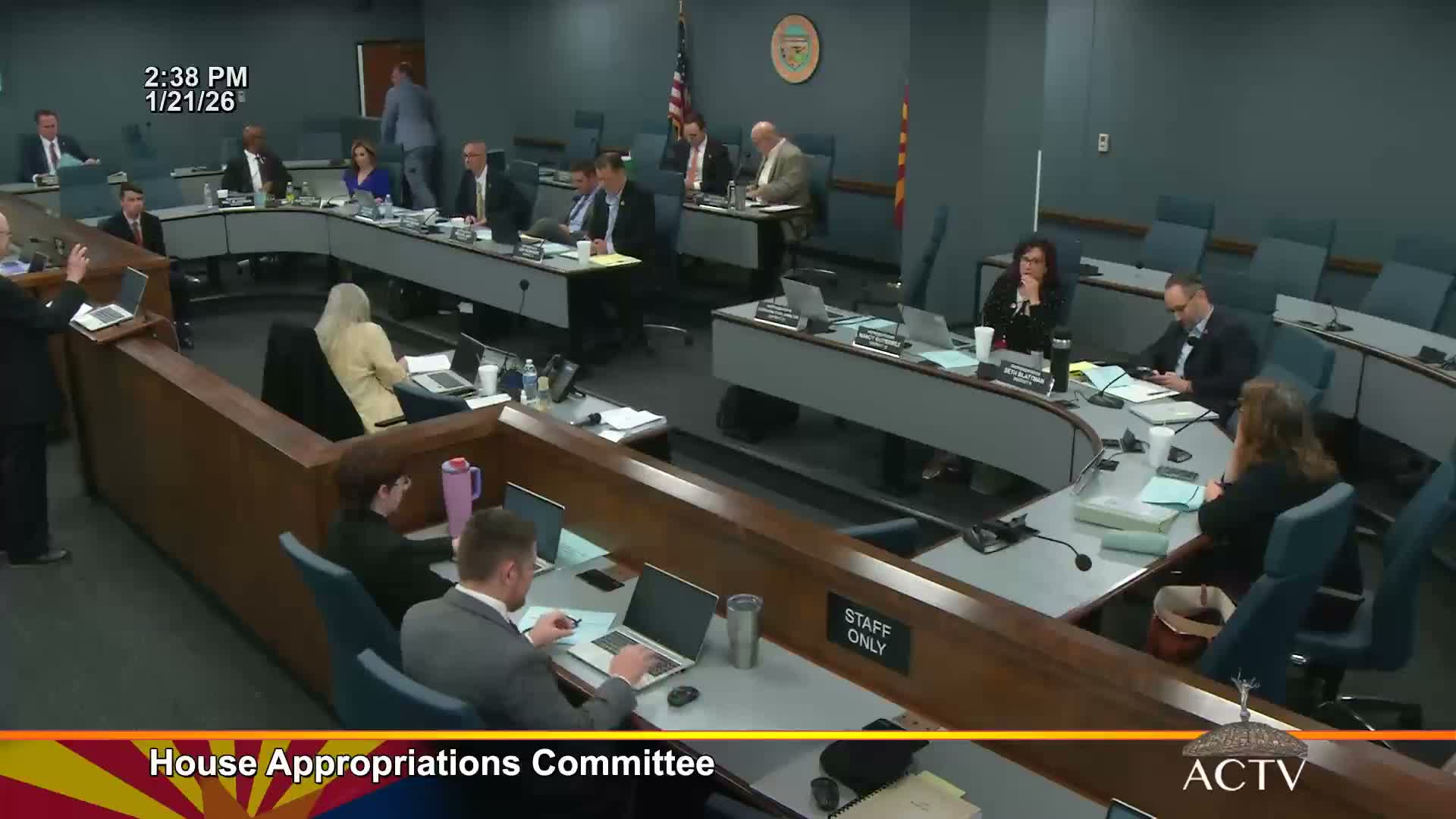
The Joint Legislative Budget Committee presented a detailed budget outlook Wednesday that left the House Appropriations Committee with a mix of improved near‑term numbers and major structural risks.
JLBC Director Richard Stadnik said the January baseline update shows an available discretionary balance of about $577 million across the forecast window, an improvement from $67 million in October. The improvement, he said, does not eliminate several large unfunded costs and policy choices that could create gaps in FY28–29.
JLBC highlighted several principal concerns:
- SNAP and HR1: JLBC included estimated costs for higher SNAP administrative match rates and potential penalties tied to the state’s error rate. The federal change to SNAP administration could raise the state’s cost and make states liable for a share of benefits if error rates remain high; JLBC estimated a $33 million ongoing admin cost and a potential $139 million penalty scenario.
- ESA and education enrollments: JLBC estimates a supplemental need of roughly $47 million for K‑12 in FY26 driven by roughly $59 million in increased ESA participation and a net public‑school enrollment decline of about 25,000 students. Committee members raised concerns about rapid ESA growth and requested guardrails and further analysis.
- Prop 123 and school‑repair bonding: The executive proposes extending Prop 123 and issuing bond proceeds (discussed as up to $1.5 billion over multiple years) to fund school building repairs. JLBC and members warned that debt service could be substantial depending on term length and that relying on land‑trust performance or land sales to cover large, recurring debt service could risk the trust corpus and other beneficiary distributions.
Stadnik and JLBC staff also explained that revenue forecasting assumptions differ from the executive’s—JLBC uses a four‑sector forecast projecting 3.6% growth while the executive used higher assumptions, producing about $503 million in cumulative differences over four years. JLBC recommended the committee pursue targeted policy reforms and maintain conservative assumptions while further evaluating executive proposals.
JLBC’s presentation concluded with cash‑balance charts showing the JLBC baseline maintains larger cushions than the executive’s plan; members said they will continue budget negotiations with those risk factors in mind.
JLBC Director Richard Stadnik said the January baseline update shows an available discretionary balance of about $577 million across the forecast window, an improvement from $67 million in October. The improvement, he said, does not eliminate several large unfunded costs and policy choices that could create gaps in FY28–29.
JLBC highlighted several principal concerns:
- SNAP and HR1: JLBC included estimated costs for higher SNAP administrative match rates and potential penalties tied to the state’s error rate. The federal change to SNAP administration could raise the state’s cost and make states liable for a share of benefits if error rates remain high; JLBC estimated a $33 million ongoing admin cost and a potential $139 million penalty scenario.
- ESA and education enrollments: JLBC estimates a supplemental need of roughly $47 million for K‑12 in FY26 driven by roughly $59 million in increased ESA participation and a net public‑school enrollment decline of about 25,000 students. Committee members raised concerns about rapid ESA growth and requested guardrails and further analysis.
- Prop 123 and school‑repair bonding: The executive proposes extending Prop 123 and issuing bond proceeds (discussed as up to $1.5 billion over multiple years) to fund school building repairs. JLBC and members warned that debt service could be substantial depending on term length and that relying on land‑trust performance or land sales to cover large, recurring debt service could risk the trust corpus and other beneficiary distributions.
Stadnik and JLBC staff also explained that revenue forecasting assumptions differ from the executive’s—JLBC uses a four‑sector forecast projecting 3.6% growth while the executive used higher assumptions, producing about $503 million in cumulative differences over four years. JLBC recommended the committee pursue targeted policy reforms and maintain conservative assumptions while further evaluating executive proposals.
JLBC’s presentation concluded with cash‑balance charts showing the JLBC baseline maintains larger cushions than the executive’s plan; members said they will continue budget negotiations with those risk factors in mind.
Don't Miss a Word: See the Full Meeting!
Go beyond summaries. Unlock every video, transcript, and key insight with a Founder Membership.
✓
Get instant access to full meeting videos
✓
Search and clip any phrase from complete transcripts
✓
Receive AI-powered summaries & custom alerts
✓
Enjoy lifetime, unrestricted access to government data
30-day money-back guarantee
