Committee advances appropriations for older blind services and increased rates for IDD home- and community-based services
January 21, 2026 | 2026 Legislature Arizona, Arizona
This article was created by AI summarizing key points discussed. AI makes mistakes, so for full details and context, please refer to the video of the full meeting. Please report any errors so we can fix them. Report an error »
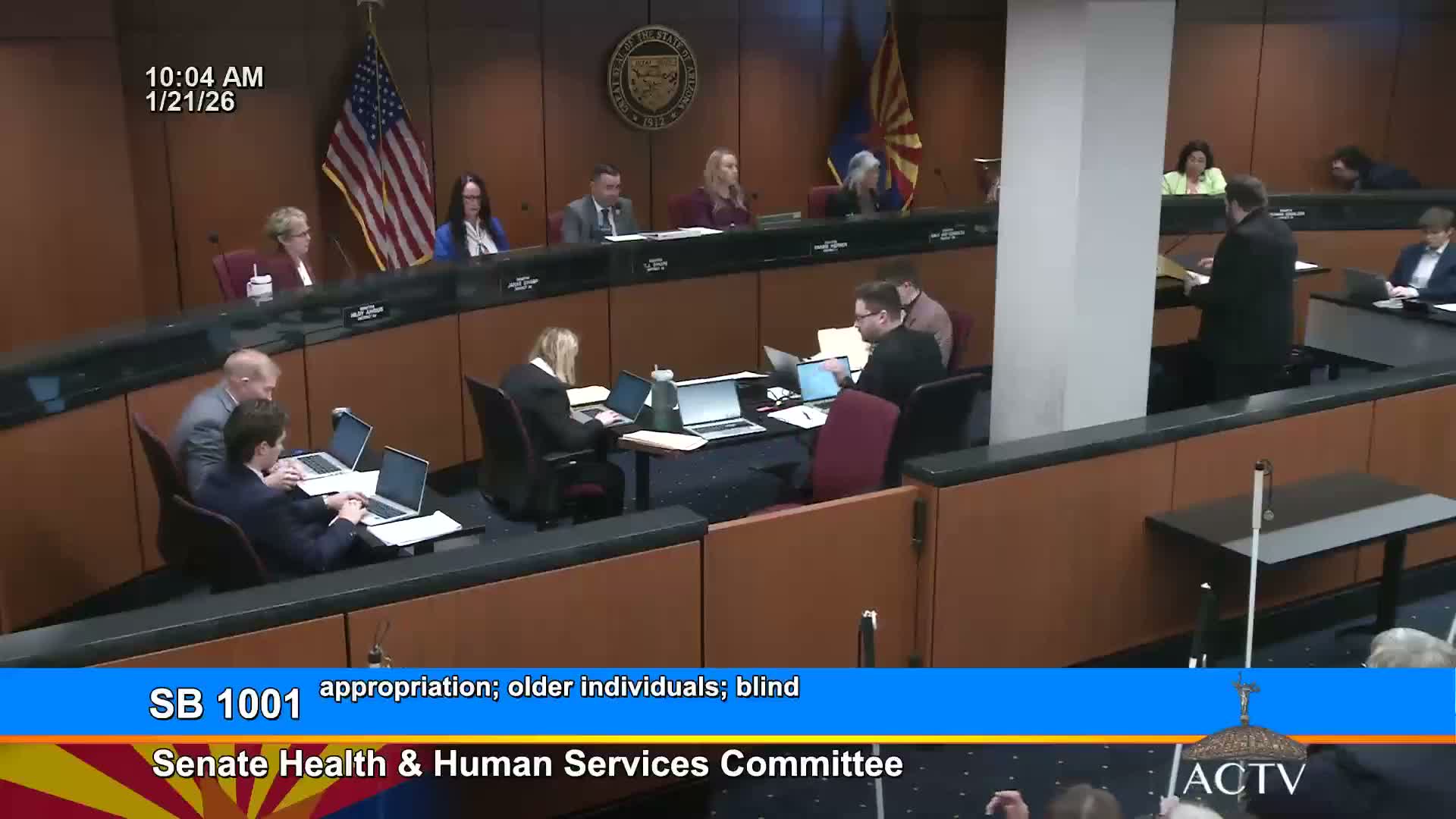
The Health and Human Services Committee moved two funding bills after public testimony urging more resources for long-waiting seniors with vision loss and for providers serving people with intellectual and developmental disabilities (IDD).
SB 1,001 would appropriate $1 million from the state general fund in fiscal year 2027 to the Department of Economic Security for the Older Individuals Who Are Blind program. Advocates from the National Federation of the Blind and local peer groups described long waitlists, lost independence among seniors, and years without program increases. "In the state of Arizona, there are 179,000 Arizonans living with blindness, low vision," Amy Porterfield said, urging lawmakers to address a program that has not seen an increase since 2008.
SB 10 72 seeks $46 million in FY27 and recurring Medicaid expenditure authority across 2027–2031 to increase reimbursement for home and community-based services for people with IDD; it also includes a $4 million per-year room-and-board increase. Providers told the committee that turnover exceeds 70% in some operations and that existing room-and-board rates (last adjusted in 2017) are insufficient to cover rent, transportation and staffing. Kelly O'Toole, a DDD provider, cited 71.5% staff turnover and said the system is fragile: "We are in the process of closing one of our sites... 30 members in Avondale are not going to have services because we can't find a place to rent." Supporters called the funding a necessary step to stabilize the workforce and maintain services.
Votes: Both bills received due-pass recommendations from the committee after public testimony and sponsor explanation. The committee recorded votes in favor of the measures and several members offered statements explaining their votes.
Next steps: The bills will proceed to the full Senate. Committee members asked for periodic reporting and stakeholder follow-ups to ensure funds translate into recruitment and retention gains.
SB 1,001 would appropriate $1 million from the state general fund in fiscal year 2027 to the Department of Economic Security for the Older Individuals Who Are Blind program. Advocates from the National Federation of the Blind and local peer groups described long waitlists, lost independence among seniors, and years without program increases. "In the state of Arizona, there are 179,000 Arizonans living with blindness, low vision," Amy Porterfield said, urging lawmakers to address a program that has not seen an increase since 2008.
SB 10 72 seeks $46 million in FY27 and recurring Medicaid expenditure authority across 2027–2031 to increase reimbursement for home and community-based services for people with IDD; it also includes a $4 million per-year room-and-board increase. Providers told the committee that turnover exceeds 70% in some operations and that existing room-and-board rates (last adjusted in 2017) are insufficient to cover rent, transportation and staffing. Kelly O'Toole, a DDD provider, cited 71.5% staff turnover and said the system is fragile: "We are in the process of closing one of our sites... 30 members in Avondale are not going to have services because we can't find a place to rent." Supporters called the funding a necessary step to stabilize the workforce and maintain services.
Votes: Both bills received due-pass recommendations from the committee after public testimony and sponsor explanation. The committee recorded votes in favor of the measures and several members offered statements explaining their votes.
Next steps: The bills will proceed to the full Senate. Committee members asked for periodic reporting and stakeholder follow-ups to ensure funds translate into recruitment and retention gains.
View the Full Meeting & All Its Details
This article offers just a summary. Unlock complete video, transcripts, and insights as a Founder Member.
✓
Watch full, unedited meeting videos
✓
Search every word spoken in unlimited transcripts
✓
AI summaries & real-time alerts (all government levels)
✓
Permanent access to expanding government content
30-day money-back guarantee
