Auditor General finds gaps in State Land Department sales, leases and inspections; committee recommends 4‑year continuation with 2‑year progress report
January 20, 2026 | 2026 Legislature Arizona, Arizona
This article was created by AI summarizing key points discussed. AI makes mistakes, so for full details and context, please refer to the video of the full meeting. Please report any errors so we can fix them. Report an error »
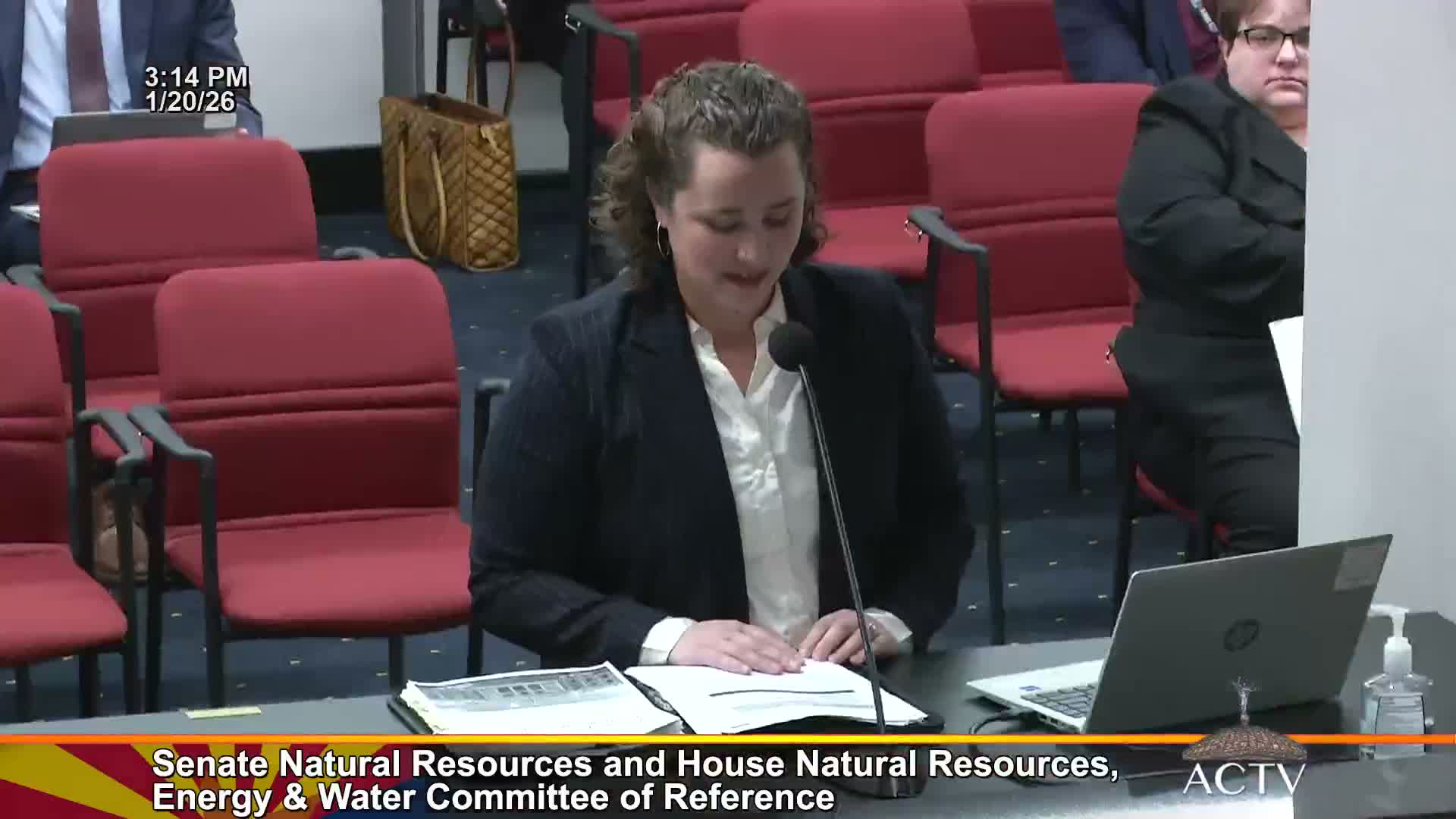
The joint committee’s review of the Arizona State Land Department highlighted systemic process and transparency problems spanning land sales, agricultural rentals and mineral‑lease oversight, but also recorded the commissioner’s pledge to implement remedies and steps to modernize operations.
Auditor General presenter Jessica Halkless summarized two related reviews: a February 2024 special audit (focused on agricultural leasing and rental‑rate setting) and a July 2025 performance audit and sunset review (covering disposition plans, inspections and statutory sunset factors). Among the audit’s central findings: the department’s last five‑year disposition plan expired in 2016 and, between then and October 2024, the department sold more than 48,000 acres without an active disposition plan; of 97 auctions in that period, roughly 69 had only a single bidder, and auctions with multiple bidders produced substantially higher winning bids than single‑bid sales. The audit estimated that, had the department adjusted agricultural rental rates to reflect a 2018 market study, it would have collected nearly $3.4 million more in calendar year 2023. The auditors also found failures to inspect mineral leases and instances in which reclamation bonds (three bonds totaling $45,000 in the sample) were released without first confirming reclamation.
Commissioner Robin Sahid, who was confirmed in 2023, told the committee she has prioritized catching up on statutory rule reviews, engaging contractors for a new mass appraisal (contractor engaged; expected completion April 2026), and process improvements such as a customer portal with a status bar, a rules team, and an MOU with the Department of Forestry and Fire Management that has enabled treatment of more than 30,000 acres for wildfire mitigation. On the Fondamonte leases in Butler Valley, Sahid said the department determined renewals would not be in the trust’s best interest because the groundwater resource extracted under those leases was worth far more than rent paid under the lease; the department canceled or non‑renewed several of those leases and has reimbursed lessees for unamortized improvements (department paid about $7 million of roughly $10 million estimated in reimbursable improvements and has repayment agreements for the remainder).
Lawmakers pressed the commissioner on multiple fronts: whether the department has statutory authority to charge agricultural leases separately for groundwater (Sahid said legal counsel believes it likely could be done but it has not been explored), timing and selection of contractors for the mass appraisal, the department’s policies for commissioner‑initiated (PCI) auctions, and staffing to handle a growing application load (commissioner said the department had about 2,000 applications in queue on her arrival and that staff levels have not kept pace with application growth). Multiple industry witnesses — mineral explorers and home builders — told the committee long permitting times and unpredictability discourage investment and complicate housing and mineral projects.
After public testimony and extended debate over the appropriate continuation interval (some legislators argued for 8 years, others for shorter oversight), the joint committee voted by roll call to recommend continuing the State Land Department for four years with a progress report and additional recommendations due in two years; the recorded roll call in the transcript shows 11 ayes and 7 nays.
The Auditor General will continue scheduled follow‑up work; the department committed to provide requested documents, dates and payment terms for specific transactions and to make available draft policies for stakeholder review. Several legislators asked for expedited reporting on items that affect beneficiaries and trust revenue, including the mass appraisal results and details on how reimbursable improvements were calculated and paid.
Auditor General presenter Jessica Halkless summarized two related reviews: a February 2024 special audit (focused on agricultural leasing and rental‑rate setting) and a July 2025 performance audit and sunset review (covering disposition plans, inspections and statutory sunset factors). Among the audit’s central findings: the department’s last five‑year disposition plan expired in 2016 and, between then and October 2024, the department sold more than 48,000 acres without an active disposition plan; of 97 auctions in that period, roughly 69 had only a single bidder, and auctions with multiple bidders produced substantially higher winning bids than single‑bid sales. The audit estimated that, had the department adjusted agricultural rental rates to reflect a 2018 market study, it would have collected nearly $3.4 million more in calendar year 2023. The auditors also found failures to inspect mineral leases and instances in which reclamation bonds (three bonds totaling $45,000 in the sample) were released without first confirming reclamation.
Commissioner Robin Sahid, who was confirmed in 2023, told the committee she has prioritized catching up on statutory rule reviews, engaging contractors for a new mass appraisal (contractor engaged; expected completion April 2026), and process improvements such as a customer portal with a status bar, a rules team, and an MOU with the Department of Forestry and Fire Management that has enabled treatment of more than 30,000 acres for wildfire mitigation. On the Fondamonte leases in Butler Valley, Sahid said the department determined renewals would not be in the trust’s best interest because the groundwater resource extracted under those leases was worth far more than rent paid under the lease; the department canceled or non‑renewed several of those leases and has reimbursed lessees for unamortized improvements (department paid about $7 million of roughly $10 million estimated in reimbursable improvements and has repayment agreements for the remainder).
Lawmakers pressed the commissioner on multiple fronts: whether the department has statutory authority to charge agricultural leases separately for groundwater (Sahid said legal counsel believes it likely could be done but it has not been explored), timing and selection of contractors for the mass appraisal, the department’s policies for commissioner‑initiated (PCI) auctions, and staffing to handle a growing application load (commissioner said the department had about 2,000 applications in queue on her arrival and that staff levels have not kept pace with application growth). Multiple industry witnesses — mineral explorers and home builders — told the committee long permitting times and unpredictability discourage investment and complicate housing and mineral projects.
After public testimony and extended debate over the appropriate continuation interval (some legislators argued for 8 years, others for shorter oversight), the joint committee voted by roll call to recommend continuing the State Land Department for four years with a progress report and additional recommendations due in two years; the recorded roll call in the transcript shows 11 ayes and 7 nays.
The Auditor General will continue scheduled follow‑up work; the department committed to provide requested documents, dates and payment terms for specific transactions and to make available draft policies for stakeholder review. Several legislators asked for expedited reporting on items that affect beneficiaries and trust revenue, including the mass appraisal results and details on how reimbursable improvements were calculated and paid.
View the Full Meeting & All Its Details
This article offers just a summary. Unlock complete video, transcripts, and insights as a Founder Member.
✓
Watch full, unedited meeting videos
✓
Search every word spoken in unlimited transcripts
✓
AI summaries & real-time alerts (all government levels)
✓
Permanent access to expanding government content
30-day money-back guarantee
