Committee sends photo‑radar prohibition to voters after heated testimony over safety and fairness
January 20, 2026 | 2026 Legislature Arizona, Arizona
This article was created by AI summarizing key points discussed. AI makes mistakes, so for full details and context, please refer to the video of the full meeting. Please report any errors so we can fix them. Report an error »
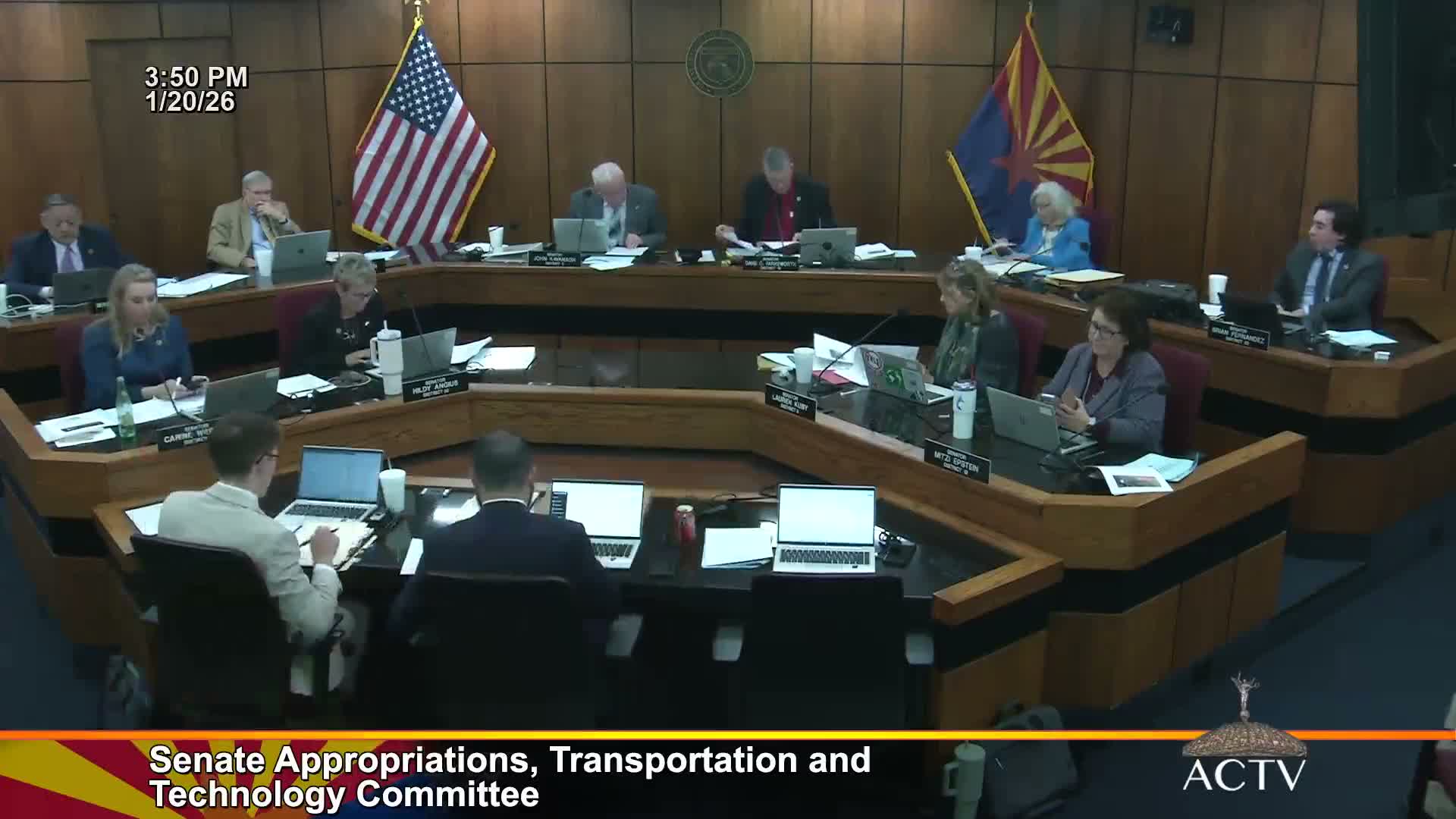
The committee voted to forward Senate Concurrent Resolution 1,004 to the ballot, a measure that would prohibit automated photo enforcement (photo radar and red‑light cameras) if approved by voters. The roll call returned 6 ayes and 4 noes after extensive public comment.
Supporters argued the programs have produced abuses and unfair citations. Online activist Sean Dow told the committee an investigative report showed significant revenue directed to political campaigns and alleged that one city forged judges' signatures on tens of thousands of notices. "This is unconscionable," he said, urging lawmakers to let voters decide whether the programs should continue.
Municipal police chiefs and public‑safety organizations pushed back. Phoenix traffic commander Nick DiPonzio and Scottsdale and Mesa police representatives described automated enforcement as a necessary force multiplier amid staffing shortages and cited studies showing reductions in severe crashes. "Automated enforcement does not and should not replace police officers," Phoenix's commander told the committee, but it can help reduce fatalities while staffing is constrained. The Insurance Institute for Highway Safety and independent engineering studies were cited by witnesses who said red‑light and speed cameras cut serious‑injury collisions.
Cities and chief executives also framed the debate as one of local control, arguing that communities should decide whether to deploy the tools. Opponents of the statewide ban asked the committee to retain local discretion and to improve transparency and program safeguards rather than a universal prohibition.
The committee advanced SCR1004 to the ballot by majority vote; the decision sets up a statewide referendum question for voters and continues the debate over automated enforcement, program transparency and local control.
Supporters argued the programs have produced abuses and unfair citations. Online activist Sean Dow told the committee an investigative report showed significant revenue directed to political campaigns and alleged that one city forged judges' signatures on tens of thousands of notices. "This is unconscionable," he said, urging lawmakers to let voters decide whether the programs should continue.
Municipal police chiefs and public‑safety organizations pushed back. Phoenix traffic commander Nick DiPonzio and Scottsdale and Mesa police representatives described automated enforcement as a necessary force multiplier amid staffing shortages and cited studies showing reductions in severe crashes. "Automated enforcement does not and should not replace police officers," Phoenix's commander told the committee, but it can help reduce fatalities while staffing is constrained. The Insurance Institute for Highway Safety and independent engineering studies were cited by witnesses who said red‑light and speed cameras cut serious‑injury collisions.
Cities and chief executives also framed the debate as one of local control, arguing that communities should decide whether to deploy the tools. Opponents of the statewide ban asked the committee to retain local discretion and to improve transparency and program safeguards rather than a universal prohibition.
The committee advanced SCR1004 to the ballot by majority vote; the decision sets up a statewide referendum question for voters and continues the debate over automated enforcement, program transparency and local control.
Don't Miss a Word: See the Full Meeting!
Go beyond summaries. Unlock every video, transcript, and key insight with a Founder Membership.
✓
Get instant access to full meeting videos
✓
Search and clip any phrase from complete transcripts
✓
Receive AI-powered summaries & custom alerts
✓
Enjoy lifetime, unrestricted access to government data
30-day money-back guarantee
