Senate committee backs SB1009 to add AED familiarization to high-school CPR training
January 21, 2026 | 2026 Legislature Arizona, Arizona
This article was created by AI summarizing key points discussed. AI makes mistakes, so for full details and context, please refer to the video of the full meeting. Please report any errors so we can fix them. Report an error »
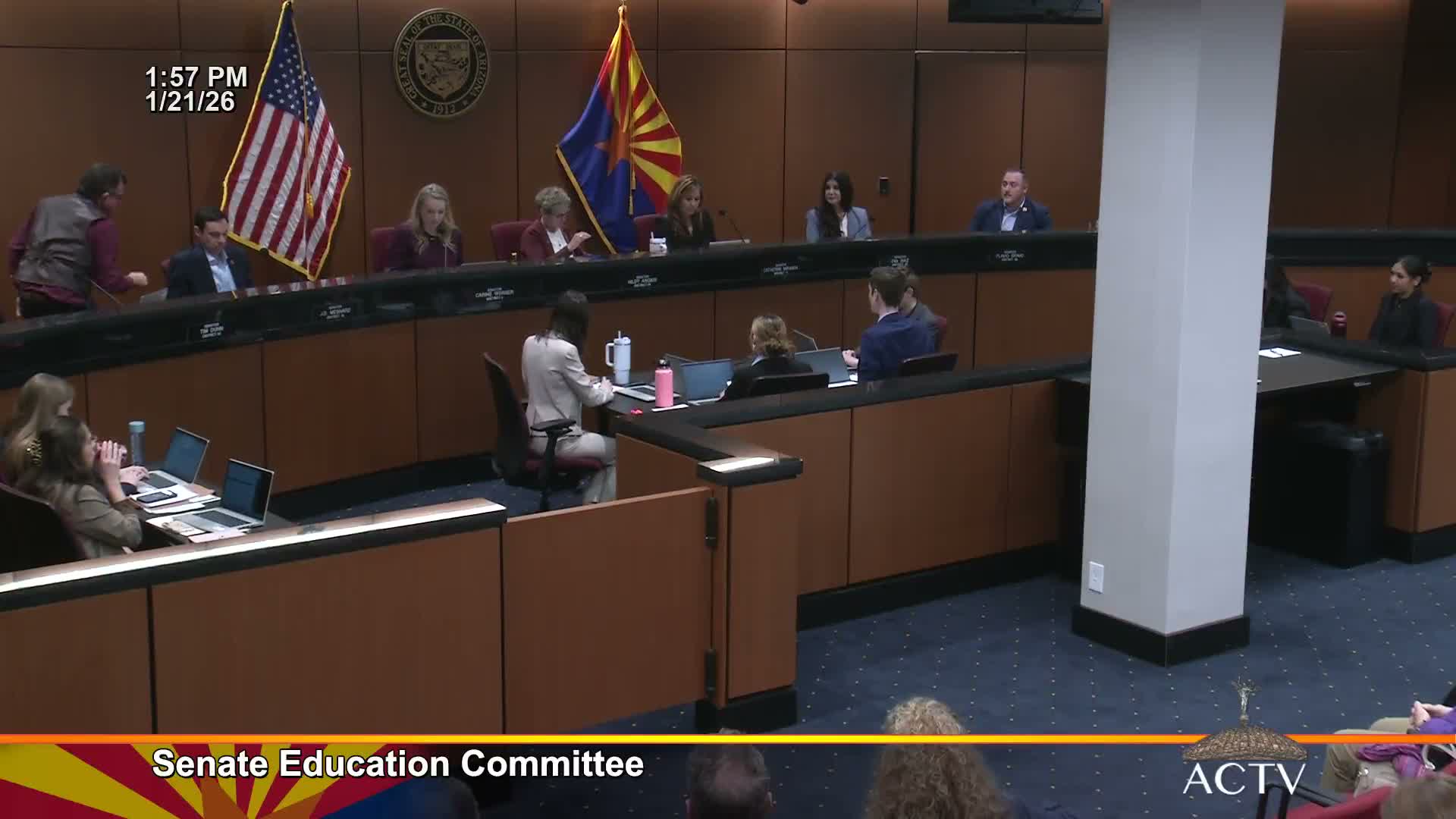
The Arizona Senate Education Committee voted 5–2 to give SB1009 a due-pass recommendation after hearing testimony that the bill would add brief hands-on automated external defibrillator (AED) instruction to existing cardiopulmonary resuscitation (CPR) training for public high school pupils.
Sponsor Senator Kavanaugh told the committee the change would be minimal and ‘‘costs nothing,’’ arguing that many CPR programs already include AED familiarization and that the bill does not require schools to buy AEDs. ‘‘This instruction is already incorporated,’’ Kavanaugh said, adding the extra familiarization takes only minutes and could help students, teachers and community members save lives.
The bill’s staff summary said SB1009 would extend existing statutory requirements that govern CPR instruction—covering instruction, certification and excusal—to AED training as well. The summary also said schools could use public school extracurricular activities, fees and tax-credit contributions to fund training.
Erin Streeter of the American Heart Association testified in support and urged the Legislature to consider an appropriation of $500,000 to help offset training costs for schools. ‘‘Teaching students CPR saves lives,’’ Streeter said, asking lawmakers to ‘‘help continue to build a nation of lifesavers.’’
Education groups pushed back. Acela Blanc of the Arizona Education Association said the bill would expand obligations without guaranteed funding and called it ‘‘an unfunded mandate.’’ Blanc asked the committee to request a fiscal note to estimate the time and cost required to train every high-school student and to clarify how schools without AED equipment would provide hands-on practice.
Other witnesses echoed practical concerns about scale and equity. Jimmy Yarwood of the Arizona School Boards Association said rural and smaller districts may lack funds or access to instructors and urged lawmakers to consider ongoing funding and implementation support.
Student witnesses and residents urged passage on public-safety grounds. Anvi Verma, a BASIS Scottsdale junior, said that while many schools will have AEDs at athletic events starting in 2026, ‘‘an AED on the wall doesn't save lives, but a trained person does.’’ A Fountain Hills resident, Arna Verma, cited SHARE registry figures and argued that increased bystander training could raise survival rates.
In committee debate, Senator Catherine Miranda asked how SB1009 differs from national CPR standards and pressed for a dedicated funding source; she said she would vote yes for now but requested a fiscal note. Senator Eva Diaz said she would vote no because she is not convinced the change is cost-free and expressed concern about instructional time and staff burden. The motion to give SB1009 a due-pass recommendation was moved by Senator Karen Warner and the committee recorded 5 ayes and 2 nays.
Next steps: SB1009 will be referred to the committee of reference with a due-pass recommendation; committee members requested additional fiscal information before final floor consideration.
Sponsor Senator Kavanaugh told the committee the change would be minimal and ‘‘costs nothing,’’ arguing that many CPR programs already include AED familiarization and that the bill does not require schools to buy AEDs. ‘‘This instruction is already incorporated,’’ Kavanaugh said, adding the extra familiarization takes only minutes and could help students, teachers and community members save lives.
The bill’s staff summary said SB1009 would extend existing statutory requirements that govern CPR instruction—covering instruction, certification and excusal—to AED training as well. The summary also said schools could use public school extracurricular activities, fees and tax-credit contributions to fund training.
Erin Streeter of the American Heart Association testified in support and urged the Legislature to consider an appropriation of $500,000 to help offset training costs for schools. ‘‘Teaching students CPR saves lives,’’ Streeter said, asking lawmakers to ‘‘help continue to build a nation of lifesavers.’’
Education groups pushed back. Acela Blanc of the Arizona Education Association said the bill would expand obligations without guaranteed funding and called it ‘‘an unfunded mandate.’’ Blanc asked the committee to request a fiscal note to estimate the time and cost required to train every high-school student and to clarify how schools without AED equipment would provide hands-on practice.
Other witnesses echoed practical concerns about scale and equity. Jimmy Yarwood of the Arizona School Boards Association said rural and smaller districts may lack funds or access to instructors and urged lawmakers to consider ongoing funding and implementation support.
Student witnesses and residents urged passage on public-safety grounds. Anvi Verma, a BASIS Scottsdale junior, said that while many schools will have AEDs at athletic events starting in 2026, ‘‘an AED on the wall doesn't save lives, but a trained person does.’’ A Fountain Hills resident, Arna Verma, cited SHARE registry figures and argued that increased bystander training could raise survival rates.
In committee debate, Senator Catherine Miranda asked how SB1009 differs from national CPR standards and pressed for a dedicated funding source; she said she would vote yes for now but requested a fiscal note. Senator Eva Diaz said she would vote no because she is not convinced the change is cost-free and expressed concern about instructional time and staff burden. The motion to give SB1009 a due-pass recommendation was moved by Senator Karen Warner and the committee recorded 5 ayes and 2 nays.
Next steps: SB1009 will be referred to the committee of reference with a due-pass recommendation; committee members requested additional fiscal information before final floor consideration.
View the Full Meeting & All Its Details
This article offers just a summary. Unlock complete video, transcripts, and insights as a Founder Member.
✓
Watch full, unedited meeting videos
✓
Search every word spoken in unlimited transcripts
✓
AI summaries & real-time alerts (all government levels)
✓
Permanent access to expanding government content
30-day money-back guarantee
