Land office reports record distributions, seeks staffing to bolster royalty compliance and invasive-species work
January 20, 2026 | 2026 Legislature OK, Oklahoma
This article was created by AI summarizing key points discussed. AI makes mistakes, so for full details and context, please refer to the video of the full meeting. Please report any errors so we can fix them. Report an error »
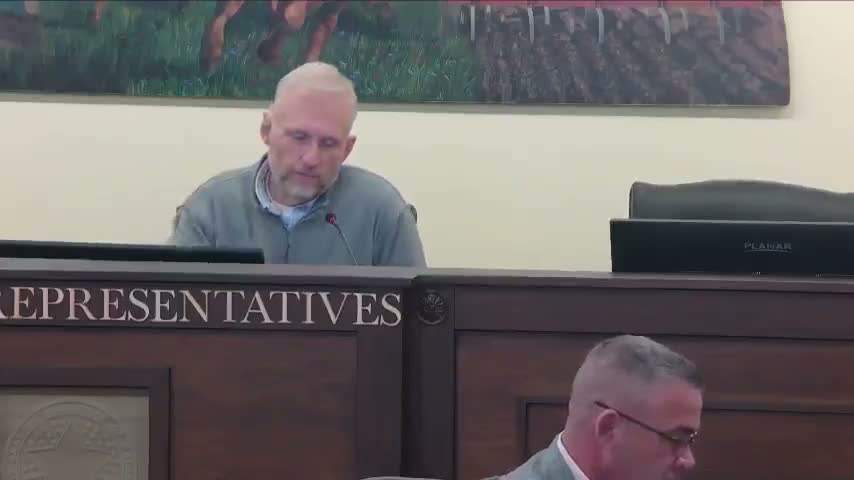
Secretary Whitmarsh told the budget committee that the Commissioners of the Land Office (CLO) delivered a strong revenue year and outlined budget priorities to protect and grow the trust that funds public education.
Whitmarsh said the CLO’s permanent trust recently surpassed $3 billion and that distributions to K–12 and higher education hit $156 million this year, a 7.5% increase over the prior record. “Our permanent trust value surpassed 3,000,000,000 recently,” he said, pointing to strong mineral auction results and targeted commercial real-estate returns as drivers of the upward trend.
The office highlighted several near-term priorities: accelerating an invasive woody-species program (IWS) with a target of roughly 2,000 acres for treatment, investing in IT to replace antiquated internal databases and capture API well identifiers, and hiring three staff—revenue compliance director, field services manager and an internal auditor—to strengthen enforcement, field oversight and internal review. Whitmarsh said the revenue-compliance role is critical after statutory changes that now limit certain royalty look-backs to five years and that the CLO needs specialized oil-and-gas accounting expertise to improve audits.
He described statutory and regulatory work including a proposed CLO Efficiency Act to clean redundant language in Title 64 and discussed SB 951 (lease-improvement appraisal concepts) and PRSA look-back reform that moved to a five-year limitation; Whitmarsh said the latter reduces protracted litigation risk but introduces trade-offs around accruing interest and enforcement costs.
On renewable projects the CLO said it has one solar lease in construction paying about $1.8 million distributable annually in Comanche County, three projects in development and three smaller solar contracts that canceled (collective impact to beneficiaries under $1 million per year). Whitmarsh emphasized constitutional distribution rules that require statewide allocation of trust revenues rather than local routing to the school district where land sits.
Committee members asked follow-up about prioritizing IWS projects near city limits, the role of outside investment consultants (RVK currently serves as investment consultant), and compensation adjustments tied to OMES guidance. CLO staff said they will follow up with the committee and technical staff (the agency forester and others) to refine prioritization criteria and cost estimates.
The committee did not take action; Whitmarsh’s presentation framed both the CLO’s recent financial gains and personnel and system investments he says are needed to sustain those gains and reduce legal and operational risk.
Whitmarsh said the CLO’s permanent trust recently surpassed $3 billion and that distributions to K–12 and higher education hit $156 million this year, a 7.5% increase over the prior record. “Our permanent trust value surpassed 3,000,000,000 recently,” he said, pointing to strong mineral auction results and targeted commercial real-estate returns as drivers of the upward trend.
The office highlighted several near-term priorities: accelerating an invasive woody-species program (IWS) with a target of roughly 2,000 acres for treatment, investing in IT to replace antiquated internal databases and capture API well identifiers, and hiring three staff—revenue compliance director, field services manager and an internal auditor—to strengthen enforcement, field oversight and internal review. Whitmarsh said the revenue-compliance role is critical after statutory changes that now limit certain royalty look-backs to five years and that the CLO needs specialized oil-and-gas accounting expertise to improve audits.
He described statutory and regulatory work including a proposed CLO Efficiency Act to clean redundant language in Title 64 and discussed SB 951 (lease-improvement appraisal concepts) and PRSA look-back reform that moved to a five-year limitation; Whitmarsh said the latter reduces protracted litigation risk but introduces trade-offs around accruing interest and enforcement costs.
On renewable projects the CLO said it has one solar lease in construction paying about $1.8 million distributable annually in Comanche County, three projects in development and three smaller solar contracts that canceled (collective impact to beneficiaries under $1 million per year). Whitmarsh emphasized constitutional distribution rules that require statewide allocation of trust revenues rather than local routing to the school district where land sits.
Committee members asked follow-up about prioritizing IWS projects near city limits, the role of outside investment consultants (RVK currently serves as investment consultant), and compensation adjustments tied to OMES guidance. CLO staff said they will follow up with the committee and technical staff (the agency forester and others) to refine prioritization criteria and cost estimates.
The committee did not take action; Whitmarsh’s presentation framed both the CLO’s recent financial gains and personnel and system investments he says are needed to sustain those gains and reduce legal and operational risk.
Don't Miss a Word: See the Full Meeting!
Go beyond summaries. Unlock every video, transcript, and key insight with a Founder Membership.
✓
Get instant access to full meeting videos
✓
Search and clip any phrase from complete transcripts
✓
Receive AI-powered summaries & custom alerts
✓
Enjoy lifetime, unrestricted access to government data
30-day money-back guarantee
