Subcommittee hears HHR budget overview as staff outline $612 million in proposed cost-containment measures
January 24, 2026 | 2026 Legislature VA, Virginia
This article was created by AI summarizing key points discussed. AI makes mistakes, so for full details and context, please refer to the video of the full meeting. Please report any errors so we can fix them. Report an error »
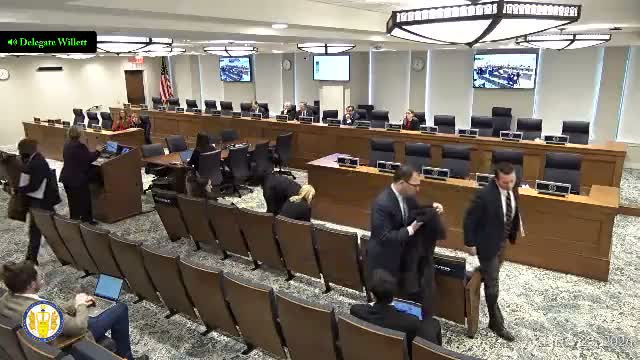
HHR staff presented the proposed Health and Human Resources budget and prioritized items for the subcommittee’s attention, noting that Medicaid remains the dominant driver of state spending.
"In 2026, the current fiscal year, the budget is about 34,000,000,000," Susan Massart told the panel and said that DMAS accounts for the majority of HHR spending. She explained that Medicaid constitutes about 97% of DMAS expenditures and roughly 77% of overall HHR spending.
Massart and Amy Cochran walked members through major proposed changes and cost-containment items. Massart said the introduced budget includes roughly $612 million in cost-containment proposals, among them eliminating automatic inflation adjustments for some Medicaid providers, limiting mobile crisis services to four hours per incident and capping certain behavioral therapies. She noted one high-profile change would cap dental benefits at $2,000 per enrollee per year.
Cochran reviewed Children’s Services Act (CSA) growth and proposed savings: an addition of $20.7 million in the caboose and a larger increase in the introduced biennial budget, while proposing a reduced average state match for community-based services from 81% to 71% and capped private day service growth to curb program expansion.
On SNAP, Cochran said HR 1 drove additional administrative cost responsibilities for the state, with new state-year increases of $43 million in the first year and $57.4 million in the second year to fund the state share of administrative costs. She warned that the federal fiscal year 2024 SNAP error rate was 11.5%, over the 10% threshold that would require a potential 15% state match costing an estimated $270 million general fund if sustained.
Massart also flagged programmatic language in the budget that directs DMAS to require hospitals receiving enhanced Medicaid payments to contract with managed care networks to preserve access to labor and delivery units, grants authority for supplemental hospital payments (including Ballad Health), and delays major program implementations such as a single pharmacy benefit manager and a full Medicaid behavioral health redesign until later implementation dates to allow for careful contracting.
Committee members requested follow-up briefings on assumptions behind MCO administrative cost efficiencies, the Medicaid behavioral health redesign timeline, and a deeper dive into CSA caseload growth; staff agreed to invite Scott Reiner and Medicaid officials to provide more detail.
No formal votes were taken; the session ended after questions and requests for additional information.
"In 2026, the current fiscal year, the budget is about 34,000,000,000," Susan Massart told the panel and said that DMAS accounts for the majority of HHR spending. She explained that Medicaid constitutes about 97% of DMAS expenditures and roughly 77% of overall HHR spending.
Massart and Amy Cochran walked members through major proposed changes and cost-containment items. Massart said the introduced budget includes roughly $612 million in cost-containment proposals, among them eliminating automatic inflation adjustments for some Medicaid providers, limiting mobile crisis services to four hours per incident and capping certain behavioral therapies. She noted one high-profile change would cap dental benefits at $2,000 per enrollee per year.
Cochran reviewed Children’s Services Act (CSA) growth and proposed savings: an addition of $20.7 million in the caboose and a larger increase in the introduced biennial budget, while proposing a reduced average state match for community-based services from 81% to 71% and capped private day service growth to curb program expansion.
On SNAP, Cochran said HR 1 drove additional administrative cost responsibilities for the state, with new state-year increases of $43 million in the first year and $57.4 million in the second year to fund the state share of administrative costs. She warned that the federal fiscal year 2024 SNAP error rate was 11.5%, over the 10% threshold that would require a potential 15% state match costing an estimated $270 million general fund if sustained.
Massart also flagged programmatic language in the budget that directs DMAS to require hospitals receiving enhanced Medicaid payments to contract with managed care networks to preserve access to labor and delivery units, grants authority for supplemental hospital payments (including Ballad Health), and delays major program implementations such as a single pharmacy benefit manager and a full Medicaid behavioral health redesign until later implementation dates to allow for careful contracting.
Committee members requested follow-up briefings on assumptions behind MCO administrative cost efficiencies, the Medicaid behavioral health redesign timeline, and a deeper dive into CSA caseload growth; staff agreed to invite Scott Reiner and Medicaid officials to provide more detail.
No formal votes were taken; the session ended after questions and requests for additional information.
Don't Miss a Word: See the Full Meeting!
Go beyond summaries. Unlock every video, transcript, and key insight with a Founder Membership.
✓
Get instant access to full meeting videos
✓
Search and clip any phrase from complete transcripts
✓
Receive AI-powered summaries & custom alerts
✓
Enjoy lifetime, unrestricted access to government data
30-day money-back guarantee
