Virginia subcommittee hears heated debate on rent-stability bill, continues HB278 to 2027
January 24, 2026 | 2026 Legislature VA, Virginia
This article was created by AI summarizing key points discussed. AI makes mistakes, so for full details and context, please refer to the video of the full meeting. Please report any errors so we can fix them. Report an error »
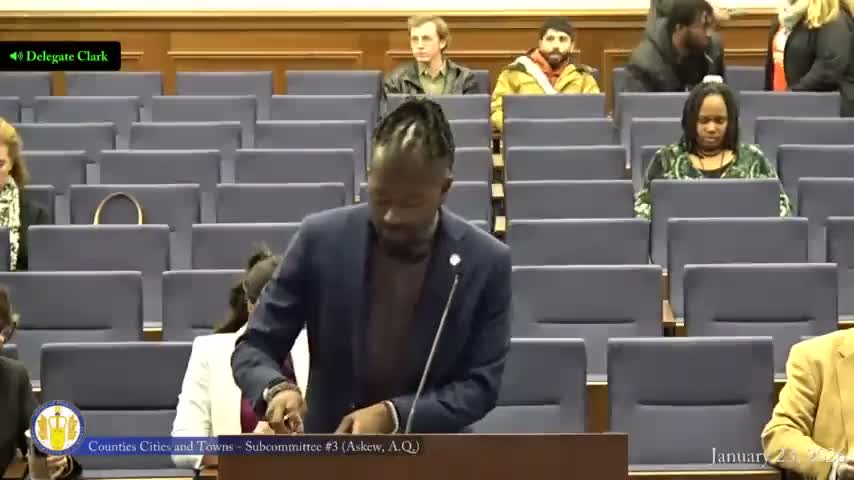
Delegate Elliot Clark urged Subcommittee No. 3 to pass House Bill 278, calling it a "common-sense solution" to empower localities to protect renters from exploitative rent increases and preserve affordable housing.
"We don't have to choose between supply and tenant protection," Clark said, describing the proposal as optional for localities and saying new construction would be exempt for the first 10 years and that the bill includes a fair-rate-of-return safeguard for landlords.
The bill drew broad support from local elected officials, housing advocates and tenants. Mayor Philip Jones of Newport News testified that his city plans to build 21,000 units over five years but still sees many residents priced out, and he said HB278 provides "another tool in our toolbox" to keep people in place. Larissa Zareh of the Legal Aid Justice Center and representatives from the Virginia Poverty Law Center and housing coalitions told the panel the policy is permissive, flexible and backed by evidence that similar measures reduce displacement.
Several tenants gave personal testimony about rapid rent increases and substandard housing conditions. One Richmond resident said their rent rose sharply despite chronic maintenance problems and urged the committee to support HB278.
Industry groups and developers opposed the bill, arguing rent-limiting policies can depress investment and constrain housing supply. DJ Spiker of Virginia Realtors and Andrew Clark of the Home Builders Association warned that limiting returns would reduce incentives to maintain and build rental housing and cited Montgomery County, Maryland, as an example of investment pullback after rent regulation.
Committee members pressed the sponsor on carve-outs and pilot approaches for small landlords; Clark said the bill had included a carve-out for "mom-and-pop" landlords in past versions and that he was open to reinstating it. After extended testimony and questions, the subcommittee moved to continue HB278 to 2027 and send a letter to the Housing Commission requesting further study and recommendations. The motion received a second and the chair announced the motion carried.
The continuation means formal action on HB278 will be deferred while the Housing Commission is asked to examine implementation issues and stakeholders' concerns.
"We don't have to choose between supply and tenant protection," Clark said, describing the proposal as optional for localities and saying new construction would be exempt for the first 10 years and that the bill includes a fair-rate-of-return safeguard for landlords.
The bill drew broad support from local elected officials, housing advocates and tenants. Mayor Philip Jones of Newport News testified that his city plans to build 21,000 units over five years but still sees many residents priced out, and he said HB278 provides "another tool in our toolbox" to keep people in place. Larissa Zareh of the Legal Aid Justice Center and representatives from the Virginia Poverty Law Center and housing coalitions told the panel the policy is permissive, flexible and backed by evidence that similar measures reduce displacement.
Several tenants gave personal testimony about rapid rent increases and substandard housing conditions. One Richmond resident said their rent rose sharply despite chronic maintenance problems and urged the committee to support HB278.
Industry groups and developers opposed the bill, arguing rent-limiting policies can depress investment and constrain housing supply. DJ Spiker of Virginia Realtors and Andrew Clark of the Home Builders Association warned that limiting returns would reduce incentives to maintain and build rental housing and cited Montgomery County, Maryland, as an example of investment pullback after rent regulation.
Committee members pressed the sponsor on carve-outs and pilot approaches for small landlords; Clark said the bill had included a carve-out for "mom-and-pop" landlords in past versions and that he was open to reinstating it. After extended testimony and questions, the subcommittee moved to continue HB278 to 2027 and send a letter to the Housing Commission requesting further study and recommendations. The motion received a second and the chair announced the motion carried.
The continuation means formal action on HB278 will be deferred while the Housing Commission is asked to examine implementation issues and stakeholders' concerns.
View the Full Meeting & All Its Details
This article offers just a summary. Unlock complete video, transcripts, and insights as a Founder Member.
✓
Watch full, unedited meeting videos
✓
Search every word spoken in unlimited transcripts
✓
AI summaries & real-time alerts (all government levels)
✓
Permanent access to expanding government content
30-day money-back guarantee
