Teachers Retirement System reports 80% funded ratio, projects full funding by 2034 under current assumptions
January 22, 2026 | 2026 Legislature OK, Oklahoma
This article was created by AI summarizing key points discussed. AI makes mistakes, so for full details and context, please refer to the video of the full meeting. Please report any errors so we can fix them. Report an error »
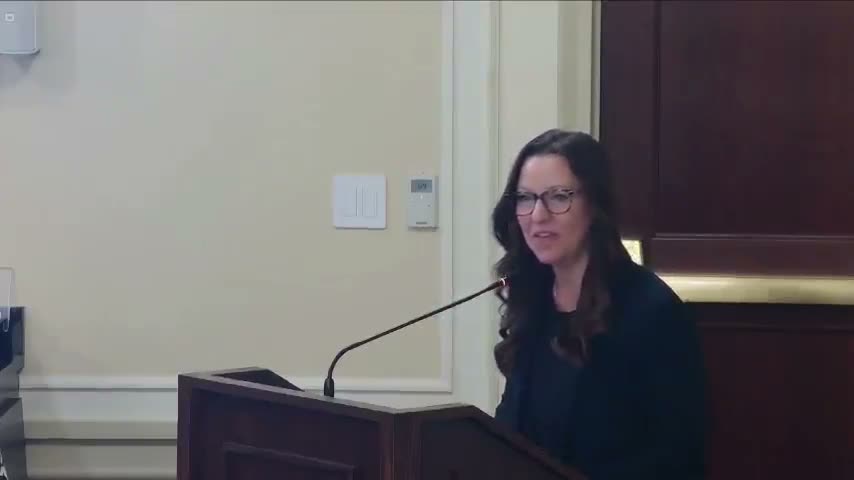
Sarah Green, executive director of the Teachers Retirement System, briefed the House A&B Subcommittee on Education on the plan’s funding history and current status. Green said TRS’s funded ratio was about 80% as of the most recent October actuarial update and that unfunded liabilities stood near $6.1 billion.
Green traced the system’s trajectory from a low funded ratio and $10.4 billion in unfunded liabilities in 2010 to improved funding driven by dedicated revenue streams, employer/member contributions and strong investment returns. She outlined TRS’s four main funding sources: investment earnings (TRS assumes a 7% long‑term return), member contributions (7%), employer rates (8.55% for some employers, 9.5% for others) and state‑dedicated revenue tied to portions of income, sales/use, tobacco and lottery receipts.
Green told members the system’s funding period declined to nine years and that, barring major plan changes, current projections show the plan could reach full funding in 2034. She cautioned the projection depends on assumptions: consistent dedicated revenue, continued employer and member contributions, and achieving long‑term investment returns near the 7% assumption.
Committee members asked about cost‑of‑living adjustments (COLAs), return‑to‑work proposals and the risk tolerance built into actuarial assumptions. Green noted that past COLAs were often granted without funding and that a pending proposal (Senate Bill 172) would tie future COLAs to funding thresholds to limit actuarial impact. She also said TRS has asked its actuary to model the fiscal effect of a 90‑day return‑to‑work policy and would provide numbers to committee members.
No committee vote occurred; the presentation provided an update on TRS progress and policy levers the Legislature could use to manage the system’s liabilities and benefits.
Green traced the system’s trajectory from a low funded ratio and $10.4 billion in unfunded liabilities in 2010 to improved funding driven by dedicated revenue streams, employer/member contributions and strong investment returns. She outlined TRS’s four main funding sources: investment earnings (TRS assumes a 7% long‑term return), member contributions (7%), employer rates (8.55% for some employers, 9.5% for others) and state‑dedicated revenue tied to portions of income, sales/use, tobacco and lottery receipts.
Green told members the system’s funding period declined to nine years and that, barring major plan changes, current projections show the plan could reach full funding in 2034. She cautioned the projection depends on assumptions: consistent dedicated revenue, continued employer and member contributions, and achieving long‑term investment returns near the 7% assumption.
Committee members asked about cost‑of‑living adjustments (COLAs), return‑to‑work proposals and the risk tolerance built into actuarial assumptions. Green noted that past COLAs were often granted without funding and that a pending proposal (Senate Bill 172) would tie future COLAs to funding thresholds to limit actuarial impact. She also said TRS has asked its actuary to model the fiscal effect of a 90‑day return‑to‑work policy and would provide numbers to committee members.
No committee vote occurred; the presentation provided an update on TRS progress and policy levers the Legislature could use to manage the system’s liabilities and benefits.
Don't Miss a Word: See the Full Meeting!
Go beyond summaries. Unlock every video, transcript, and key insight with a Founder Membership.
✓
Get instant access to full meeting videos
✓
Search and clip any phrase from complete transcripts
✓
Receive AI-powered summaries & custom alerts
✓
Enjoy lifetime, unrestricted access to government data
30-day money-back guarantee
