OETA director warns federal cuts threaten local services, highlights $2.8M transmitter upgrade
January 21, 2026 | 2026 Legislature OK, Oklahoma
This article was created by AI summarizing key points discussed. AI makes mistakes, so for full details and context, please refer to the video of the full meeting. Please report any errors so we can fix them. Report an error »
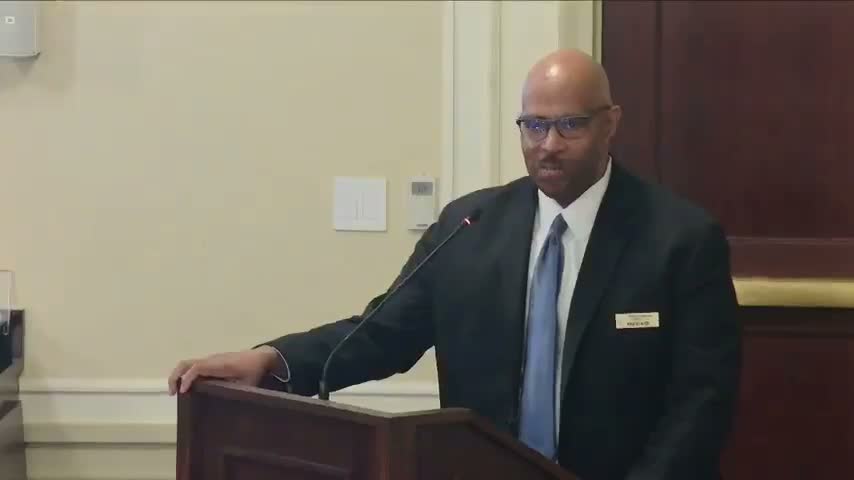
Sean Black, executive director of OETA, told the House Appropriations & Budget education subcommittee that the station faces an immediate funding shortfall after federal public-broadcast funding was rescinded and that the Legislature last year provided $2,800,000 for transmitter upgrades across Oklahoma.
Black said the Corporation for Public Broadcasting funding “was rescinded” and that those federal funds will run out in September; he quantified the lost federal support at $1,900,000. He told members OETA plans three steps to respond: increase fundraising, reduce costs and seek programming partners that bring money to the table.
The testimony stressed public-safety and rural-access roles for broadcast television. Black described the PBS WARN emergency-alert system as a precise, 24-hour service that can deliver alerts to cellphones even when phones are on silent and credited the system with helping in rural emergencies, citing a chemical spill near Weatherford. “Without that WARN system, we would have a lot more tragedies,” Black said.
On capital work, Black said the Legislature’s $2.8 million appropriation is funding replacement of transmitters statewide and that the final installations — including Velma — will make the system entirely fiber-fed by the end of FY26. He said replacing older transmitters reduces electricity and cooling costs at individual sites and estimated modest savings (he referred to a possible $10,000 electricity reduction next year) and additional savings from outsourced facility maintenance (about $7,500 this year and $22,000 next year, as presented).
Black also reviewed audience and education metrics for OETA: growth in streaming (he cited 62% year-over-year streaming growth and 1.3 million prime-time streams from January through June), monthly averages for PBS Kids and PBS LearningMedia, and community events such as a Route 66 prescreening that drew 166 attendees. He said OETA has 57.5 FTE and 6 job vacancies the agency is trying to fill.
When asked whether donors can completely replace federal funds, Black said OETA has raised large sums in recent years but does not expect private fundraising to sustain the full $1.9 million annually. “Last year, donors brought in, like, $4,100,000; as of December we have raised 3.7,” he said, adding that he does not believe it is possible to replace the entire federal amount annually through donations alone.
The committee thanked Black for his presentation and recessed for a short break before the Department of Libraries presentation.
Black said the Corporation for Public Broadcasting funding “was rescinded” and that those federal funds will run out in September; he quantified the lost federal support at $1,900,000. He told members OETA plans three steps to respond: increase fundraising, reduce costs and seek programming partners that bring money to the table.
The testimony stressed public-safety and rural-access roles for broadcast television. Black described the PBS WARN emergency-alert system as a precise, 24-hour service that can deliver alerts to cellphones even when phones are on silent and credited the system with helping in rural emergencies, citing a chemical spill near Weatherford. “Without that WARN system, we would have a lot more tragedies,” Black said.
On capital work, Black said the Legislature’s $2.8 million appropriation is funding replacement of transmitters statewide and that the final installations — including Velma — will make the system entirely fiber-fed by the end of FY26. He said replacing older transmitters reduces electricity and cooling costs at individual sites and estimated modest savings (he referred to a possible $10,000 electricity reduction next year) and additional savings from outsourced facility maintenance (about $7,500 this year and $22,000 next year, as presented).
Black also reviewed audience and education metrics for OETA: growth in streaming (he cited 62% year-over-year streaming growth and 1.3 million prime-time streams from January through June), monthly averages for PBS Kids and PBS LearningMedia, and community events such as a Route 66 prescreening that drew 166 attendees. He said OETA has 57.5 FTE and 6 job vacancies the agency is trying to fill.
When asked whether donors can completely replace federal funds, Black said OETA has raised large sums in recent years but does not expect private fundraising to sustain the full $1.9 million annually. “Last year, donors brought in, like, $4,100,000; as of December we have raised 3.7,” he said, adding that he does not believe it is possible to replace the entire federal amount annually through donations alone.
The committee thanked Black for his presentation and recessed for a short break before the Department of Libraries presentation.
Don't Miss a Word: See the Full Meeting!
Go beyond summaries. Unlock every video, transcript, and key insight with a Founder Membership.
✓
Get instant access to full meeting videos
✓
Search and clip any phrase from complete transcripts
✓
Receive AI-powered summaries & custom alerts
✓
Enjoy lifetime, unrestricted access to government data
30-day money-back guarantee
