Committee: Department of Corrections still working to enable recidivism tracking after system rollout
November 08, 2025 | Joint Legislative Performance Audit and Oversight Committee, Joint, Committees , Legislative, New Hampshire
This article was created by AI summarizing key points discussed. AI makes mistakes, so for full details and context, please refer to the video of the full meeting. Please report any errors so we can fix them. Report an error »
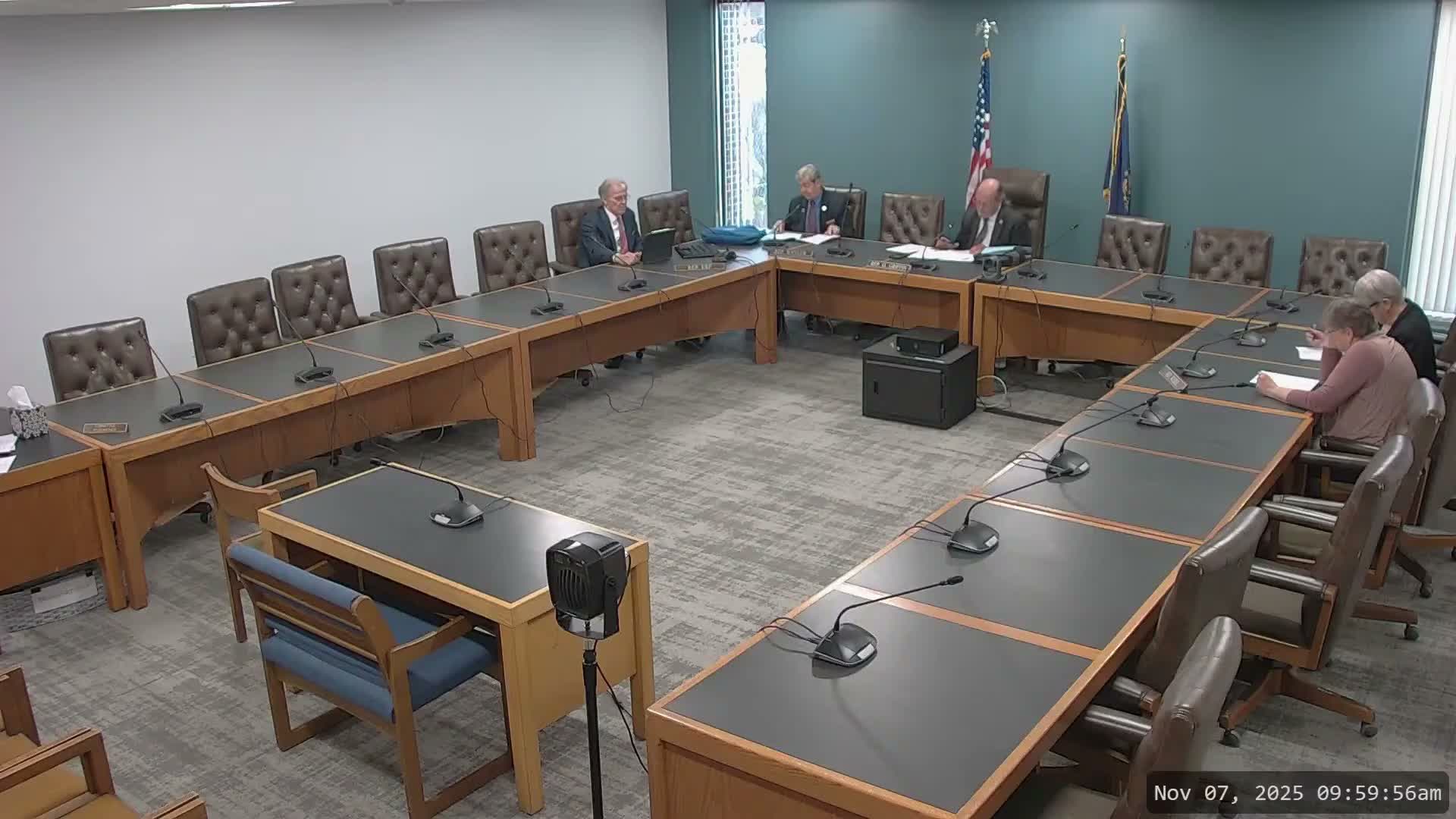
The Joint Legislative Performance Audit and Oversight Committee heard on the status of a 2016 performance audit of the Department of Corrections’ offender treatment program, where agency staff said one audit item remains unresolved.
Jane Graham, communications and legislative affairs liaison for the Department of Corrections, told the committee the audit’s outstanding item concerns “the mechanism for us to be able to track benchmarks, progress, recidivism, with the *** offender treatment program.” She said the department upgraded its offender management system in the spring to Chorus (version 8) from an older version 4 but that the rollout has produced operational problems that must be addressed before reporting features can be finalized.
Why it matters: tracking standardized benchmarks and recidivism is central to judging whether treatment programs reduce reoffending. Committee members asked how treatment is continued after release and how the department measures success.
Abby Simon, behavioral health administrator for the DOC, described the department’s approach to post-release follow-up: intensive in-prison programs for those recommended for them, discharge summaries by clinicians presented to an administrative review committee, and aftercare arrangements with community providers alongside supervision by probation and parole officers. Simon said these steps form a system of checks and balances to monitor continuing treatment needs in the community.
Graham said the department has prioritized fixing operational issues with Chorus—such as problems that have affected victim restitution payments—before building new reports and analytics. “We have had a difficult rollout with that offender management system,” Graham said, and technology staff are addressing “some of the hotter issues” before creating reporting features. She told the committee she is “hoping that sometime within the next 6 months, we’ll be able to get to a place where our offender management system is stable enough for us to be able to start tracking those metrics.”
Committee members pressed on whether DOC or community partners follow participants after release; Graham and Simon explained that probation and parole officers and aftercare providers carry much of the day-to-day monitoring and that the department relies on returns to custody when conditions are violated. The committee thanked DOC staff and requested follow-up when the outstanding audit item is resolved.
The department did not provide a formal timetable beyond the estimate that reporting capability could start in roughly six months. The committee recorded no formal vote on this agenda item.
Jane Graham, communications and legislative affairs liaison for the Department of Corrections, told the committee the audit’s outstanding item concerns “the mechanism for us to be able to track benchmarks, progress, recidivism, with the *** offender treatment program.” She said the department upgraded its offender management system in the spring to Chorus (version 8) from an older version 4 but that the rollout has produced operational problems that must be addressed before reporting features can be finalized.
Why it matters: tracking standardized benchmarks and recidivism is central to judging whether treatment programs reduce reoffending. Committee members asked how treatment is continued after release and how the department measures success.
Abby Simon, behavioral health administrator for the DOC, described the department’s approach to post-release follow-up: intensive in-prison programs for those recommended for them, discharge summaries by clinicians presented to an administrative review committee, and aftercare arrangements with community providers alongside supervision by probation and parole officers. Simon said these steps form a system of checks and balances to monitor continuing treatment needs in the community.
Graham said the department has prioritized fixing operational issues with Chorus—such as problems that have affected victim restitution payments—before building new reports and analytics. “We have had a difficult rollout with that offender management system,” Graham said, and technology staff are addressing “some of the hotter issues” before creating reporting features. She told the committee she is “hoping that sometime within the next 6 months, we’ll be able to get to a place where our offender management system is stable enough for us to be able to start tracking those metrics.”
Committee members pressed on whether DOC or community partners follow participants after release; Graham and Simon explained that probation and parole officers and aftercare providers carry much of the day-to-day monitoring and that the department relies on returns to custody when conditions are violated. The committee thanked DOC staff and requested follow-up when the outstanding audit item is resolved.
The department did not provide a formal timetable beyond the estimate that reporting capability could start in roughly six months. The committee recorded no formal vote on this agenda item.
Don't Miss a Word: See the Full Meeting!
Go beyond summaries. Unlock every video, transcript, and key insight with a Founder Membership.
✓
Get instant access to full meeting videos
✓
Search and clip any phrase from complete transcripts
✓
Receive AI-powered summaries & custom alerts
✓
Enjoy lifetime, unrestricted access to government data
30-day money-back guarantee
