Maine bill would fund technical upgrade to localize emergency broadcast alerts
January 22, 2026 | 2026 Legislature ME, Maine
This article was created by AI summarizing key points discussed. AI makes mistakes, so for full details and context, please refer to the video of the full meeting. Please report any errors so we can fix them. Report an error »
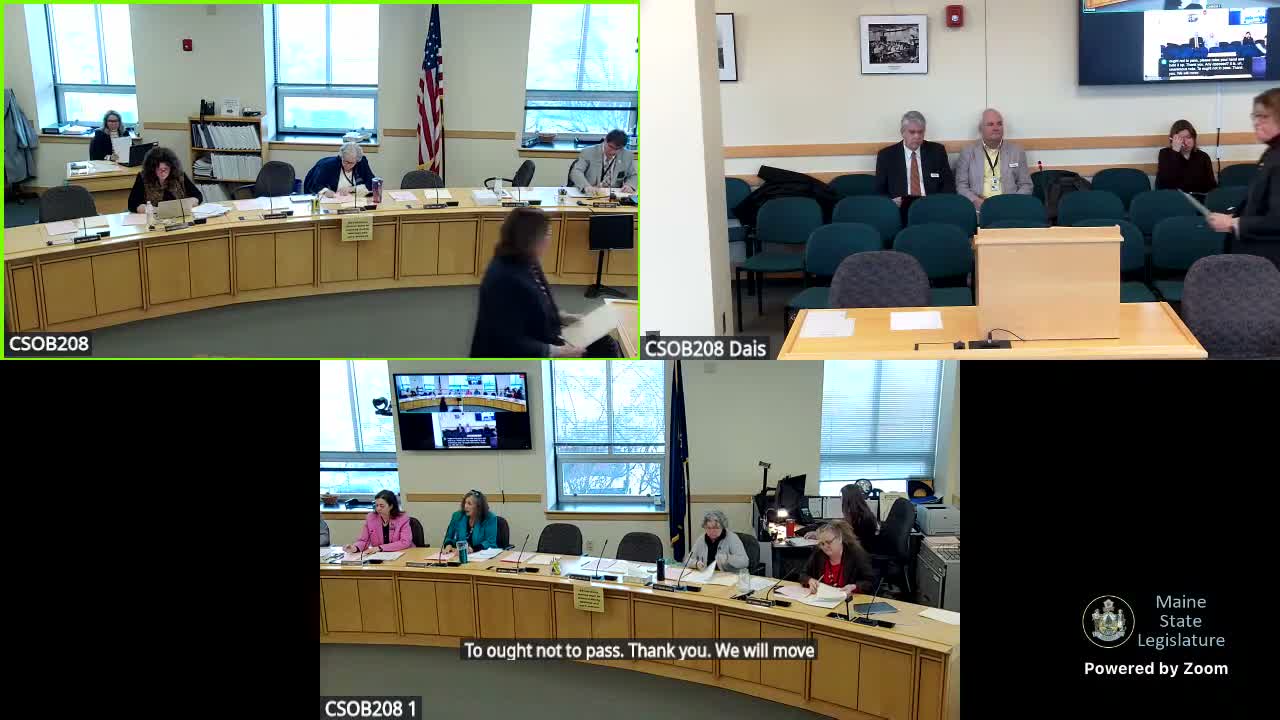
Sen. Theresa Perce (sponsor) told the joint standing committee on Education and Cultural Affairs that LD 2003 would add the ability to localize emergency broadcast messages so alerts reach only the area affected by an incident rather than the entire state.
Perce said the change would reduce confusion and prevent unnecessary alarm in unaffected communities. "Simply put, it means an emergency alert about a dangerous situation would be targeted at the county and not broadcast statewide," she said during the public hearing.
Rick Snyder, president and CEO of Maine Public, testified the proposal would fund one-time technical gear — mostly encoder equipment at transmitters — to enable that targeting. "The main reason to do this is public safety," Snyder said. He added that tailoring alerts improves the credibility of the system: "If you hear an emergency alert that doesn't apply to you, you tend to disregard it." Snyder also said an added benefit would be shortening the lengthy legal station identification listeners currently hear because of a larger transmitter network.
Snyder told lawmakers that a federal grant program the network would have used no longer exists after changes to federal grant management connected to the Corporation for Public Broadcasting; he said the network had a pending federal application that cannot be completed because that program was eliminated. Technical questions were addressed by Jeff Mahaney, Maine Public's chief technology officer, who explained that Maine Public receives messages from content providers such as the National Weather Service and MEMA over a fiber link and distributes them across its transmitter network; the proposed equipment would allow MEMA‑originated alerts to be targeted geographically.
Committee members asked for more detail about past federal support and the exact technical specification of the equipment; Snyder said he had left a handout and would provide follow-up information to the committee. No outside witnesses spoke in the room for or against the bill and the chair closed the public hearing. The committee indicated it will take the bill up again in work session.
Next steps: The sponsor requested the item be taken to a work session; committee members asked for additional documentation on the federal grant program's termination and the precise costs of the equipment before further action.
Perce said the change would reduce confusion and prevent unnecessary alarm in unaffected communities. "Simply put, it means an emergency alert about a dangerous situation would be targeted at the county and not broadcast statewide," she said during the public hearing.
Rick Snyder, president and CEO of Maine Public, testified the proposal would fund one-time technical gear — mostly encoder equipment at transmitters — to enable that targeting. "The main reason to do this is public safety," Snyder said. He added that tailoring alerts improves the credibility of the system: "If you hear an emergency alert that doesn't apply to you, you tend to disregard it." Snyder also said an added benefit would be shortening the lengthy legal station identification listeners currently hear because of a larger transmitter network.
Snyder told lawmakers that a federal grant program the network would have used no longer exists after changes to federal grant management connected to the Corporation for Public Broadcasting; he said the network had a pending federal application that cannot be completed because that program was eliminated. Technical questions were addressed by Jeff Mahaney, Maine Public's chief technology officer, who explained that Maine Public receives messages from content providers such as the National Weather Service and MEMA over a fiber link and distributes them across its transmitter network; the proposed equipment would allow MEMA‑originated alerts to be targeted geographically.
Committee members asked for more detail about past federal support and the exact technical specification of the equipment; Snyder said he had left a handout and would provide follow-up information to the committee. No outside witnesses spoke in the room for or against the bill and the chair closed the public hearing. The committee indicated it will take the bill up again in work session.
Next steps: The sponsor requested the item be taken to a work session; committee members asked for additional documentation on the federal grant program's termination and the precise costs of the equipment before further action.
View the Full Meeting & All Its Details
This article offers just a summary. Unlock complete video, transcripts, and insights as a Founder Member.
✓
Watch full, unedited meeting videos
✓
Search every word spoken in unlimited transcripts
✓
AI summaries & real-time alerts (all government levels)
✓
Permanent access to expanding government content
30-day money-back guarantee
