Maine lawmakers hear pleas to restore Upward Bound funding after federal cuts
January 22, 2026 | 2026 Legislature ME, Maine
This article was created by AI summarizing key points discussed. AI makes mistakes, so for full details and context, please refer to the video of the full meeting. Please report any errors so we can fix them. Report an error »
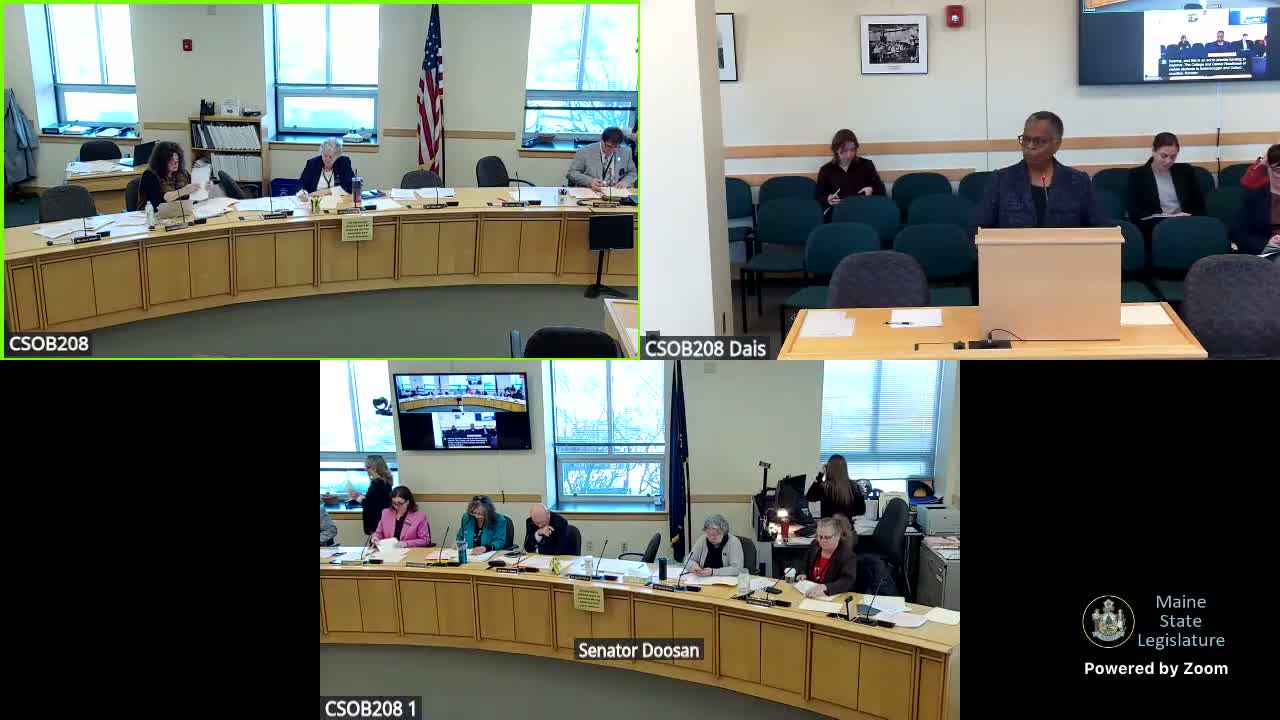
Sen. Jill Dusen presented LD 2147 to the joint standing committee on Education and Cultural Affairs as a one‑time appropriations bill to provide stopgap funding after federal grant support for the River Valley Upward Bound program at the University of Maine at Farmington was terminated.
Dusen, who said she is a product of an Upward Bound program, described the programs as critical for first‑generation and low‑income students. "This bill restores critical one‑time funding to the University of Maine System to deliver academic college and career services to eligible students in six high schools in Androscoggin and Oxford Counties," she told the committee.
Sam Warren, representing UMF, explained the River Valley grant served about 60 students annually and that UMF had lost federal funding with more than two years remaining in its grant cycle. Warren said the University system serves hundreds of TRIO participants statewide and that the termination affected a relatively small but high‑impact cohort: "Through this program, UMF has provided these eligible students, 60 a year, with life‑changing counseling and advising, college and career exploration, and an annual on‑campus summer residential experience," he said. Warren said appeals and federal reconsideration efforts are ongoing and that legal processes are active in related cases.
Multiple witnesses from the program and alumni urged the committee to approve the funding for one year. Marietta Wheeler, an alum, said, "To say Upward Bound changed my life is an understatement," and described how the program enabled her to complete college and build a public‑service career. Program staff and UMF faculty cited outcome data: recent program cohorts posted high school graduation and postsecondary enrollment rates above state averages.
Committee members acknowledged the program's strong track record but pressed for specifics on how state dollars would be allocated, how many students statewide are served by TRIO programs, and whether the bill should restrict funds to the affected six high schools or allow the University of Maine System to deploy funds systemwide. Witnesses offered a range of figures: UMF reported the River Valley program directly served roughly 60 students, the University of Maine System administers programs that served roughly 455 students in the most recent fiscal year, and combined statewide upward‑bound enrollment may be higher when including other program variants.
Next steps: The committee closed public testimony and will consider requests for additional data and allocation scenarios in work sessions.
Dusen, who said she is a product of an Upward Bound program, described the programs as critical for first‑generation and low‑income students. "This bill restores critical one‑time funding to the University of Maine System to deliver academic college and career services to eligible students in six high schools in Androscoggin and Oxford Counties," she told the committee.
Sam Warren, representing UMF, explained the River Valley grant served about 60 students annually and that UMF had lost federal funding with more than two years remaining in its grant cycle. Warren said the University system serves hundreds of TRIO participants statewide and that the termination affected a relatively small but high‑impact cohort: "Through this program, UMF has provided these eligible students, 60 a year, with life‑changing counseling and advising, college and career exploration, and an annual on‑campus summer residential experience," he said. Warren said appeals and federal reconsideration efforts are ongoing and that legal processes are active in related cases.
Multiple witnesses from the program and alumni urged the committee to approve the funding for one year. Marietta Wheeler, an alum, said, "To say Upward Bound changed my life is an understatement," and described how the program enabled her to complete college and build a public‑service career. Program staff and UMF faculty cited outcome data: recent program cohorts posted high school graduation and postsecondary enrollment rates above state averages.
Committee members acknowledged the program's strong track record but pressed for specifics on how state dollars would be allocated, how many students statewide are served by TRIO programs, and whether the bill should restrict funds to the affected six high schools or allow the University of Maine System to deploy funds systemwide. Witnesses offered a range of figures: UMF reported the River Valley program directly served roughly 60 students, the University of Maine System administers programs that served roughly 455 students in the most recent fiscal year, and combined statewide upward‑bound enrollment may be higher when including other program variants.
Next steps: The committee closed public testimony and will consider requests for additional data and allocation scenarios in work sessions.
Don't Miss a Word: See the Full Meeting!
Go beyond summaries. Unlock every video, transcript, and key insight with a Founder Membership.
✓
Get instant access to full meeting videos
✓
Search and clip any phrase from complete transcripts
✓
Receive AI-powered summaries & custom alerts
✓
Enjoy lifetime, unrestricted access to government data
30-day money-back guarantee
