Committee hears sweeping school-construction financing amendment; bill tabled for more study
January 22, 2026 | 2026 Legislature ME, Maine
This article was created by AI summarizing key points discussed. AI makes mistakes, so for full details and context, please refer to the video of the full meeting. Please report any errors so we can fix them. Report an error »
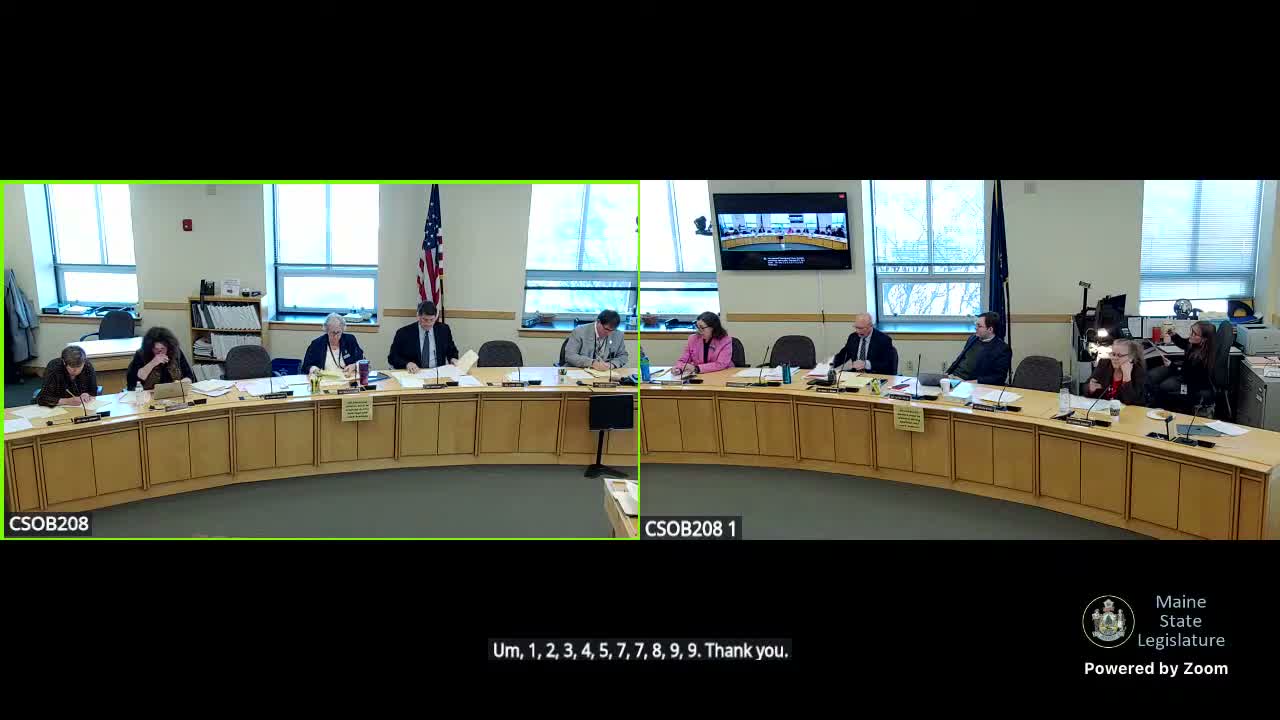
Representative Brennan introduced an amended approach to LD 1892 during the committee's work session, saying the state must develop new funding streams for school construction and renovation. The amendment would raise the revolving loan eligibility cap from $2 million to $8 million, direct $50 million annually of lapsed balances into a renovation and repair fund, and raise the long‑standing debt‑service set‑aside now at roughly $150 million toward $175 million and eventually $200 million. He also proposed an "accelerator" program modeled on other states to respond quickly to urgent roof and HVAC repairs.
Brennan said some revenue ideas in the original bill (lottery, marijuana tax, tobacco tax reallocation) were politically unlikely and suggested carving those sections into a study. He proposed routing funds to the University/DOE revolving loan program for renovation and said the amendment is intended to expand the pool of projects and address health and safety issues more broadly than the major construction program alone.
Committee members questioned the fiscal mechanics, how the cascade of lapsed balances would be modified, and whether a cost‑share requirement (for example 75/25 or 80/20 state/local split) would disadvantage rural districts with a narrow tax base. Senator Libby and others said they support targeting lapsed balances but worried cost share could favor wealthier municipalities. Representative Brennan said the proposed language would permit the State Board of Education and DOE to consider fiscal capacity when setting cost‑share guidelines.
After extended discussion and requests for further modeling and input from DOE and the governor's task force on school construction, the committee moved to table the bill. The tabling motion passed unanimously and the committee signaled it will schedule multiple follow‑up work sessions to refine financing mechanisms and consider recommendations from the governor's task force when available.
Brennan said some revenue ideas in the original bill (lottery, marijuana tax, tobacco tax reallocation) were politically unlikely and suggested carving those sections into a study. He proposed routing funds to the University/DOE revolving loan program for renovation and said the amendment is intended to expand the pool of projects and address health and safety issues more broadly than the major construction program alone.
Committee members questioned the fiscal mechanics, how the cascade of lapsed balances would be modified, and whether a cost‑share requirement (for example 75/25 or 80/20 state/local split) would disadvantage rural districts with a narrow tax base. Senator Libby and others said they support targeting lapsed balances but worried cost share could favor wealthier municipalities. Representative Brennan said the proposed language would permit the State Board of Education and DOE to consider fiscal capacity when setting cost‑share guidelines.
After extended discussion and requests for further modeling and input from DOE and the governor's task force on school construction, the committee moved to table the bill. The tabling motion passed unanimously and the committee signaled it will schedule multiple follow‑up work sessions to refine financing mechanisms and consider recommendations from the governor's task force when available.
Don't Miss a Word: See the Full Meeting!
Go beyond summaries. Unlock every video, transcript, and key insight with a Founder Membership.
✓
Get instant access to full meeting videos
✓
Search and clip any phrase from complete transcripts
✓
Receive AI-powered summaries & custom alerts
✓
Enjoy lifetime, unrestricted access to government data
30-day money-back guarantee
