Committee advances surgical-smoke bill after debate over evidence and rural costs
January 20, 2026 | 2026 Legislature FL, Florida
This article was created by AI summarizing key points discussed. AI makes mistakes, so for full details and context, please refer to the video of the full meeting. Please report any errors so we can fix them. Report an error »
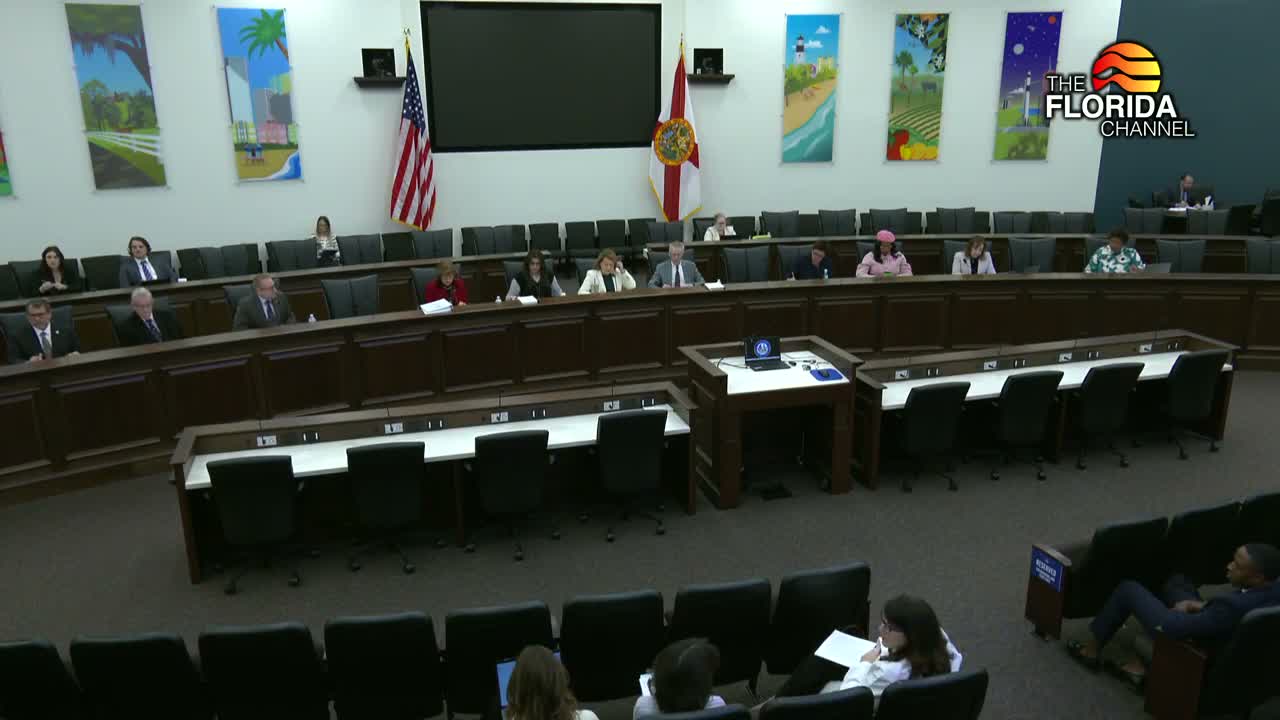
Senator Davis urged the Senate Health Policy Committee to adopt Senate Bill 162, which would require hospitals and ambulatory surgical centers to implement policies requiring the use of smoke-evacuation systems during surgical procedures likely to generate surgical smoke.
Davis told the committee the bill sets a policy requirement rather than prescribing a single vendor or a prescriptive engineering standard, and that systems typically cost less than $5,000. "Most of our large-system hospitals have this evacuation system already," Davis said, and the measure is intended to ensure policies are in place across all facilities.
Several senators pressed for evidence that surgical smoke causes demonstrable human harm or incident reports showing acute patient or staff injury. Senator Gates said he had not seen analysis of incident reports demonstrating human consequences and indicated he would vote no without evidence of necessity. Senator Masulo and others asked how the bill would distinguish which cases require evacuation systems and how enforcement would work given variable local practices.
Public witnesses offered practical context. Vance Ahrens, a surgical practitioner with more than 20 years' experience, said common suction is designed for liquids and not for smoke; he described the risk as cumulative exposure over many cases, analogous to occupational exposures like those firefighters face.
Sponsor and supporters said the bill is intended to prompt systems to adopt operating policies rather than to immediately impose costly equipment mandates. They noted vendors often provide leasing options and argued smaller hospitals can obtain systems without prohibitive capital outlays. The committee adopted a clarifying amendment and then reported SB 162 favorably.
Why it matters: Supporters framed the bill as a workplace-safety and patient-safety measure; opponents in committee sought concrete incident-analysis evidence and worried about unintended consequences for surgical capacity in rural communities.
Next steps: Sponsors said they would provide additional data to the committee and stakeholders as the bill moves to subsequent panels; appropriations or implementation rules may be considered in later stages.
Davis told the committee the bill sets a policy requirement rather than prescribing a single vendor or a prescriptive engineering standard, and that systems typically cost less than $5,000. "Most of our large-system hospitals have this evacuation system already," Davis said, and the measure is intended to ensure policies are in place across all facilities.
Several senators pressed for evidence that surgical smoke causes demonstrable human harm or incident reports showing acute patient or staff injury. Senator Gates said he had not seen analysis of incident reports demonstrating human consequences and indicated he would vote no without evidence of necessity. Senator Masulo and others asked how the bill would distinguish which cases require evacuation systems and how enforcement would work given variable local practices.
Public witnesses offered practical context. Vance Ahrens, a surgical practitioner with more than 20 years' experience, said common suction is designed for liquids and not for smoke; he described the risk as cumulative exposure over many cases, analogous to occupational exposures like those firefighters face.
Sponsor and supporters said the bill is intended to prompt systems to adopt operating policies rather than to immediately impose costly equipment mandates. They noted vendors often provide leasing options and argued smaller hospitals can obtain systems without prohibitive capital outlays. The committee adopted a clarifying amendment and then reported SB 162 favorably.
Why it matters: Supporters framed the bill as a workplace-safety and patient-safety measure; opponents in committee sought concrete incident-analysis evidence and worried about unintended consequences for surgical capacity in rural communities.
Next steps: Sponsors said they would provide additional data to the committee and stakeholders as the bill moves to subsequent panels; appropriations or implementation rules may be considered in later stages.
Don't Miss a Word: See the Full Meeting!
Go beyond summaries. Unlock every video, transcript, and key insight with a Founder Membership.
✓
Get instant access to full meeting videos
✓
Search and clip any phrase from complete transcripts
✓
Receive AI-powered summaries & custom alerts
✓
Enjoy lifetime, unrestricted access to government data
30-day money-back guarantee
