Maine senators hear debate over allowing municipalities to file Chapter 9 bankruptcy
January 22, 2026 | 2026 Legislature ME, Maine
This article was created by AI summarizing key points discussed. AI makes mistakes, so for full details and context, please refer to the video of the full meeting. Please report any errors so we can fix them. Report an error »
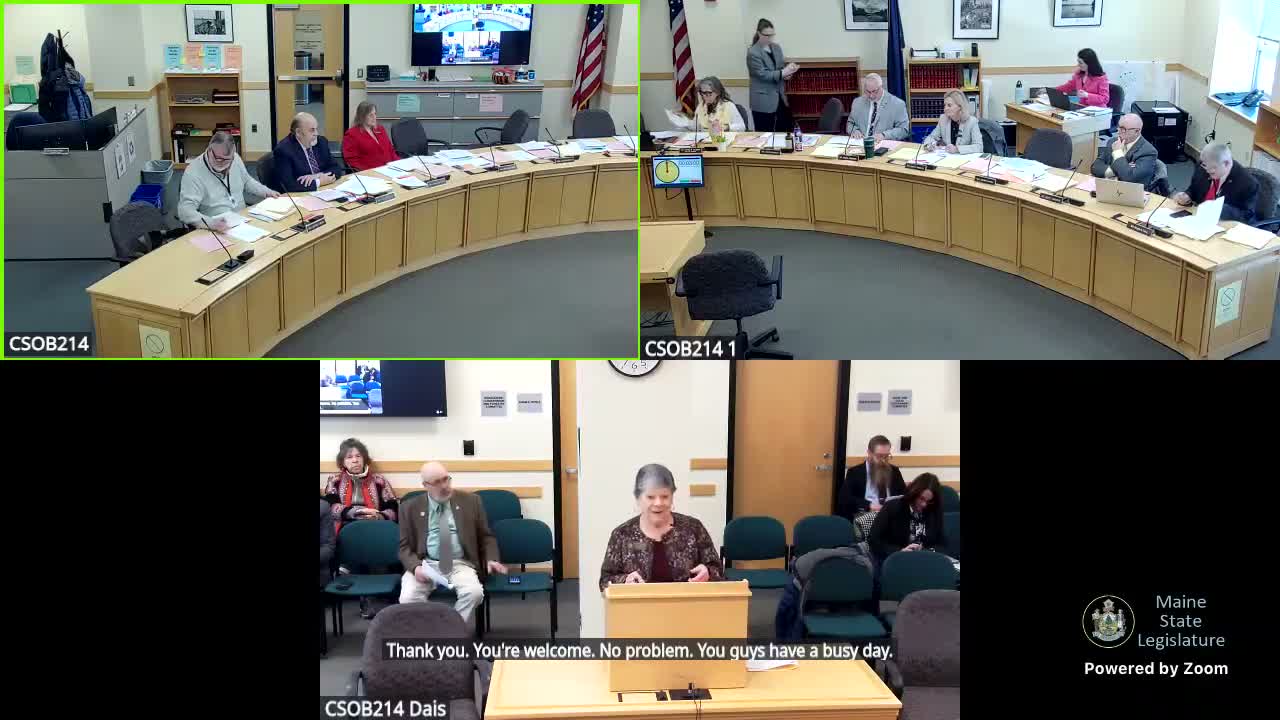
Senator Mary Anne Moore introduced LD 2009, a proposal to allow Maine political subdivisions — counties, cities, towns and special districts — to seek Chapter 9 municipal bankruptcy under federal Title 11. Moore said she drafted the bill after Washington County’s cash‑flow crisis and audit shortfalls left the county facing a large shortfall, and described proposed guardrails: exhaustion of alternatives, a state‑auditor insolvency finding, majority approval by the county or municipal governing body, and a requirement to satisfy certain public‑pension unfunded liabilities before filing.
Municipal leaders and financial-sector witnesses opposed the bill. Rebecca Lambert for the Maine Municipal Association testified that bankruptcy is a last resort that would signal fiscal instability and likely raise borrowing costs statewide. Jim Cohen, representing the Maine County Commissioners Association, and Terry Hayes, of the Municipal Bond Bank, warned lenders would price risk into municipal borrowing. Bill Brown of Maine PERS told the committee that, as drafted, the bill could expose pension beneficiaries to shifted liabilities; he and other witnesses urged adding a condition that a filing requires a municipality to resolve its share of unfunded actuarial liabilities.
Lawmakers pressed for alternatives, including a stronger audit schedule, status-reporting and targeted state assistance. Senator Moore said she introduced the bill as a tool for distressed local governments but was open to amendments that would add accountability measures; members asked staff for more information on statutory audit obligations and asked the state auditor to attend the work session.
Municipal leaders and financial-sector witnesses opposed the bill. Rebecca Lambert for the Maine Municipal Association testified that bankruptcy is a last resort that would signal fiscal instability and likely raise borrowing costs statewide. Jim Cohen, representing the Maine County Commissioners Association, and Terry Hayes, of the Municipal Bond Bank, warned lenders would price risk into municipal borrowing. Bill Brown of Maine PERS told the committee that, as drafted, the bill could expose pension beneficiaries to shifted liabilities; he and other witnesses urged adding a condition that a filing requires a municipality to resolve its share of unfunded actuarial liabilities.
Lawmakers pressed for alternatives, including a stronger audit schedule, status-reporting and targeted state assistance. Senator Moore said she introduced the bill as a tool for distressed local governments but was open to amendments that would add accountability measures; members asked staff for more information on statutory audit obligations and asked the state auditor to attend the work session.
View the Full Meeting & All Its Details
This article offers just a summary. Unlock complete video, transcripts, and insights as a Founder Member.
✓
Watch full, unedited meeting videos
✓
Search every word spoken in unlimited transcripts
✓
AI summaries & real-time alerts (all government levels)
✓
Permanent access to expanding government content
30-day money-back guarantee
