Hourslong hearing on LD 13 83 draws hundreds of voices over divestment from companies tied to genocide and human-rights abuses
January 22, 2026 | 2026 Legislature ME, Maine
This article was created by AI summarizing key points discussed. AI makes mistakes, so for full details and context, please refer to the video of the full meeting. Please report any errors so we can fix them. Report an error »
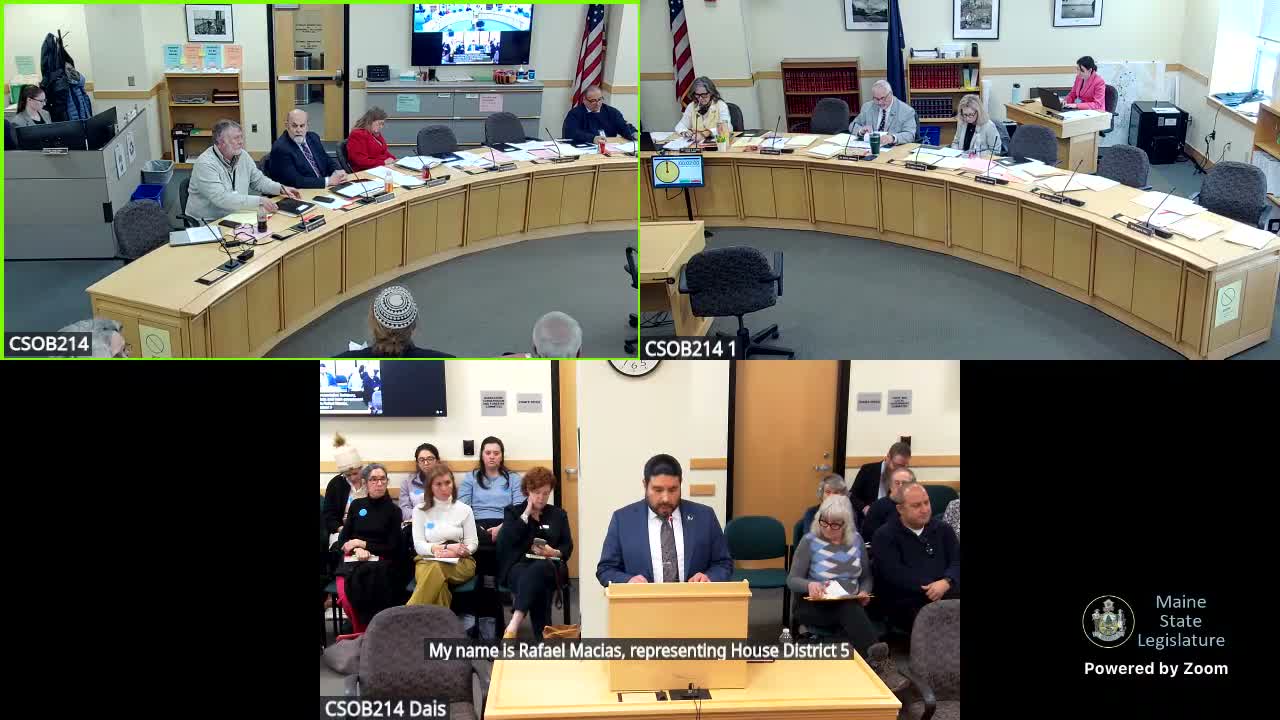
Representative Rafael Macias opened an extended public hearing on LD 13 83, a strike‑and‑replace bill that would direct state investment managers to identify and divest holdings in corporations "credibly identified" as materially supporting genocide, ethnic cleansing or gross human‑rights violations. Macias framed the bill as a moral and financial risk-management measure: "Divestment is not market timing; it's risk management," he said.
The hearing, which drew many hundreds of testifiers, split sharply. Proponents included public employees, retirees, clergy, nurses, teachers, small-business owners, students, veterans, and survivors of genocide who urged Maine to stop investing state pensions and procurement dollars in companies such as those named in testimony (examples raised repeatedly included Palantir, Signature Aviation and major defense contractors). Supporters argued divestment is feasible, would reduce legal and reputational risk, and is consistent with earlier Maine divestments (e.g., apartheid South Africa, Sudan) and the state’s values. Several current and former Maine PERS trustees and investment professionals testified that targeted divestment could be achieved without materially harming long‑term returns and that in‑house staff and external managers can implement reallocations.
Opponents included many Jewish Mainers, veterans, financial experts and municipal leaders who warned the bill risks politicizing pension investments, could conflict with Maine PERS’s fiduciary duty and expose the state to litigation or higher costs. Legal and financial witnesses described constitutional and federal tax limits that require investment solely in beneficiaries’ financial interest and urged clarity on who makes "credible" determinations. Several speakers also reported that past municipal divestment actions had produced local tensions and security concerns for Jewish communities; they urged restraint and careful drafting.
Committee members repeatedly asked for written legal advice from the Attorney General’s office, for Maine PERS and the State Treasurer to appear at the work session, and for comparative examples of other states’ approaches and the lists/data used to identify implicated firms. The committee scheduled a work session follow-up and asked for specific materials (AG opinion, Maine PERS analysis of holdings and implementation options, the source lists cited during testimony, and fiscal/legal analyses).
The hearing, which drew many hundreds of testifiers, split sharply. Proponents included public employees, retirees, clergy, nurses, teachers, small-business owners, students, veterans, and survivors of genocide who urged Maine to stop investing state pensions and procurement dollars in companies such as those named in testimony (examples raised repeatedly included Palantir, Signature Aviation and major defense contractors). Supporters argued divestment is feasible, would reduce legal and reputational risk, and is consistent with earlier Maine divestments (e.g., apartheid South Africa, Sudan) and the state’s values. Several current and former Maine PERS trustees and investment professionals testified that targeted divestment could be achieved without materially harming long‑term returns and that in‑house staff and external managers can implement reallocations.
Opponents included many Jewish Mainers, veterans, financial experts and municipal leaders who warned the bill risks politicizing pension investments, could conflict with Maine PERS’s fiduciary duty and expose the state to litigation or higher costs. Legal and financial witnesses described constitutional and federal tax limits that require investment solely in beneficiaries’ financial interest and urged clarity on who makes "credible" determinations. Several speakers also reported that past municipal divestment actions had produced local tensions and security concerns for Jewish communities; they urged restraint and careful drafting.
Committee members repeatedly asked for written legal advice from the Attorney General’s office, for Maine PERS and the State Treasurer to appear at the work session, and for comparative examples of other states’ approaches and the lists/data used to identify implicated firms. The committee scheduled a work session follow-up and asked for specific materials (AG opinion, Maine PERS analysis of holdings and implementation options, the source lists cited during testimony, and fiscal/legal analyses).
Don't Miss a Word: See the Full Meeting!
Go beyond summaries. Unlock every video, transcript, and key insight with a Founder Membership.
✓
Get instant access to full meeting videos
✓
Search and clip any phrase from complete transcripts
✓
Receive AI-powered summaries & custom alerts
✓
Enjoy lifetime, unrestricted access to government data
30-day money-back guarantee
