Mill Valley adopts updated safety element for Mill Valley 2040; maps, SB 99 overlays and outreach to follow
January 20, 2026 | Mill Valley, Marin County, California
This article was created by AI summarizing key points discussed. AI makes mistakes, so for full details and context, please refer to the video of the full meeting. Please report any errors so we can fix them. Report an error »
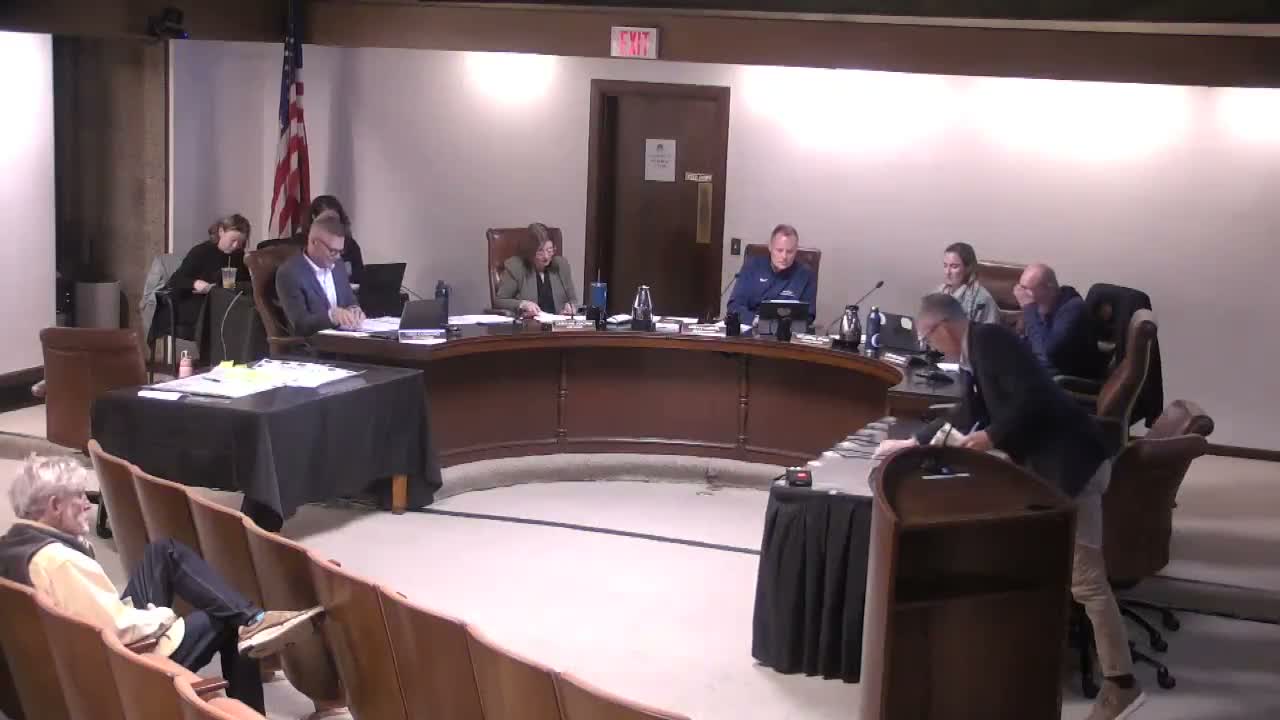
The Mill Valley City Council unanimously adopted an updated Safety and Hazards element for the Mill Valley 2040 general plan at its Jan. 20 meeting. Staff said the amendment improves evacuation planning, adds a new climate-adaptation and sea-level-rise section and integrates requirements from Senate Bill 99 to identify parcels with only one way in or out.
Danielle, the project manager for the update, told the council the draft grew out of outreach and technical analysis, and that the document was reviewed by the Emergency Preparedness Commission and Cal Fire (which had no substantive changes). The element identifies existing hazards (wildfire, flood, liquefaction, landslide), includes evacuation-route analysis and notes that roughly 6,000 parcels may be subject to one or more hazards; staff recommended adoption and described how the policies will guide future preparedness and budgeting.
Council discussion addressed how mapping and parcel overlays could be used for community outreach and planning. Councilmember Burke suggested the data could be layered in public portals so residents can see overlapping risks. Councilmember Carmel and others discussed neighborhood-level mitigation tools, including Measure C–funded fuel breaks, and noted emerging technologies and systems such as neighborhood sprinkler systems being tested elsewhere.
During public comment, Richard Owens — who earlier raised concerns about a leaning pole and long secondary lines near his house — reiterated his safety concerns and urged the city to press PG&E on mitigation or undergrounding. Owens said arcing from long, overloaded secondary lines can reach very high temperatures and described a recent event at his home; staff said they have walked the site with Mr. Owens, are coordinating with PG&E and a North Bay consultant (Tony Walls), and will follow up. Council directed staff and the Emergency Preparedness Commission to provide targeted notices and further outreach, including providing SB 9 parcel addresses to the EPC for focused notification.
The adoption passed on a roll-call vote of 5–0. City staff said the update will help secure FEMA and other state funding, improve evacuation planning and inform the city’s five‑year infrastructure and mitigation priorities.
Next steps: staff will circulate SB 9 and SB 99 parcel lists as promised, integrate minor nonsubstantive edits supplied by the Southern Marin Fire District, and move to implementation and outreach with commissions and community groups.
Danielle, the project manager for the update, told the council the draft grew out of outreach and technical analysis, and that the document was reviewed by the Emergency Preparedness Commission and Cal Fire (which had no substantive changes). The element identifies existing hazards (wildfire, flood, liquefaction, landslide), includes evacuation-route analysis and notes that roughly 6,000 parcels may be subject to one or more hazards; staff recommended adoption and described how the policies will guide future preparedness and budgeting.
Council discussion addressed how mapping and parcel overlays could be used for community outreach and planning. Councilmember Burke suggested the data could be layered in public portals so residents can see overlapping risks. Councilmember Carmel and others discussed neighborhood-level mitigation tools, including Measure C–funded fuel breaks, and noted emerging technologies and systems such as neighborhood sprinkler systems being tested elsewhere.
During public comment, Richard Owens — who earlier raised concerns about a leaning pole and long secondary lines near his house — reiterated his safety concerns and urged the city to press PG&E on mitigation or undergrounding. Owens said arcing from long, overloaded secondary lines can reach very high temperatures and described a recent event at his home; staff said they have walked the site with Mr. Owens, are coordinating with PG&E and a North Bay consultant (Tony Walls), and will follow up. Council directed staff and the Emergency Preparedness Commission to provide targeted notices and further outreach, including providing SB 9 parcel addresses to the EPC for focused notification.
The adoption passed on a roll-call vote of 5–0. City staff said the update will help secure FEMA and other state funding, improve evacuation planning and inform the city’s five‑year infrastructure and mitigation priorities.
Next steps: staff will circulate SB 9 and SB 99 parcel lists as promised, integrate minor nonsubstantive edits supplied by the Southern Marin Fire District, and move to implementation and outreach with commissions and community groups.
Don't Miss a Word: See the Full Meeting!
Go beyond summaries. Unlock every video, transcript, and key insight with a Founder Membership.
✓
Get instant access to full meeting videos
✓
Search and clip any phrase from complete transcripts
✓
Receive AI-powered summaries & custom alerts
✓
Enjoy lifetime, unrestricted access to government data
30-day money-back guarantee
