Legislative Council hears dozens of after‑deadline bills, tables most amid vote‑count concerns
January 22, 2026 | 2026 Legislature ME, Maine
This article was created by AI summarizing key points discussed. AI makes mistakes, so for full details and context, please refer to the video of the full meeting. Please report any errors so we can fix them. Report an error »
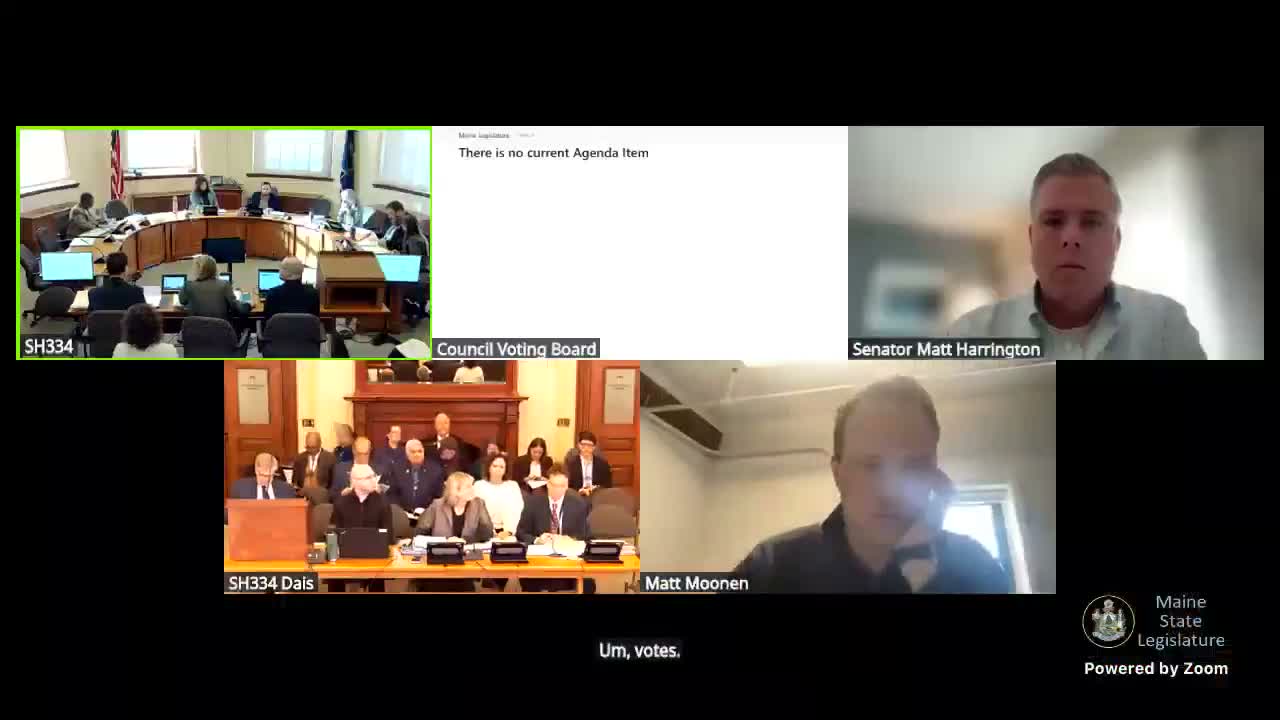
The Legislative Council on Jan. 15, 2026, heard sponsors or their designees explain a slate of after‑deadline bills but largely deferred formal action, with members citing low attendance and difficulty reaching the usual voting thresholds.
Laurie Gramlich read testimony for Senator Donna Bailey on LR 29 72, which would prohibit step therapy that requires MaineCare beneficiaries to fail cheaper alternatives before receiving new FDA‑approved, disease‑modifying Alzheimer’s drugs. "It seeks to prohibit step therapy for MaineCare patients who should be receiving the newest FDA approved treatments," Gramlich read. Council members expressed sympathy for the goal; a motion to table the measure carried unanimously among those present and online.
Other after‑deadline bills presented and then tabled included LR 29 92, which Senator Dusan described as a narrowly tailored fix to allow a surviving spouse who already holds an elver (elder) license to access a deceased spouse’s elder quota, and LR 29 67, a bill from Senator Scott Searway to permit transfer‑on‑death designations for motor vehicles and other titled property. Searway said more than 25 states already allow similar transfers and that the change would reduce probate costs for families. Those bills were also tabled for later consideration.
Senator **** Bradstreet presented LR 29 69, a proposal to prevent state income tax collection on funds stolen in government‑imposter scams. Bradstreet described constituents who lost life savings and said Maine Revenue Services lacks statutory authority to forgive certain state tax liabilities. Following discussion, members moved to table that measure as well; one member recorded opposition to tabling during the procedural count.
Council members repeatedly framed tabling as a pragmatic response to the temporary lack of a full complement of members rather than a judgment on the merits of the proposals. "I can probably forecast some challenges with getting to 6 votes," the chair said early in the meeting, explaining why many items were deferred. Members noted that sponsors can still seek ballots or requests for reconsideration at later meetings.
The council did allow a handful of items to proceed immediately where members judged further review timely or noncontroversial. Procedural votes — including motions to accept several commission reports — were completed before the meeting moved on to other business.
Next steps: Sponsors may request that their bills be reconsidered, seek ballots, or come back to the council when full attendance makes a vote more viable.
Laurie Gramlich read testimony for Senator Donna Bailey on LR 29 72, which would prohibit step therapy that requires MaineCare beneficiaries to fail cheaper alternatives before receiving new FDA‑approved, disease‑modifying Alzheimer’s drugs. "It seeks to prohibit step therapy for MaineCare patients who should be receiving the newest FDA approved treatments," Gramlich read. Council members expressed sympathy for the goal; a motion to table the measure carried unanimously among those present and online.
Other after‑deadline bills presented and then tabled included LR 29 92, which Senator Dusan described as a narrowly tailored fix to allow a surviving spouse who already holds an elver (elder) license to access a deceased spouse’s elder quota, and LR 29 67, a bill from Senator Scott Searway to permit transfer‑on‑death designations for motor vehicles and other titled property. Searway said more than 25 states already allow similar transfers and that the change would reduce probate costs for families. Those bills were also tabled for later consideration.
Senator **** Bradstreet presented LR 29 69, a proposal to prevent state income tax collection on funds stolen in government‑imposter scams. Bradstreet described constituents who lost life savings and said Maine Revenue Services lacks statutory authority to forgive certain state tax liabilities. Following discussion, members moved to table that measure as well; one member recorded opposition to tabling during the procedural count.
Council members repeatedly framed tabling as a pragmatic response to the temporary lack of a full complement of members rather than a judgment on the merits of the proposals. "I can probably forecast some challenges with getting to 6 votes," the chair said early in the meeting, explaining why many items were deferred. Members noted that sponsors can still seek ballots or requests for reconsideration at later meetings.
The council did allow a handful of items to proceed immediately where members judged further review timely or noncontroversial. Procedural votes — including motions to accept several commission reports — were completed before the meeting moved on to other business.
Next steps: Sponsors may request that their bills be reconsidered, seek ballots, or come back to the council when full attendance makes a vote more viable.
Don't Miss a Word: See the Full Meeting!
Go beyond summaries. Unlock every video, transcript, and key insight with a Founder Membership.
✓
Get instant access to full meeting videos
✓
Search and clip any phrase from complete transcripts
✓
Receive AI-powered summaries & custom alerts
✓
Enjoy lifetime, unrestricted access to government data
30-day money-back guarantee
