Appropriations Committee hears FY2027 preliminary budgets from Florida's five water management districts
January 21, 2026 | 2026 Legislature FL, Florida
This article was created by AI summarizing key points discussed. AI makes mistakes, so for full details and context, please refer to the video of the full meeting. Please report any errors so we can fix them. Report an error »
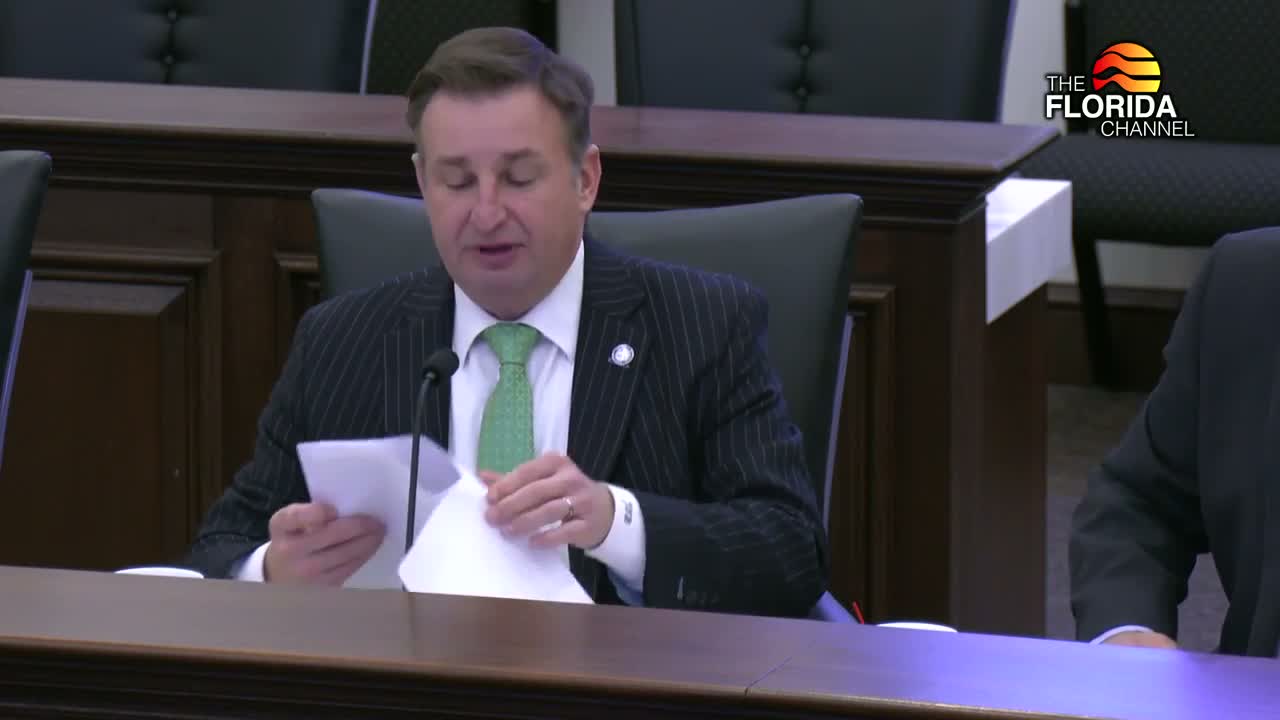
The Florida Senate Appropriations Committee on Agriculture, Environment and General Government spent its session Thursday hearing FY2027 preliminary budget presentations from the state's five water management districts, which collectively described large water‑supply and restoration projects, ongoing storm and flood recovery work and concerns about rising construction and operations costs.
The five executive directors opened with topline budget figures: Northwest Florida Water Management District's preliminary budget is $93.4 million, Suwannee River's $70.4 million, St. Johns River's $181 million, Southwest Florida's $227.6 million and South Florida's $1.05 billion. Presenters said most spending remains tied to the districts' four core statutory missions: water supply, water quality, natural systems and flood protection.
Why it matters: the presentations lay out the districts' near‑term project pipeline and long‑term maintenance obligations that will inform the Legislature's budget decisions this spring. Lawmakers pressed the directors on staffing for permit reviews, the accuracy of operations and maintenance (O&M) projections, and how projects are selected and prioritized.
Highlights and figures: Lyle Siegler, executive director of the Northwest Florida district, said 97% of his district's budget aligns with statutory functions, with 119 staff and administrative costs around 3% of the total. He told the committee the district's $93.4 million budget is about a 15% reduction from the prior year, reflecting completion of several springs and watershed projects.
Director Thomas of the Suwannee River district described a largely rural service area of roughly 360,000 residents and a $70.4 million budget that relies heavily on state funding. Thomas said the district requested one additional full‑time employee from the Department of Environmental Protection to manage permit reviews required by upcoming rulemaking for the Lower Santa Fe and Ichetucknee basins. He also outlined the Water First North Florida initiative, estimating roughly 40 million gallons per day of recharge using highly treated reclaimed water.
St. Johns River district Executive Director Register highlighted projects including the Taylor Creek Reservoir Improvement (adding roughly 54 million gallons per day) and the Black Creek Water Resource Development Project (about 7.5 million gallons per day). Register said the district saved about 20 million gallons per day through its artesian well abandonment program.
Brian Armstrong of Southwest Florida described seven large alternative water supply projects that together cost about $1.9 billion, with the district's share roughly $614 million and FY27 commitments of about $65.3 million for AWS development. Armstrong warned that construction and repair costs have risen sharply in recent years and described a risk‑based capital plan for prioritizing repairs.
Drew Bartlett of South Florida framed the district's $1.05 billion preliminary budget around Everglades restoration and large reservoir work, including the EAA Reservoir. Bartlett said the district is focused on keeping more fresh water in the system, restoring flows to Florida Bay and building new storage, but cautioned that the many new reservoirs and treatment systems coming online increase ongoing O&M obligations.
Questions from senators focused on how projects are identified (staff proposals scored scientifically and reviewed by governing boards and workshops), the source mix for revenue (state and federal appropriations, ad valorem, district revenues and fund balance), and whether cost increases are driven by regulation or market forces (directors largely pointed to supply/demand and inflation).
The committee took no formal votes on budgets or appropriations. Senator McLean moved to rise; the motion was adopted without objection and the committee adjourned.
Next steps: the districts will refine tentative budgets as the legislative process advances; lawmakers will weigh those requests against other priorities during the appropriations cycle.
The five executive directors opened with topline budget figures: Northwest Florida Water Management District's preliminary budget is $93.4 million, Suwannee River's $70.4 million, St. Johns River's $181 million, Southwest Florida's $227.6 million and South Florida's $1.05 billion. Presenters said most spending remains tied to the districts' four core statutory missions: water supply, water quality, natural systems and flood protection.
Why it matters: the presentations lay out the districts' near‑term project pipeline and long‑term maintenance obligations that will inform the Legislature's budget decisions this spring. Lawmakers pressed the directors on staffing for permit reviews, the accuracy of operations and maintenance (O&M) projections, and how projects are selected and prioritized.
Highlights and figures: Lyle Siegler, executive director of the Northwest Florida district, said 97% of his district's budget aligns with statutory functions, with 119 staff and administrative costs around 3% of the total. He told the committee the district's $93.4 million budget is about a 15% reduction from the prior year, reflecting completion of several springs and watershed projects.
Director Thomas of the Suwannee River district described a largely rural service area of roughly 360,000 residents and a $70.4 million budget that relies heavily on state funding. Thomas said the district requested one additional full‑time employee from the Department of Environmental Protection to manage permit reviews required by upcoming rulemaking for the Lower Santa Fe and Ichetucknee basins. He also outlined the Water First North Florida initiative, estimating roughly 40 million gallons per day of recharge using highly treated reclaimed water.
St. Johns River district Executive Director Register highlighted projects including the Taylor Creek Reservoir Improvement (adding roughly 54 million gallons per day) and the Black Creek Water Resource Development Project (about 7.5 million gallons per day). Register said the district saved about 20 million gallons per day through its artesian well abandonment program.
Brian Armstrong of Southwest Florida described seven large alternative water supply projects that together cost about $1.9 billion, with the district's share roughly $614 million and FY27 commitments of about $65.3 million for AWS development. Armstrong warned that construction and repair costs have risen sharply in recent years and described a risk‑based capital plan for prioritizing repairs.
Drew Bartlett of South Florida framed the district's $1.05 billion preliminary budget around Everglades restoration and large reservoir work, including the EAA Reservoir. Bartlett said the district is focused on keeping more fresh water in the system, restoring flows to Florida Bay and building new storage, but cautioned that the many new reservoirs and treatment systems coming online increase ongoing O&M obligations.
Questions from senators focused on how projects are identified (staff proposals scored scientifically and reviewed by governing boards and workshops), the source mix for revenue (state and federal appropriations, ad valorem, district revenues and fund balance), and whether cost increases are driven by regulation or market forces (directors largely pointed to supply/demand and inflation).
The committee took no formal votes on budgets or appropriations. Senator McLean moved to rise; the motion was adopted without objection and the committee adjourned.
Next steps: the districts will refine tentative budgets as the legislative process advances; lawmakers will weigh those requests against other priorities during the appropriations cycle.
View the Full Meeting & All Its Details
This article offers just a summary. Unlock complete video, transcripts, and insights as a Founder Member.
✓
Watch full, unedited meeting videos
✓
Search every word spoken in unlimited transcripts
✓
AI summaries & real-time alerts (all government levels)
✓
Permanent access to expanding government content
30-day money-back guarantee
